
 Seeds
























 Growshop
 Nutrients








 Extractions
 CBD
 Magic Mushrooms
 Headshop
 Alchimia now available in the USA!
GH Cheese by Green House seeds
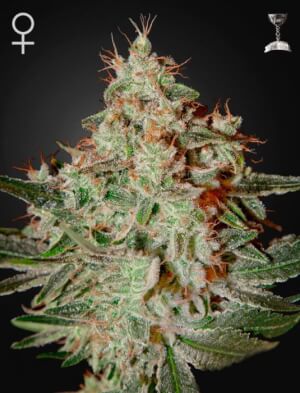
Cheese by Greenhouse Seeds is a feminized, mostly sativa Skunk selection with an intense, skunky flavour and a cerebral, mood-lifting effect. Indoors it flowers in 8-9 weeks yielding up to 700g/m2; outdoors, bushy plants are ready mid-October with up to 800g each.

Information on GH Cheese
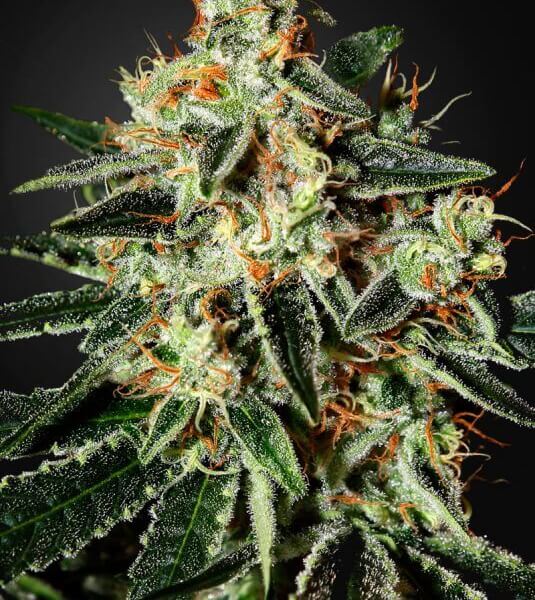
GH Cheese is Green House Seeds' feminized-seed version of the legendary British Cheese, a phenotype selected from Skunk #1 that for years only circulated as a clone. It's an indica-dominant strain, with 60% indica and 40% sativa heritage.
Lab tests show THC of around 24.5%, with CBD close to 0.6%. Its hallmark is a pungent aroma of aged cheese and skunk, accompanied by an intense effect that builds gradually and lasts a long time.
The history of Cheese: from underground clone to seed
The history of the Cheese strain begins in England in the late 80s, when a female unlike the others appeared among the plants from a pack of Skunk #1 seeds. It produced large buds and gave off such a strong cheesy smell that it was cloned immediately and named accordingly.
Around the mid-90s, a Cheese cutting reached Exodus, an alternative collective based on the outskirts of Luton, known for organising free parties and for its pro-cannabis activism. So many people passed through the community that numerous clones were handed out to visitors, and the strain spread throughout the British rave scene. The collective even launched a campaign with a very telling acronym: CANABIS.
For more than a decade, Cheese was an exclusive clone passed from hand to hand among British growers, until a cutting reached Big Buddha, who turned it into seed. Green House Seeds today presents itself as the official producer of that original Cheese.
The strain has an impressive track record: it won first prize at the 2006 HTCC in the seed bank category, and first place at the 2013 Spannabis Champions Cup in the outdoor category.
The exact origin of that pack of seeds is still debated. Some claim it came from Sacred Seeds and others say it was from Sensi Seeds, but everyone agrees it was an 80s Skunk #1 line.
Genetics and plant structure
Rather than a cross between two parents, GH Cheese is a phenotype selection from Skunk #1. Over time, the line was reinforced with Afghan genetics to gain potency and yield, which explains its 60% indica dominance.
The plant shows the typical skunk structure of the Cheese family, with a Christmas-tree shape and medium internodal spacing. Depending on light intensity, the branches may stretch somewhat, although they're sturdy enough to support the weight of the buds.
The buds have a very well-defined conical shape, and some phenotypes develop a little foxtailing towards the end of flowering. The resin is very sticky, and just brushing against the plant is enough for the smell to fill the room.
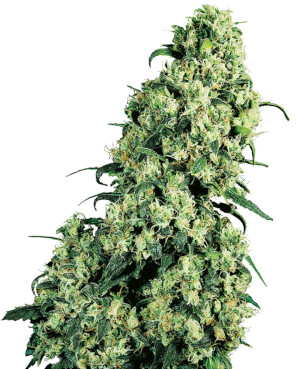
Skunk #1
Skunk #1 was developed between the 70s and 80s by combining Afghan, Colombian and Mexican genetics, with Acapulco Gold representing the latter. Sam Skunkman of Sacred Seeds is considered its original breeder.
Its stability and vigour made it the basis for countless modern hybrids. Cheese is one of its best-known descendants.
The British Cheese clone
The original Cheese was a female selected in 1988-89 in the Chiltern Hills area of southern England. It stood out for the size of its buds and for a savoury aromatic profile never before seen in a Skunk.
Its success proved that a single phenotype could become as famous as its parent strain. Over the years it has become a coffeeshop classic and a benchmark for lovers of savoury terpenes.
When Big Buddha decided to turn Cheese into seed, he chose as the father a pure Afghan that a friend had brought back from a trip to Afghanistan. The result retained the clone's flavour and clearly improved its yield.
Growing GH Cheese
Indoors, GH Cheese completes flowering in around 8 weeks, with yields that can reach 500 g/m². Its branchy structure makes it well suited to SCROG, a technique that helps distribute light and make the most of all its branches.
Some growers have recorded final indoor heights of around 90 cm, with a 56-day flowering period. It's worth keeping an eye on light intensity, as it directly affects branch stretch.
Outdoors in the northern hemisphere, harvest arrives in early October, with yields of up to 800 g per plant. It's a very branchy plant with vine-like growth, so it needs good staking to support the flower-laden branches.
Given its penetrating smell, which intensifies as flowering progresses, an odour control system is recommended for indoor grows. Outdoors, keep this in mind when choosing a location.
Flavour, aroma and effect
The organoleptic profile revolves around a pungent, penetrating skunk with hints of aged cheese. On the palate, that skunky character fills the mouth from the first draw, and earthy, sugary notes appear on the exhale.
Those who have grown it also describe a background of pine and earth alongside the characteristic cheesy touch. There's also a gentle sweetness in the background that often goes unnoticed next to the power of the skunk.
The effect is intense and long-lasting, with a marked physical component. It builds gradually: it takes a while to be felt, but once it sets in it's powerful and prolonged, so it's best to wait before having more.
It's a strain made to be enjoyed in good company, whether with friends, at concerts or at festivals. Its profile makes it a clear choice for anyone looking for the authentic flavour of British Cheese in a stable feminized seed.
Specifications on GH Cheese
| Feminized Seeds | |
| Seed bank | Green House Seeds |
| THC Content | High (15-25%) |
| Indica/Sativa Genotype | Indica +60% |
| Flavor | Sweet, Skunk, Earthy |
| Easy to grow | |
| Effect | Relaxing |
| Outdoor harvest | Standard (Autumn) |
| Indoor flowering | Fast (-9 weeks) |
| Indoor yield | High (500-600 g/m2) |
| Outdoor yield | High (400-1000 g/plant) |
| Genetics | UK Cheese |
Opinions about GH Cheese
- 5
- 4
- 3
- 2
- 1

GH Cheese related products (Green House seeds)





Bought together with GH Cheese