
 Seeds
Seeds





















 Growshop
 Nutrients








 Extractions
 CBD
CBD
 Magic Mushrooms
 Headshop
List of contents
- Alexander and Ann Shulgin: the couple who mapped the human mind
- Alexander Shulgin: the chemist who listened to molecules
- Ann Shulgin: the therapeutic voice and the soul of the project
- The Lafayette ranch: science, therapy and trust
- MDMA: when chemistry and empathy go hand in hand
- PIHKAL and TIHKAL: science written by four hands
- A life shared between flasks and personal growth
- The Shulgins’ legacy: a door that remains open

Alexander and Ann Shulgin: the couple who mapped the human mind
Alexander Shulgin has often been portrayed as a solitary scientist, almost a modern alchemist surrounded by flasks. However, his work cannot be understood without Ann Shulgin, transpersonal therapist, writer and intellectual partner for more than 30 years.
Ann was not a mere observer. She was co-author, analyst and bridge between chemistry and human experience. While Sasha synthesized molecules, Ann helped translate those inner states into psychological, therapeutic and narrative language. Where he saw molecular structures, she saw healing processes, emotional blockages and transformative potential.
Alexander Shulgin: the chemist who listened to molecules
Alexander Shulgin was born in 1925 in Berkeley, in an artistic environment that fostered both creativity and discipline. From an early age he showed an insatiable curiosity to understand how the world worked. It is said that one of his favourite pastimes was spending entire days dismantling objects, not out of mischief, but out of a need to understand.
During World War II he enlisted in the navy, and an experience with a placebo after surgery marked his life: even believing he had received a sedative, he felt real effects. This revealed something crucial to him: the mind has enormous power over perception and experience. Years later, he would identify that moment as the seed of all his later research.
After studying organic chemistry at Berkeley and spending time at Harvard, he joined Dow Chemical, where he developed the profitable insecticide Zectran. That success gave him unusual freedom: to research whatever he wished. And what he wished was to explore compounds capable of interacting directly with consciousness.
Ann Shulgin: the therapeutic voice and the soul of the project
Ann Shulgin, born in 1931, entered Sasha’s life when he had already been researching psychoactive compounds for years. She brought something that was missing: a deeply human and therapeutic perspective. Trained in transpersonal psychotherapy, Ann was especially interested in how altered states of consciousness could help heal trauma, unlock emotions and facilitate processes of self-knowledge.
It was Ann who structured many of the sessions of the famous exploration group, helping to interpret experiences beyond the purely chemical. She was also key in documenting, organising and giving narrative meaning to decades of experimental work, turning data and journals into accessible knowledge.
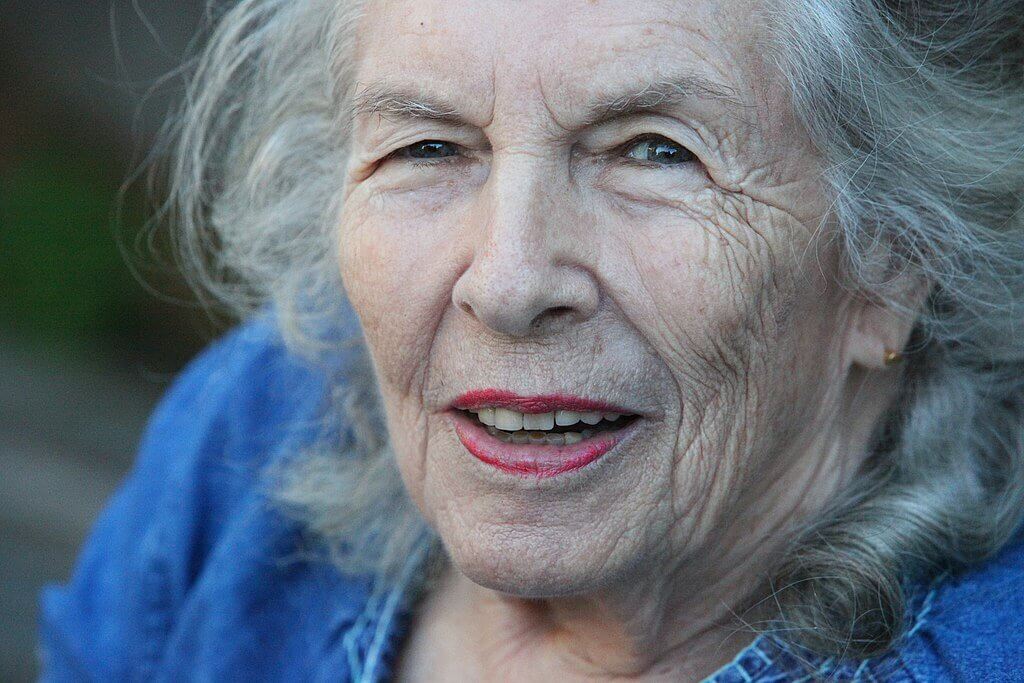
RIP Ann Shulgin, pioneering psychonaut
This weekend we received the sad news that Ann Shulgin had passed away at the age of 91. Famous as co-author (with her late husband Alexander or Sasha) of the two most important books about psychedelic drugs ever published: PiHKAL and TiHKAL, she leaves behind a powerful legacy as a psychedelic ambassador and inspiration to many. In this post we remember and celebrate her life.
The Lafayette ranch: science, therapy and trust
In the 1960s, the couple established their base on a ranch in Lafayette, California. There, Sasha set up a DEA-authorised laboratory, while Ann helped create a safe, structured and respectful space for inner exploration.
In this seemingly simple environment, more than 200 psychoactive compounds were studied. But what was truly revolutionary was not only the number of molecules, but the shared method: progressive dosing, meticulous observation, detailed record-keeping and, above all, deep respect for subjective experience.
The sessions were not recreational. They were conscious, almost ceremonial encounters, where emotions, memories, fears and discoveries were discussed. Ann played an essential role here, helping to integrate the experiences and understand their therapeutic potential.

MDMA: when chemistry and empathy go hand in hand
One of the key moments in the Shulgins’ joint work was the rediscovery of MDMA. Although the molecule had been synthesised by Merck in 1912, it was Sasha who revisited it in 1976 and recognised its uniqueness.
MDMA did not produce visions or sensory overload, but something different: empathy, emotional clarity and honest communication. Ann quickly understood its enormous therapeutic potential. Together, they shared it with psychotherapists such as Leo Zeff, who used it in hundreds of sessions with surprising results.
When MDMA was banned in 1985, both regretted the outcome, but they never stopped defending that, when used responsibly and in the right context, it was a psychological tool of incalculable value. Decades later, modern clinical research is proving them right.
PIHKAL and TIHKAL: science written by four hands
In the 1990s, Alexander and Ann Shulgin published two fundamental works: PIHKAL (Phenethylamines I Have Known And Loved) and TIHKAL (Tryptamines I Have Known And Loved).
These books are not simple chemistry manuals. They are the perfect reflection of their collaboration: half autobiography, half scientific treatise. Sasha provided the syntheses, dosages and structures; Ann shaped the human narrative, the couple’s stories, the ethical dilemmas and the emotional dimension of exploration.
The result is a true scientific novel that has inspired generations of researchers, therapists and explorers of consciousness.
A life shared between flasks and personal growth
Beyond the laboratory, the Shulgins lived a simple and deeply connected life. Gardening, walks, endless conversations and a relationship based on absolute trust were the foundation of all their work.
Those who knew them agree that their greatest achievement was not only scientific, but human: demonstrating that research can be carried out with respect, ethics and a love for shared knowledge.
The Shulgins’ legacy: a door that remains open
Today, as universities and hospitals once again investigate substances such as psilocybin, the DMT, LSD or MDMA, it is clear that the path was paved by this extraordinary couple.
Alexander and Ann Shulgin were not seeking fame or revolution. They sought understanding. And by doing so together, they left an immense map for those who today continue to ask what consciousness is and how we can alleviate human suffering responsibly.