
 Seeds
Seeds
























 Growshop
 Nutrients








 Extractions
 CBD
CBD
 Magic Mushrooms
 Headshop
List of contents
- What are phytohormones and how do they work?
- Auxins, controlling growth and apical dominance
- Cytokinins, the key to branching
- Gibberellins, stretching and the transition to flowering
- Abscisic acid, the stress hormone
- Ethylene, maturation and aging
- Less known but relevant hormones
- Practical applications in cannabis cultivation
- Understanding the plant to grow better
When we talk about growing cannabis, most growers immediately think of fertilizers, LEDs, or genetics. However, there's a much quieter (and more decisive) factor that acts in every phase of cultivation: plant hormones, also known as phytohormones. These invisible molecules are truly responsible for whether a plant grows tall or compact, whether it branches more or less, how it responds to stress, or even how and when it flowers.

We could say, without exaggeration, that hormones are the internal language of cannabis, a network of chemical signals that coordinates every vital process. Understanding them not only brings us closer to better comprehending the plant, but also allows us to make much more precise and efficient growing decisions. And this is where things get really interesting: it's not about adding miracle products, but about learning to interpret how the plant responds to what we do... but what are these hormones really and what role does each one play?
What are phytohormones and how do they work?
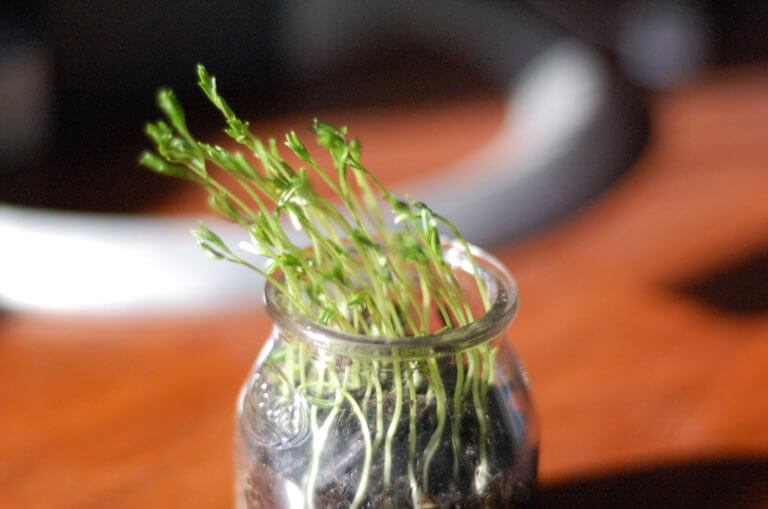
Phytohormones are chemical compounds produced by the plant itself that regulate its growth, development, and response to the environment; they act as messengers, telling the plant what to do, when to do it, and with what intensity.
How to use plant hormones in cannabis cultivation
In this blog post, we take a look at the complex world of plant hormones, talking about the wide range of effects they have, and how they control and regulate almost every aspect of our plants' lives.
The most important thing to understand is that they don't work in isolation; in reality, they act as a complex network where each hormone influences the others. For example, vertical growth doesn't depend solely on one hormone, but on the balance between several.
In cannabis, this interaction is especially visible when we apply cultivation techniques. A pruning, a change in light intensity or photoperiod, or even mild stress can alter this hormonal balance and trigger very specific responses. The grower doesn't directly control the hormones, but can influence them...
Auxins, controlling growth and apical dominance
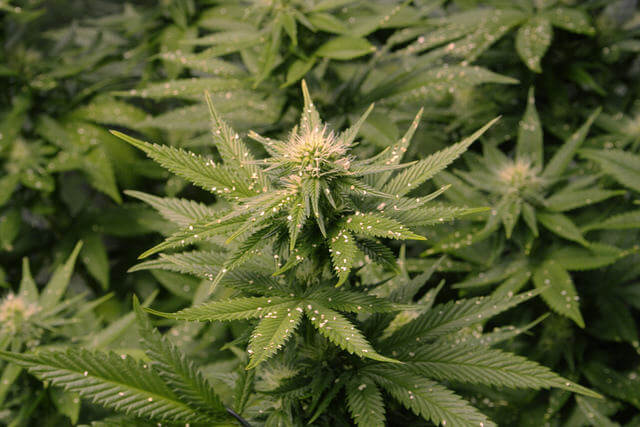
Auxins are probably the most well-known phytohormones and, without a doubt, one of the most important in cannabis cultivation. They are produced mainly in the growing tips and are responsible for cell elongation, that is, growth in height. Their most interesting function is what's called apical dominance, a mechanism by which the plant prioritizes growth of the main tip over lateral branches. This explains why an unpruned plant tends to grow with a vertical and sparsely branched structure.

When we perform techniques like topping or apical pruning, we break this dominance. By removing the main source of auxins, the plant redistributes its growth toward lateral branches, generating a wider and more productive structure.
A practical example: in indoor cultivation, controlling auxins through pruning can significantly increase the number of flowering sites. But here an interesting question arises: if auxins favor vertical growth, what hormone drives lateral development?

Apical pruning in cannabis: a complete guide to multiplying your harvest
Apical pruning is one of the most effective techniques for improving the structure of your cannabis plants and increasing final yields. It involves cutting the terminal shoot to break apical dominance and stimulate the growth of several lateral branches. In this complete guide, we explain when and how to do it step by step, its advantages, drawbacks, differences between indoor and outdoor growing, and the most common mistakes you should avoid.
Cytokinins, the key to branching
Cytokinins act in some way as a counterpoint to auxins. While auxins favor growth in height, cytokinins stimulate cell division and the development of lateral shoots.
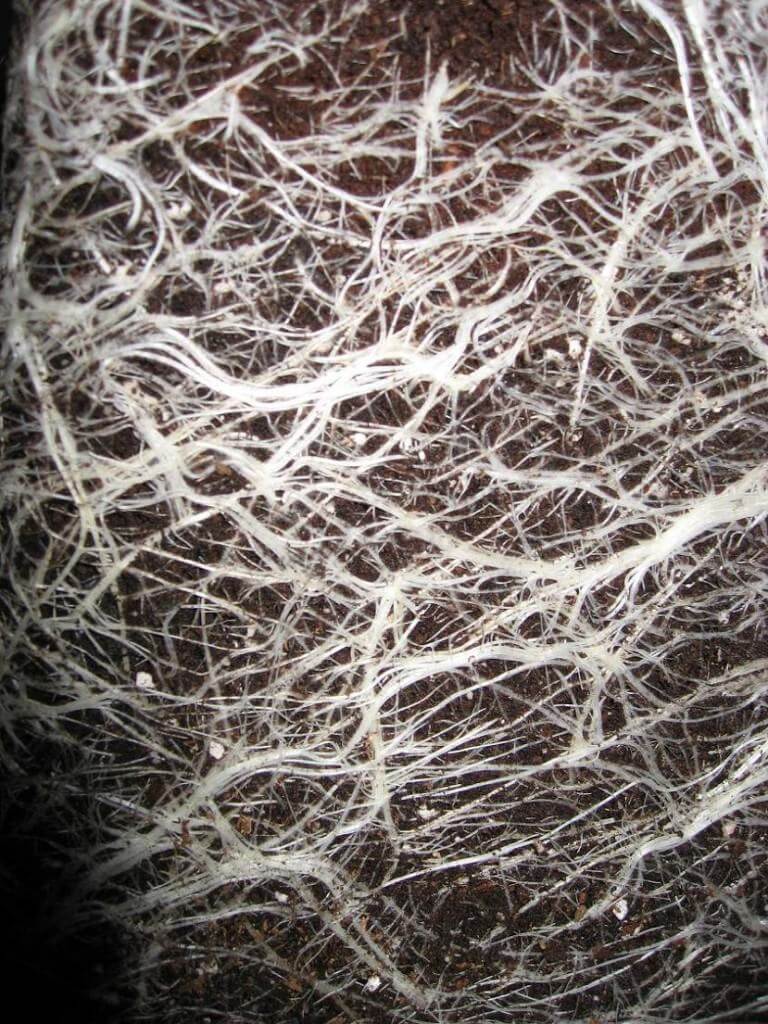
They are synthesized primarily in the roots and travel toward the aerial part of the plant, promoting a denser and more balanced structure. The balance between auxins and cytokinins is what defines the final architecture of the plant.

In practical terms, a healthy root system favors greater cytokinin production. This means that proper irrigation management, oxygen in the substrate, and soil microbiology can directly influence cannabis branching.
An interesting connection appears here: many times increased production is sought through aerial techniques, but the real engine may be underground. And then another key question arises: what hormone is behind the famous stretch at the start of flowering?
Gibberellins, stretching and the transition to flowering
Gibberellins are responsible for stem elongation and play a crucial role in the transition from growth to flowering. In cannabis, their effect is especially visible during the first weeks after changing the photoperiod in the case of photoperiod-dependent varieties. This phenomenon, known as stretching, can cause the plant to double or even triple its size. Although it is a natural process, it can be problematic in reduced indoor growing spaces.
Gibberellins also participate in seed germination and flower development, making them a key hormone at various stages of cultivation.

From a practical point of view, controlling factors such as light intensity or distance from the light can modulate this stretching. But not everything in the plant is growth, it also needs mechanisms to survive… what happens when cannabis experiences stress?
Abscisic acid, the stress hormone
Abscisic acid (ABA) is known as the stress hormone. It is activated in adverse situations such as drought, excess salinity or extreme temperatures.
Its main function is to protect the plant. For example, it induces the closure of stomata to reduce water loss, which is vital in drought conditions. It can also slow down growth to prioritize survival.

Although it is often perceived as something negative, ABA is essential for cannabis adaptation to its environment. In fact, mild and controlled stress can activate beneficial responses in the plant.
This connects with advanced techniques where the aim is to stimulate certain processes through controlled stress. But there is another hormone that also comes into play in extreme situations, and its behavior is even more complex.
Ethylene, maturation and aging
Ethylene is a gaseous hormone that regulates maturation and aging processes. Although its role in cannabis is not as evident as in fruits, it does influence tissue senescence and stress responses. It is also involved in leaf drop and certain physiological changes during the final phase of the cycle. Under stress conditions, its production can increase, affecting the overall development of the plant.
In cultivation, poor ventilation can favor the accumulation of ethylene, which can have unwanted effects. That's why something as simple as renewing the air in the grow has hormonal implications. But beyond these main hormones, cannabis has other less well-known signals that also play an important role. What are they and why should they interest us?
Less known but relevant hormones
In addition to the main protagonists, there are other phytohormones that, although less studied, influence cannabis development. Brassinosteroids participate in cell expansion and stress resistance. Jasmonates are related to defense against pests and mechanical damage, while salicylic acid plays a key role in the plant's immunological response.
We also find strigolactones, which regulate branching and interaction with soil microorganisms, and polyamines, involved in growth and flowering processes.
Although their role is not always visible, these hormones form part of an integrated system that allows the plant to adapt to its environment. And this brings us to the most interesting part for the grower: how can we apply all this knowledge in practice?
Practical applications in cannabis cultivation
Understanding cannabis hormones is not just theory—it has direct applications in cultivation. For example, apical pruning manipulates auxins to favor branching. Good root development stimulates cytokinins, improving plant structure. Controlling light and space helps manage gibberellins and avoid excessive stretching.
Water management can influence abscisic acid, avoiding unnecessary stress, while good ventilation reduces problems related to ethylene.
Even techniques like LST (Low Stress Training) or SCROG work, largely because they modify the plant's hormonal balance without the need for external products.
The key is understanding that each action by the grower has an internal response in the plant. And the better we understand that language, the more precise our decisions will be…
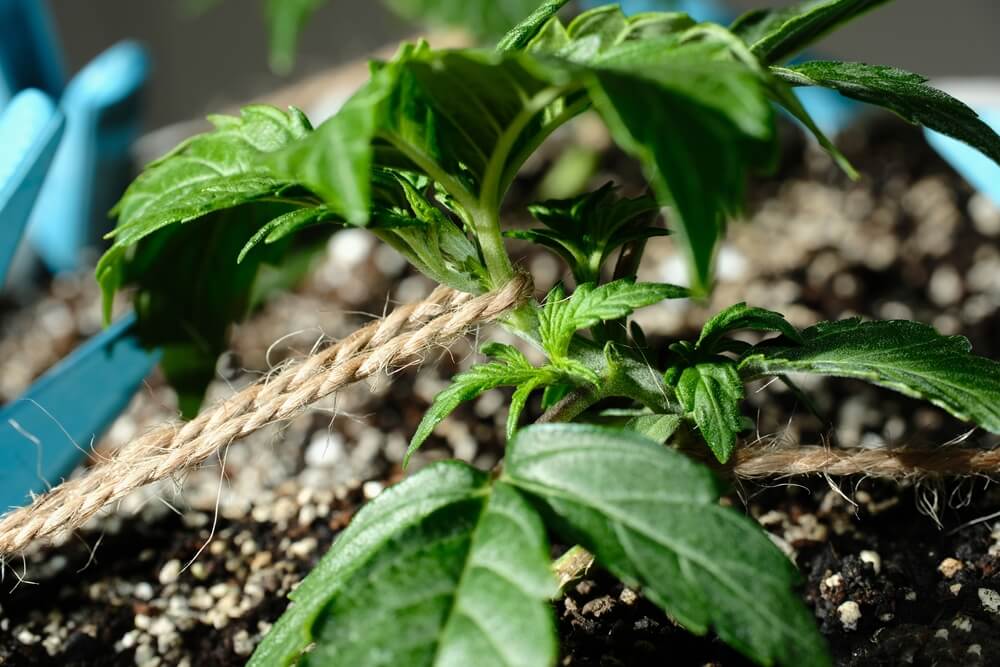
LST - Low Stress Training for cannabis plants
In this helpful and practical article we'll look at some simple, non-destructive ways to manage plant height and at the same time optimise light penetration and maximise the homegrown harvests from your cannabis garden, both indoors and in the great outdoors.
Understanding the plant to grow better
Cannabis hormones are the invisible engine that regulates its entire life cycle. From germination to harvest, every process is coordinated by a delicate balance of chemical signals. Far from being a purely theoretical concept, understanding this system allows the grower to improve their results naturally, without relying exclusively on external products or solutions.
In the end, growing cannabis isn't just about feeding a plant, but learning to interpret how it responds to its environment. And in that constant dialogue between grower and plant, hormones are the language that makes it possible.
The real question isn't whether we should take them into account, but to what extent we're willing to deepen this knowledge to take our cultivation to the next level.