
 Seeds
























 Growshop
 Nutrients








 Extractions
 CBD
 Magic Mushrooms
 Headshop
List of contents
- What are fabric pots and why have they gained popularity
- Air pruning of roots
- What changes compared to a traditional plastic pot
- Root system health, where they really stand out
- Limitations and common mistakes when using fabric pots
- Flood irrigation, a particularly interesting technique in fabric pots
- How to choose the size and type of pot according to your crop
- Situations where they are not the best option
- Maintenance and cleaning of fabric pots
- When it's worth making the switch
In cannabis cultivation, there are decisions that may seem minor but, over time, make very clear differences in the final result. The type of pot is one of them. For years, plastic has been the undisputed standard, but in the last decade, alternatives have been gaining ground that rethink how roots interact with their environment.
Among them, fabric pots have become one of the favorite options both in indoor and outdoor cultivation. Their popularity is not the result of marketing, but of a real change in the way the root system develops and relates to the substrate, air, and water.

However, as with any tool, simply using them is not enough to get better results. Understanding how they work, in which situations they excel, and when they can work against you is what really makes the difference between correct cultivation and optimized cultivation.
In this post, we're going to delve a bit deeper from a practical perspective, based on real cultivation experience, so you can decide with criteria whether fabric pots fit your way of working.
What are fabric pots and why have they gained popularity
Fabric pots are, in essence, containers made with permeable fabrics that allow air and water to pass through their walls. This characteristic, which at first glance may seem secondary, completely changes the behavior of the substrate and, above all, of the root system.
Their popularity has grown progressively as growers have verified that they are not simply an alternative to plastic, but rather a tool that actively modifies the root environment. In cultivation where every detail counts, this has a direct impact on the plant's health and vigor.
Air pruning of roots
The key concept that explains the success of these pots is air pruning of roots. In a conventional pot, roots grow until they encounter a physical barrier, at which point they begin to coil forming spirals. This behavior, although natural in that context, limits the efficiency of the root system.
In contrast, when a root reaches the wall of a fabric pot, it comes into contact with air. That exposure stops its growth in that direction and causes the emission of new lateral roots. The result is not a long root that circles around itself, but rather a much denser, more branched and functional network.
On a practical level, this translates into a plant capable of better exploring the substrate, absorbing nutrients more uniformly, and responding with greater vigor to growing conditions.

What changes compared to a traditional plastic pot
The change is not only structural, it also affects the behavior of water, oxygen and temperature in the substrate. In a plastic pot, exchange with the outside is very limited. Air enters mainly through the surface and drainage is concentrated at the base.
With a fabric pot, exchange is constant across the entire surface. The substrate breathes, loses moisture more uniformly and avoids the formation of saturated zones. This generates a more balanced environment, but also a more dynamic one, which forces the grower to adjust their watering method.
Root system health, where they really stand out
Where the use of fabric pots is most noticeable is in the overall health of the root system. Constant oxygenation promotes both root development and microbial activity, something especially interesting in organic cultivation.

They also stand out for their ability to prevent overwatering problems. Drainage is so efficient that it's harder to create prolonged waterlogging, which considerably reduces the risk of root diseases.
Outdoors, another advantage is thermal regulation. By not accumulating heat like plastic, the substrate maintains more stable ranges, something key during the hottest months.
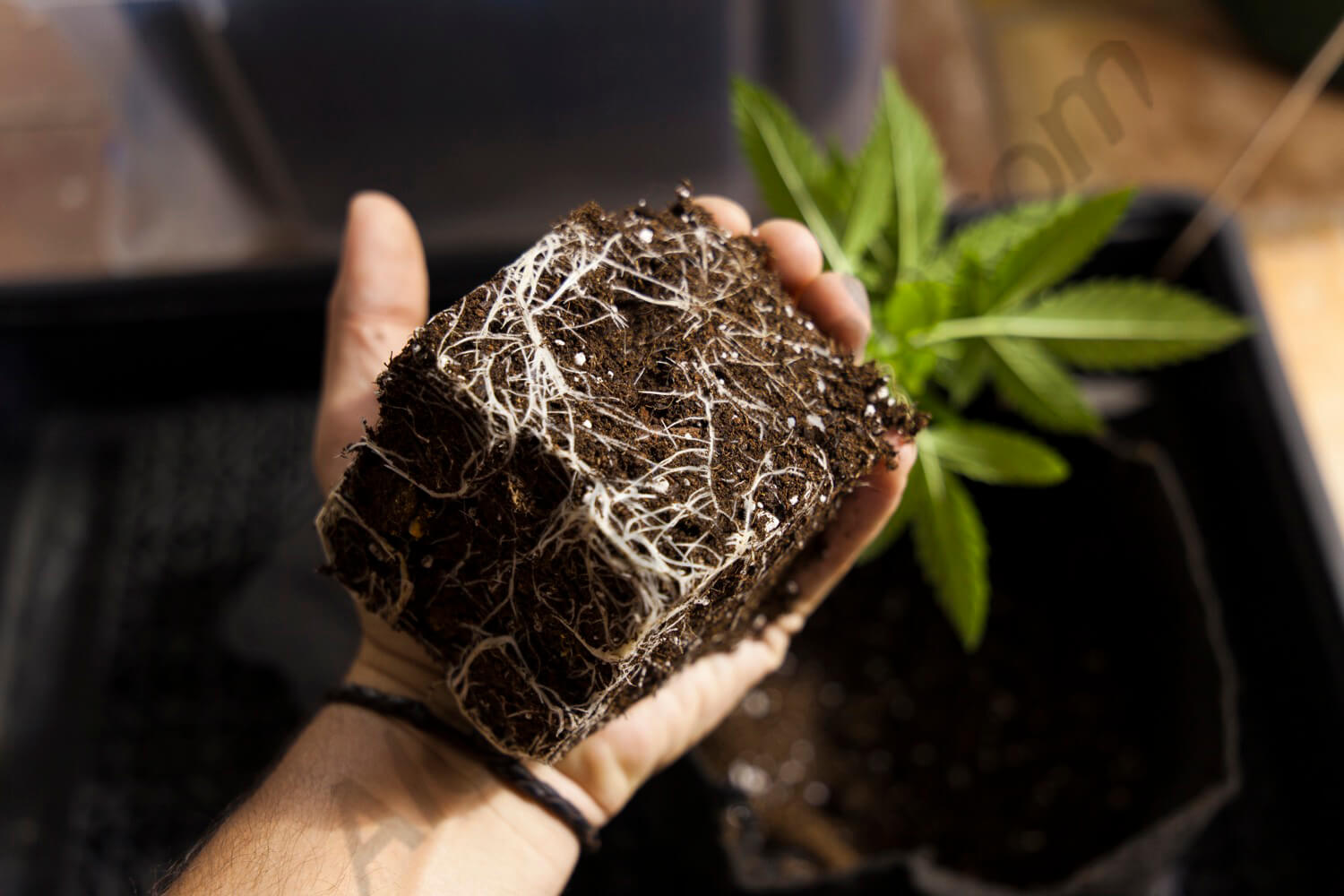
Cannabis roots: A complete guide
A successful harvest depends to a great extent on the condition of your plants' roots. In this article you'll see the most commonly found problems with regard to the root system, and what to do to solve them and get the most out of your plants.
Limitations and common mistakes when using fabric pots
The main mistake when starting with fabric pots is treating them as if they were plastic. Greater aeration also means greater water loss, which requires more frequent watering.
If this aspect isn't adapted, the crop can suffer water stress relatively easily. On the other hand, excessive watering can also cause unnecessary nutrient loss due to constant drainage.
Another point to consider is their durability. Although they can be reused, they require proper maintenance and don't usually have the same lifespan as a rigid pot.
We must keep in mind that due to their lack of rigidity, moving plants is much less practical; if we need to move the pots frequently, we'll need some patience.
Watering is probably the most determining factor when working with fabric pots. The approach of "watering abundantly every now and then" doesn't work as well here; instead, a finer strategy is needed, based on more frequent and controlled applications.
The goal is to maintain a balance between humidity and oxygenation, without saturating the substrate or letting it dry out excessively. This, which at first may seem more demanding, ends up translating into much more precise control of the crop.
How to water marijuana plants in soil
In this post we present a simple and useful way to properly water your marijuana plants. There are many mistakes made with irrigation, but with four simple steps you can rest easy and get an excellent harvest. From lack of watering to excess, today we will tell you everything you need to know to water your plants correctly, thus avoiding many worries.
Flood irrigation, a particularly interesting technique in fabric pots
Among the different forms of irrigation, there is one that fits particularly well with this type of pot: flood irrigation or tray irrigation.
Unlike what happens with plastic pots, where water only enters from the base, in fabric pots absorption also occurs through the lower sides. This allows the substrate to hydrate much more uniformly, avoiding dry or excessively wet areas.

When applied correctly, this system reduces surface evaporation and greatly facilitates irrigation management in crops with several plants, especially indoors. Additionally, it is clean, very convenient and also easily automated.
However, it does require some control. It's not about leaving the pots in water permanently, but rather allowing them to absorb for a limited time and removing the excess (we can also provide just the right amount of water that experience will teach us). It is also advisable to occasionally combine it with watering from above, especially if working with mineral fertilization or with active microbial life in the substrate.
How to choose the size and type of pot according to your crop
Choosing the right size remains key. Indoors, medium volumes allow for good crop control, while outdoors plants appreciate larger containers that allow them to develop their full potential.
Beyond size, the quality of the fabric also matters. A thicker geotextile usually offers greater durability and stability.
Situations where they are not the best option
They are not always the best alternative. In very dry environments or in crops where you cannot water frequently, they can complicate things more than help. They may also not be the ideal option for those seeking low-maintenance systems.
In these cases, a plastic pot can offer simpler management, although with lower potential performance.
Maintenance and cleaning of fabric pots
Fabric pots require somewhat more attention than plastic ones, mainly because their fabric is porous and in direct contact with water, nutrients and the substrate's microbiology. With use, it is normal for them to accumulate salts, organic residues and a certain microbial load, which can end up affecting their breathability if they are not cleaned between crops.
When the crop has been correct and there have been no pest problems, maintenance is quite simple. It is enough to completely empty the substrate, shake the pot well and rinse it with plenty of water. If you use pressurized water, the result is usually even better, as it helps to wash away the most embedded residues in the fabric.
If you want to do a deeper cleaning (most recommended), they can be machine washed without problem. It is a very practical option, especially when you have several pots. It is recommended to use a gentle cycle, with cold or warm water, and avoid harsh detergents. In fact, in many cases it is not even necessary to use soap. If used, it should be very neutral and always ensuring a good final rinse so that no residues remain.
Disinfection is only really necessary when there have been problems during cultivation, such as root fungi or pests. In that case, it is advisable to treat the pots before reusing them. Hydrogen peroxide is a very interesting option because it disinfects without leaving complicated residues. You can also use very diluted bleach, although here it's important not to overdo it and rinse with plenty of water afterwards.
After cleaning, there's a key point that shouldn't be overlooked: drying. The pots must be completely dry before storing them. Ideally, leave them out in the air, in a ventilated place or even in the sun (hanging like clothes), as this also helps to complete the disinfection naturally. Storing them damp is usually the origin of bad odors and mold problems.
Ultimately, they don't require complicated maintenance, but they do need a minimum of care. Keeping them clean and in good condition not only extends their lifespan, but also ensures they continue to provide that optimal root environment that makes them so interesting in cultivation.
When it's worth making the switch
Fabric pots are not a miracle solution, but they are a very powerful tool when understood and used correctly. Their ability to improve root development and optimize the substrate environment makes them a very interesting option for growers looking to take their technique to the next level.
As always in cannabis cultivation, the key lies in adaptation. If you adjust your watering, understand their behavior, and integrate them well into your system, they can make a real difference in the health and performance of your plants, and that's where they stop being just a pot and become a true cultivation tool.