
 Seeds
Seeds
























 Growshop
 Nutrients








 Extractions
 CBD
CBD
 Magic Mushrooms
 Headshop
List of contents
- Manicure trim: not all leaves are equal
- How to Dry and Store the Trim
- Solventless Extractions, the Most Natural Way to Harness the Resin
- Dry Sift Hash
- Ice-o-lator or bubble hash
- Rosin: heat and pressure, nothing else
- Solvent extractions, maximum efficiency
- Alcohol extractions
- BHO and other gas extracts
- Cooking with marijuana, a post-harvest tradition
- Cannabis butter and oil
- Cannabis milk, express preparation
- Creams, balms and tinctures, marijuana is also used externally
- Base oil and homemade marijuana balm
- Cannabis tinctures
- What to do with leaves without resin?
- Juices and infusions
- Compost and mulching for your next grow
- Not a single leaf in the trash
Did you just finish manicuring your harvest and have a mountain of sticky little leaves in front of you that you feel bad about throwing away? You're right to hesitate! Those scraps that many growers send straight to the trash hide a treasure trove of trichomes, terpenes, and cannabinoids waiting for a second life.
In this article, we'll tell you what to do with manicure trim, both with the leaves loaded with resin and those that barely have any. We'll talk about solventless extractions like hashish or rosin, solvent-based extractions, cannabis cooking, creams, and even uses for your garden. Will you join us? Keep reading and don't waste a single leaf!

Manicure trim: not all leaves are equal
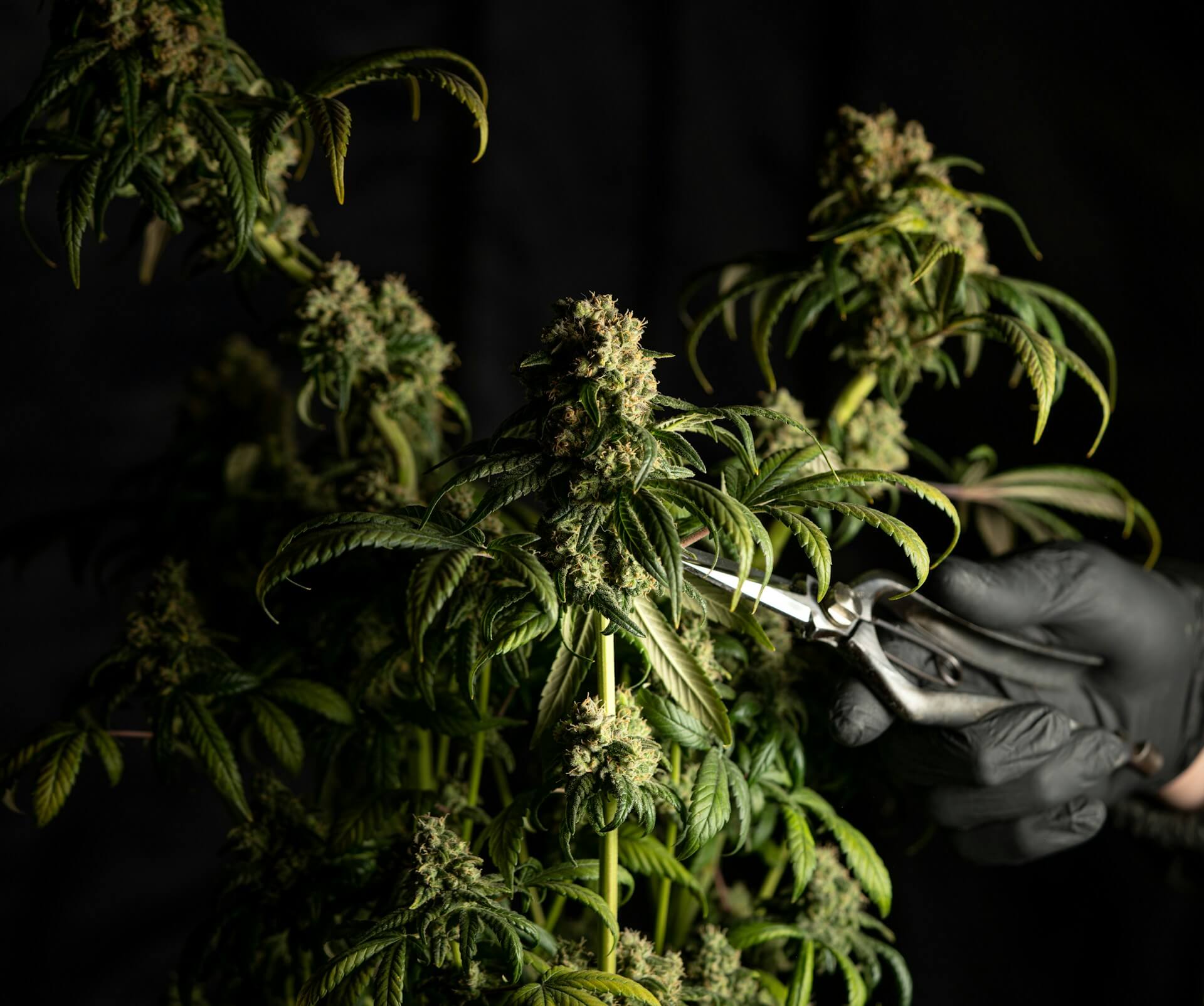
When we talk about manicure trim, we're referring to all the plant material you remove from the plant during and after harvest. Here two very different groups coexist: the sugar leaves (sugar leaves), those small leaves that emerge from the buds and are usually coated with trichomes, and the large or fan leaves (fan leaves), with little or no resin.
The difference is key, because trichomes are the glands where the plant produces THC, CBD, and terpenes. More trichomes means more potency and more aroma in your preparations, so sugar leaves are the perfect candidates for extractions, while fan leaves shine in other gentler uses.

Our advice is to separate both types during manicuring, into two different containers. This small gesture saves you time later and allows you to get the most out of each type of trim, without diluting the quality of the resinous material with leaves that contribute almost nothing.
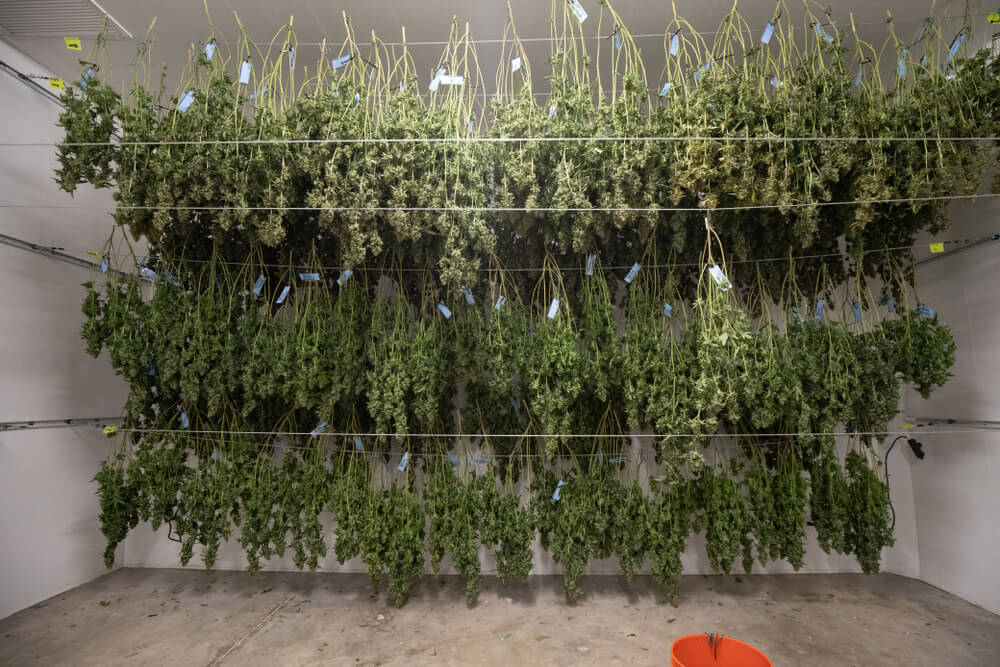
Drying and curing cannabis buds
Today we are going to explain all the necessary steps to correctly carry out the marijuana drying processes and its subsequent curing. If you have been careful when growing, you must be careful during and after harvest, otherwise you risk seeing the quality of your flowers seriously compromised, which would be a shame!
How to Dry and Store the Trim
Before you start making anything, think about what state you need the material in. For most techniques (dry sifting, cooking, creams) the remnants must be well dried, because moisture promotes the appearance of mold, and there's no worse nightmare than seeing your trim covered in botrytis after so much effort!
You can dry them spread out on a drying mesh, in a dark, ventilated and cool place, stirring them from time to time. Darkness and moderate temperatures protect the terpenes and prevent THC from degrading, which translates into more aromatic and potent preparations.

One important exception: if you're going to make ice water hash or fresh material rosin, you can also freeze the freshly cut trim. Store them in airtight bags in the freezer and you'll preserve the terpenes to the maximum. However, once frozen, don't thaw them until the moment of use.
Solventless Extractions, the Most Natural Way to Harness the Resin
Solventless extractions are the favorites of many growers, and for good reason. They only use physical methods (cold, agitation, heat and pressure) to separate the trichomes from the leaf, so the result is a clean concentrate, without chemical residues and made in a much safer way at home.
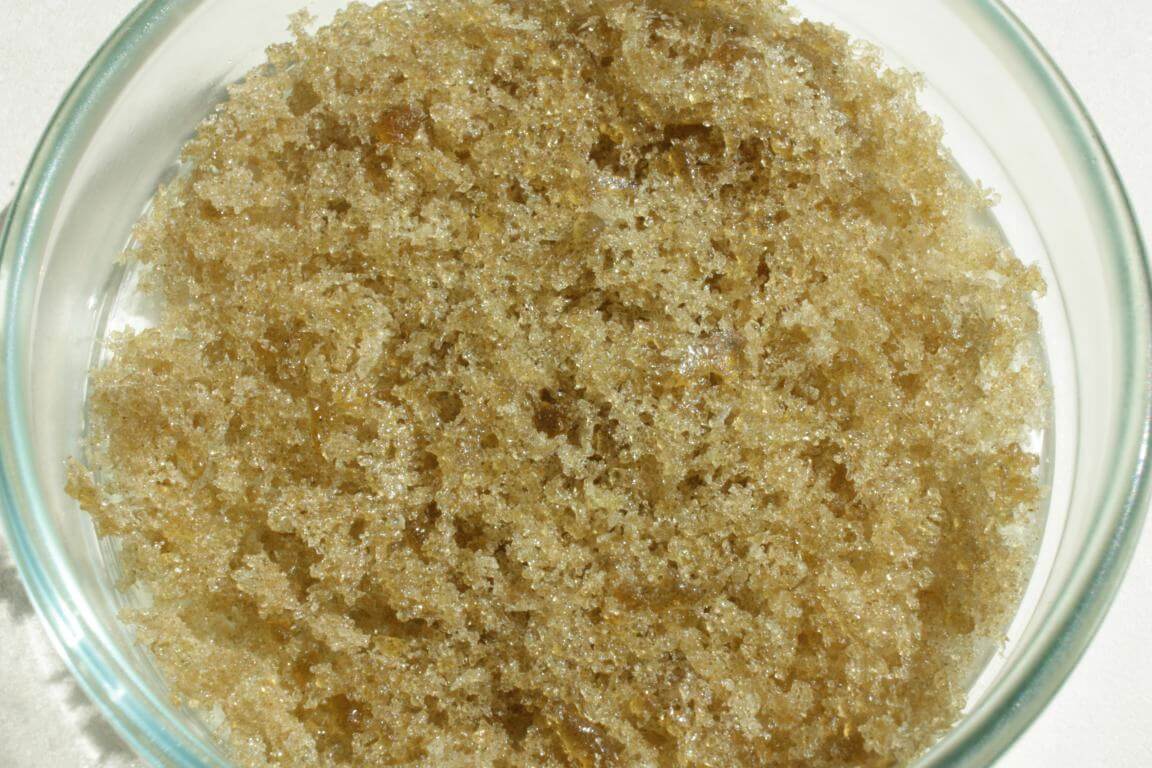
Complete Guide to Solventless/Non-solvent Cannabis Concentrates
While being a traditional product used for centuries, the evolution of solventless (also called non-olvent) cannabis resin concentrates during the past years has been astounding. From the very first charas ever made to the most modern THC-A separation techniques, this type of extracts have skyrocketed in popularity lately. In this article we explain the details of each type of solventless concentrate and take you to a trip through the evolution of this product.
Dry Sift Hash
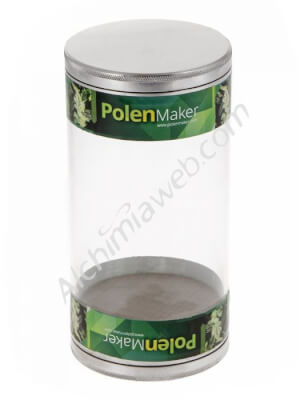
It's the simplest and most traditional technique: it involves rubbing or shaking the dried trim over a fine mesh so that the trichomes fall through and the plant matter stays on top. The resulting pollen can then be pressed to obtain a classic hash. Its great advantage is that you only need well-dried material, a quality sieve and patience.
A very useful trick is to freeze the trimmings before sifting. With the cold, the trichomes become brittle and break off more easily, which means more yield and less plant contamination in your pollen. Drum-type sifting machines also help a lot if you're working with large quantities.


Ice-o-lator or bubble hash
Water hash is one of the most appreciated extractions for its purity. It consists of mixing the trimmings with water and ice, shaking so the trichomes break off and separate, and filtering the mixture through a set of bags with different mesh sizes (measured in microns). Each bag retains a different resin fraction, from the purest to the one most loaded with plant material.
The reward is a hash of a quality that will leave you speechless, especially if you use fresh frozen material. The best batches almost completely melt when heated!
Rosin: heat and pressure, nothing else
Rosin is obtained by applying moderate heat and a lot of pressure to the material, usually with a specific press and mesh filters. The resin comes out melted and, when it cools, remains as a dense oil or amber-looking wax (even transparent). It's a quick, clean method without any solvents.
That said, we'll be honest, pressing the manicure trimmings directly gives quite low yields. What works best is pressing the dry sift hash or bubble hash you've obtained from those trimmings, working at low temperatures to preserve the terpenes. This way you turn simple pollen into a luxury concentrate—double the use!


Solvent extractions, maximum efficiency
Solvent extractions use substances like alcohol, butane, or CO2 to dissolve cannabinoids and terpenes from the plant. Afterward, the solvent evaporates, leaving a very potent concentrate. These are techniques capable of extracting almost all the resin from trim leftovers, hence their popularity, but they're also the ones that require the most precautions.
Alcohol extractions
Food-grade alcohol is the most accessible solvent. In QWET-type techniques (Quick Wash Ethanol Extraction), frozen leftovers are briefly washed with very cold alcohol, so that it drags along the resin but barely any chlorophyll, and then the alcohol is evaporated. The result is a concentrate that can be used as is or as a base for other preparations.
Although it's less dangerous than gas, alcohol is still flammable, and the evaporation phase should never be done near flames, sparks, or uncontrolled heat sources. Abundant ventilation, proper equipment, and plenty of common sense are essential.
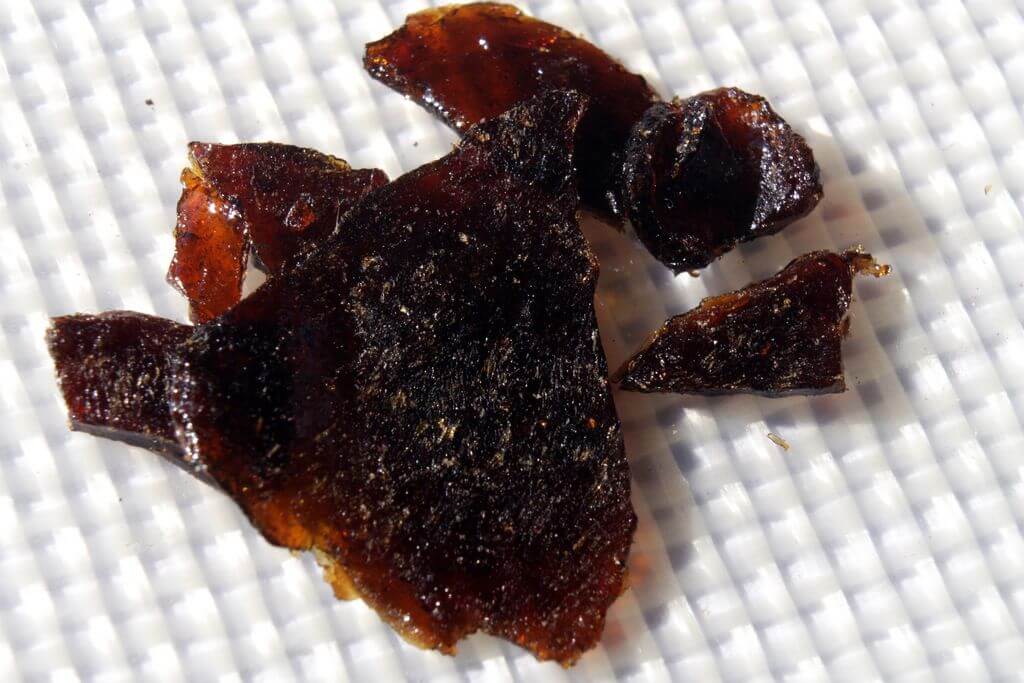
Surely you have heard of cannabis resin extractions made with alcohol as a solvent, and acronyms like QWISO or QWET may sound familiar to you. However, what do these names mean? What are the differences between the different extractions with alcohol? Today we will tell you all about the QWISO technique, in which isopropyl alcohol is used as a solvent.
BHO and other gas extracts
BHO (Butane Hash Oil), and its variants like Shatter, Wax, or Budder, is made with gases like butane or propane. Its reputation as an extremely potent concentrate is well-deserved, but so is its dangerousness—gases accumulate and a single spark can cause an explosion. Unfortunately, home accidents with severe burns are no legend.
This type of extraction is performed in professional environments, with closed-loop systems and trained personnel. If you're curious about concentrates, bubble hash and rosin will give you spectacular results without risking your neck—and that's priceless!
Cooking with marijuana, a post-harvest tradition
Who said you can't enjoy a delicious dessert with a special touch? Trim leftovers are the perfect raw material for cannabis cooking, because their slightly lower potency compared to buds makes them ideal for making infused fats at a ridiculously low price... the trim.

In the plant, THC and CBD are found mostly in their acidic form (THCA and CBDA), which doesn't produce the effects you're looking for. To activate them, you need to apply heat for a period of time, a process called decarboxylation. The most common method is to spread the dried leftovers on a tray and bake them at a moderate temperature for a while.
If you skip this step, your butter will have much less effect than expected. And if you go over the temperature, you'll degrade cannabinoids and terpenes.
Cannabis butter and oil
Cannabinoids are fat-soluble, meaning they dissolve in fat. That's why butter, olive oil, or coconut oil are the perfect vehicles.
With this base you can prepare brownies, cookies, cakes, or dress your favorite dishes.
Cannabis milk, express preparation
Cannabis milk is a method as simple as it is quick to extract cannabinoids and prepare a magic drink with few ingredients; therefore, it's a classic we couldn't help but mention.

How to make a cannabis infusion
Infusions are a simple and effective way to consume cannabis for recreational or therapeutic use. The active ingredients of this plant are not soluble in water, so it is necessary to use a liquid containing fat, such as whole milk, to extract the cannabinoids more easily. In this article, we present a homemade recipe for making a cannabis infusion with whole milk.
Edibles take quite a while to take effect (between 30 minutes and two hours) and their effect lasts much longer than smoked cannabis. That's why it's easy to fall into the trap of repeating out of impatience and ending up with a high as epic as it is unwanted.
Always start with a very small amount, wait patiently, and keep in mind that the potency of each batch varies depending on the material. And, of course, keep your preparations out of reach of children and pets, properly labeled so no one eats them by mistake.
Creams, balms and tinctures, marijuana is also used externally
If the world of homemade cosmetics calls to you, the trim leftovers open up a huge range of possibilities. Topical cannabis products are applied to the skin and don't produce psychoactive effects, making them a very interesting option for anyone who wants to use the plant in a more relaxed way.
Base oil and homemade marijuana balm
The base of almost all topicals is an infused oil, made the same way as the cooking oil we told you about earlier, but using cosmetic oils like extra virgin olive, coconut, almond or jojoba. Once strained, you can melt it in a double boiler with beeswax to obtain a solid balm, perfect for small areas like hands, elbows or lips.
If you want something lighter, you can emulsify that oil with water or hydrosols and an emulsifier to create a cream. And if you add a few drops of essential oils like lavender, rosemary or mint, you'll have a product with an irresistible aroma. Remember to always test on a small area of skin before using, in case any irritation or allergy appears.
Cannabis tinctures
Tinctures are alcoholic extracts made by macerating the leftovers (decarboxylated or not, depending on what you're looking for) in food-grade alcohol for weeks. Afterwards they're filtered and stored in dark glass dropper bottles, which protect the contents from light and extend their shelf life.

Their great advantage is that they keep for a very long time and allow you to adjust the amount drop by drop. That said, if you take them orally, apply the same precautions as with edibles, little by little and with patience.
What to do with leaves without resin?
The large fan leaves have hardly any trichomes, but that doesn't mean they go straight in the trash, because they have very interesting uses, both in your kitchen and in your garden.
Juices and infusions
Fresh leaves can be added to juices and green smoothies, just as you would with spinach or kale. Since they aren't decarboxylated, their THC remains in THCA form, which isn't psychoactive, so they're consumed like any other vegetable. However, only if they come from a clean grow, without pesticides or foliar fertilizers in the final weeks.
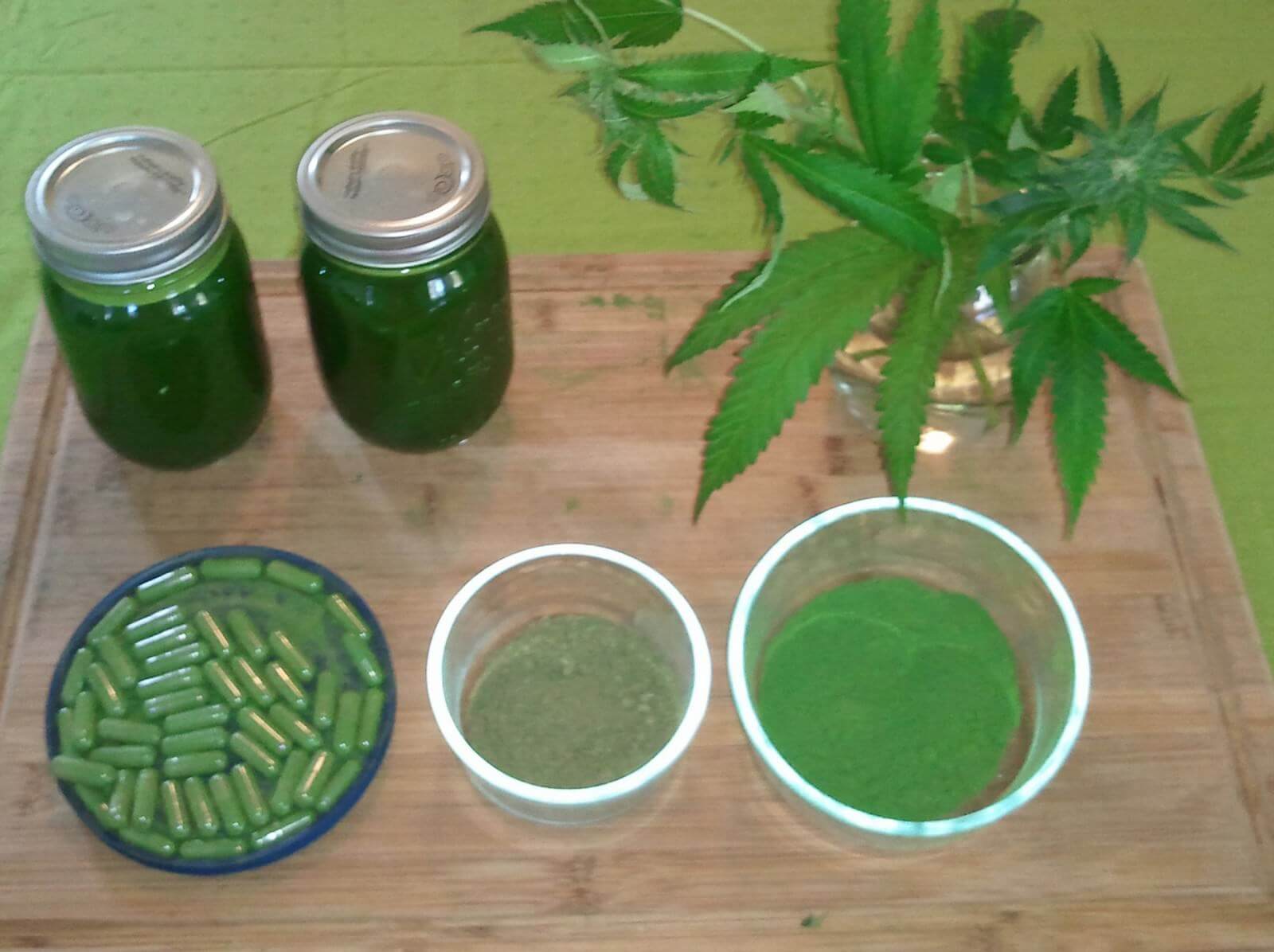
Dr. Courtney's raw cannabis juice
Marihuana can be consumed as raw juice, using both buds and leafs. In this form, cannabinoids are in acid form, and so, they have no psychoactivity, so we can enjoy all their benefitial properties without side effects. In this post we introduce you Doctor William Courtney, user of raw cannabis juice, and his first patient with this treatment, Kristen Peskuski, who later on became his wife. We also tell you how to make this amazing raw marijuana juice, as well as some use and conservation tips.
You can also dry them and prepare a mild, herbal infusion. If you want it to have some effect, remember that cannabinoids need fat to extract properly, so adding a splash of whole milk or plant-based beverage with some fat will make a difference.
Compost and mulching for your next grow
Closing the loop is one of the most beautiful things about home growing. Non-resinous leaves are excellent green matter for your compost, rich in nitrogen and other nutrients that will return to your soil converted into humus. Just make sure they're free from pests and diseases.
Another option is to use them, once dried and shredded, as mulching in pots or beds. This layer helps conserve substrate moisture, reduce weed appearance, and feed the soil's microbial life as it decomposes. Your next plants will thank you!
Not a single leaf in the trash
As you've seen, trim leftovers offer much more than meets the eye. Resinous sugar leaves turn into hash, rosin, or top-quality butters, while fan leaves nourish your body, your skin, or your next grow. It's all about properly separating the material, choosing the right technique, and always working safely.
So next time you finish trimming, look at that mountain of little leaves with different eyes. There's a small treasure waiting for you to discover it!
Happy harvest!