
 Seeds























 Growshop
 Nutrients








 Extractions
 CBD
 Magic Mushrooms
 Headshop
 Alchimia now available in the USA!
List of contents
If you've been in the cultivation world for a while, you've surely heard the story: in the seventies, the United States government gathered the best indicas on the planet in a secret laboratory and from there emerged the perfect plant, G13. A technician with a smuggler's soul took a cutting and, decades later, that genetics has ended up in your hands in seed form.
It's a neat story, one of those you want to believe. The problem is that only part of it is true. The laboratory existed (and still exists), but no one has ever been able to prove that G13 came from there. And, as you'll see, there's a detail that the legend usually leaves out that makes it even less likely.
In this article we separate what's documented, what's told, and what simply cannot be verified. At the end you'll find what we do know about G13 as a plant, which is far more solid than its biography.

Yes, the Mississippi laboratory is real
The basis of the story is true. In 1968, the University of Mississippi signed a contract with the federal government to cultivate cannabis intended for scientific research. Initially it was funded by the National Institute of Mental Health and, later on, by NIDA, the federal institute dedicated to drug abuse. According to Atlas Obscura, the project started by germinating Mexican seeds seized by anti-drug authorities and, over the years, added dozens of varieties from around the world.
For more than half a century it was the only cannabis cultivation authorized by the federal government throughout the country: a farm of about five hectares on the Oxford campus, monitored with cameras and guards. At its head for decades has been chemist Mahmoud ElSohly, who took over the direction in the mid-seventies. Nothing that comes out of there goes to consumption: everything ends up in the hands of researchers with official permits.

There's a second verifiable fact, and it's curious. In 1987, Nevil Schoenmakers, founder of The Seed Bank and one of the key figures in Dutch cultivation in the eighties, described G-13 in his catalog as an exceptional indica clone that had supposedly been "liberated" from the government research program in Mississippi. Notice the nuances: that "supposedly" and the quotes around "liberated." Not even the person who put it into circulation sold it as fact, but rather as a rumor with a lot of hook.
And a third: in 1999, Sensi Seeds recovered the G13 x Hash Plant cross and launched it under the name Mr. Nice, as a tribute to Howard Marks, who had been friends with Ben Dronkers, the founder of Sensi, since the eighties.
What the legend doesn't tell: the government's weed was pretty bad
Here comes the irony. If the government had a super-indica factory in Mississippi, it disguised it very well. For years, scientists who depended on that cannabis complained about its poor quality. Researcher Sue Sisley, who led the first clinical trial with whole-plant cannabis to treat post-traumatic stress using material from Mississippi, went so far as to sue the DEA in 2019: according to her, the poor quality of that weed was sabotaging the research.
Analyses prove her right. A 2017 study found that NIDA's cannabis had barely a quarter of the average THC found in legal markets, plus an excess of CBN, the compound THC degrades into over time. And a genomic analysis published in 2021 in Frontiers in Plant Science concluded that government varieties had very little genetic diversity and bore little resemblance to the medicinal or recreational cannabis people actually consume.
The pressure ended up yielding results: at the end of 2021, the DEA began authorizing new growers for research, including Groff North America, Sisley's own Scottsdale Research Institute, and Biopharmaceutical Research Company. Thus ended more than fifty years of monopoly.
Mind you, none of this proves anything about what was in Mississippi in the seventies. But it does take quite a bit of shine off the image of a federal laboratory dedicated to perfecting the ultimate indica.
Four versions of the same story
The legend has been changing depending on who tells it. These are the most circulated versions:
| Version | What it says | Where it's found |
|---|---|---|
| The secret laboratory | The CIA and FBI allegedly gathered the most potent Afghan indicas in Mississippi to create the ultimate indica | Descriptions from many seed banks |
| The numbered clones | The Afghan plants had labels from G-1 to G-23, and G-13 was the most stable of all | Strain reviews |
| The rebel technician | A center worker with a rebellious reputation passed a sample to Nevil Schoenmakers, who distributed it through his network of growers | Descriptions from banks like ApeOrigin |
| The friend of a friend | A guy named Sandy Weinstein had a friend at the center, and G13 allegedly appeared in a batch of Afghan indicas with codes starting with G | Media outlets citing Seedsman |
The details change, but the skeleton is always the same: a real place, an official secret, and someone who took a plant. The G, according to popular tradition, comes from government.
And, like any good legend, it grows each time it's told. The University of Southern California's folklore archive contains a testimony from 2008 according to which G13 was a hybrid stolen from the CIA in the seventies that reached 27% THC in analyses. The CIA, which didn't even appear in the oldest versions, has already crept into the plot.
The definitive push came from cinema. In American Beauty (1999), the young neighbor who deals sells G13 to Kevin Spacey's character for 2,000 dollars an ounce, and assures him it's a variety designed by the government. Since then, the story has become part of popular culture, to the point that American brewery SweetWater launched an IPA with the name G13.

There's no way to prove that G13 came out of the laboratory
This is where the story falls apart. The federal program in Mississippi is a historical fact, but no one has ever provided a document proving that a cultivar called G13 existed there. Specialized sources and strain databases agree: there's no reliable evidence that any federal agency created it.
So, what do we really know about its origin?
- Breeders describe it as an indica with probable Afghan heritage, but its exact pedigree remains a mystery.
- The two oldest clues are The Seed Bank's 1987 catalog, which already presents it as a rumor, and word-of-mouth among growers.
- None of the accounts (the technician, the friend, the numbered clones) comes accompanied by a single document to support it.
Why does the story work so well? Because it brings together a place that exists, an official secret, and a plant that "could" have come from there. A legend like this doesn't need bad faith to grow: it's enough that it's repeated over and over again.
An Afghan indica with many descendants
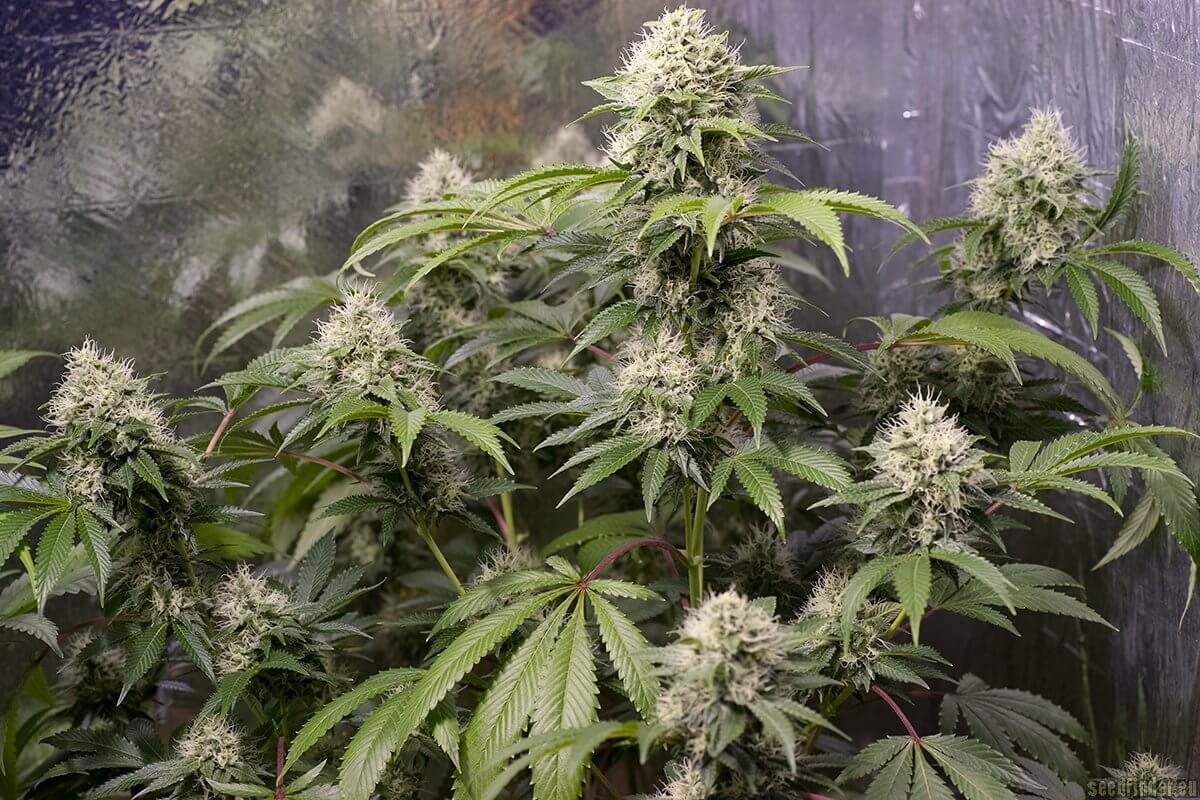
Leaving the myth aside, descriptions of G13 are quite consistent: compact plant structure, broad leaves and very dense flowers, with an earthy, woody and sweet Afghan-type aroma, often with a pine background. Among its dominant terpenes, myrcene, caryophyllene and pinene are usually cited. Analyses from legal markets place it approximately between 18 and 25% THC, with very little CBD.
A practical tip: such compact buds appreciate good ventilation indoors, as they are more prone to mold.
Its heritage is much better documented than its origin. Some of its best-known descendants:
- Mr. Nice G13 x Hash Plant (Sensi Seeds, 1999): pure indica with a flowering period of about 60 to 65 days. The Hash Plant it contributes is itself a cross of Hash Plant with Northern Lights #1, so it carries Afghan genetics throughout. It placed second in the hydroponic category at the 2004 Highlife Cup.
- N13 Kush (Sensi Seeds): cross of G13 x Hash Plant with Nicole Kush, a way to bring the G13 line into the Kush family.
- G13 Skunk (Mr. Nice Seeds): a rescue cross designed for indoor cultivation.
- G13 Haze: G13 combined with Neville's Super Haze, a blend of heavy indica with true sativa.
In other words: G13 is real as a genetic line, even though its biography remains a mystery.

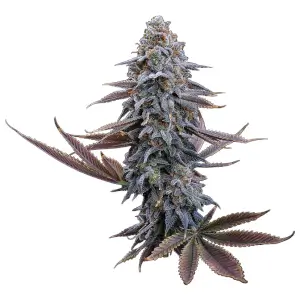

G13 is real but its story not so much
G13 is an Afghan indica with well-proven lineage, and the laboratory story is a rumor that was already circulating in 1987 without any documentation behind it. The most ironic thing is that the only federal cultivation facility in the United States ended up becoming famous for precisely the opposite: for producing weak and poorly varied weed.
So the next time someone tells you that G13 "came from a government laboratory," you now know what's true (the Mississippi program) and what's not (that G13 came from there).

If you're interested in this genetics, the most direct way to access it is through its crosses, such as Mr. Nice G13 x Hash Plant.
Sources
- University of Mississippi: The Marijuana Project
- Atlas Obscura: University of Mississippi Marijuana Research Project
- Drug Discovery & Development: the nation's only federally authorized grower
- NBC News: Sue Sisley's battle with the DEA
- CBS News: DEA announces it will expand authorized growers (2019)
- Leafly: end of Mississippi federal monopoly (2021)
- Vergara et al. (2021), Frontiers in Plant Science: genomic diversity of government cannabis
- Schwabe et al. (2021), Frontiers in Plant Science: genetic identity of NIDA cannabis
- SeedFinder: G-13, 1987 The Seed Bank catalog
- SeedFinder: G13 Thirteen Project (ApeOrigin)
- SeedFinder: Mr. Nice G13 x Hash Plant
- SeedFinder: N13 Kush genealogy
- JointCommerce: G13 Strain Origin
- Weedmaps: G-13
- Leafly: G13
- Cannigma: G13 and American Beauty
- MedicalJane: G-13, an Indica Strain of Legends
- Green Blazer: story attributed to Seedsman
- USC Digital Folklore: The Legend of G13
- Sensi Seeds: Mr. Nice G13 x Hash Plant
- Sensi Seeds: Friends of Sensi Seeds (Howard Marks)
- Cannabis NI: Mr. Nice and Sensi Seeds