
 Seeds



















 Growshop
 Nutrients








 Extractions
 CBD
 Magic Mushrooms
 Headshop
List of contents
- Carlos Castaneda and Don Juan
- What exactly is a hallucinogenic ally?
- The characteristics of an ally according to don Juan
- The devil's weed
- The Little Smoke
- Mescalito
- From power plants to "inorganic beings"
- Reality or fiction? The great Castaneda controversy
- Responsibility, health and legality
- A legacy that continues to spark curiosity
Have you ever heard of a hallucinogenic ally and imagined an invisible companion guiding you through other realities? You're not far off. This concept, popularized by anthropologist and writer Carlos Castaneda, has fascinated several generations of readers, psychonauts, and those curious about psychedelic culture.
Today we invite you to join us on a journey (a literary one, that is) through the universe of don Juan Matus, his power plants, and those mysterious forces that the shaman learned to master. We'll tell you what exactly an ally is, which plants "contained" it, why Castaneda's work continues to raise hackles among anthropologists, and above all, why some of these plants are genuinely dangerous.

Carlos Castaneda and Don Juan
It all begins in 1968, when Castaneda published The Teachings of Don Juan: A Yaqui Way of Knowledge. In the book, the then anthropology student at the University of California (UCLA) recounts how, in the early sixties, he met an elderly indigenous man at a bus station on the Arizona-Mexico border who introduced himself as a "man of knowledge".
From there, Castaneda narrates his supposed apprenticeship with don Juan, a path filled with experiences involving psychoactive plants, philosophical conversations, and episodes as epic as they are bewildering. The success was overwhelming: the book became a worldwide bestseller and bedside reading for the counterculture of the sixties and seventies.

They were followed by such well-known titles as A Separate Reality, Journey to Ixtlan or Tales of Power, which built an entire system of thought. And at the heart of the first teachings appears a key figure: the ally.
What exactly is a hallucinogenic ally?
In don Juan's language, an ally is an impersonal force or incorporeal entity that a man of knowledge can come to control in order to obtain power, wisdom and the ability to perceive alternative realities. It has no fixed human form or personality in the sense that we understand: it is rather an energy that acts as a guardian or teacher of the "other world".
Here comes the nuance that many readers overlook: according to don Juan, the plant is not the ally. The plant is only the vehicle, the receptacle that "contains" or gives access to that force. That's why we speak of a hallucinogenic ally: the psychoactive substance would be the door, but what lies on the other side is something different and much more difficult to tame.
The world, as you see it, is not as you think it is. It is, rather, a floating world that shifts and changes. Perhaps one could learn to understand this world on one's own, but that would be useless, because under duress the body deteriorates. With smoke, on the other hand, one never experiences fatigue. Smoke provides the speed necessary to capture the floating movement of the world and, at the same time, keeps the body and its strength intact. The Teachings of Don Juan
And what did the apprentice gain from all this? In theory, the ally allowed him to go beyond the limits of himself, see the world from a radically new perspective and acquire a personal power that, poorly managed, could become his worst nightmare. A deal with fine print, wow!
The characteristics of an ally according to don Juan
Throughout the first book, don Juan gradually breaks down the traits that define an ally. To make it easier for you to follow along, we summarize them in four fundamental ideas:
- It is impersonal and formless: it is not a spirit with a face nor a god with a proper name, but rather a force that each person perceives in their own way.
- It is accessed through a plant: the plant is the vehicle, not the ally itself.
- It must be tamed: the apprentice must subdue it through discipline, rituals, and years of practice.
- It has a "temperament": each ally possesses its own character that influences whoever uses it.
This last point is especially interesting, because it marks the great difference between the two allies that are central to the teachings. And as we shall see, not all allies are equal... nor equally advisable.
The devil's weed
The first major ally in the work is the devil's weed, identified with plants of the genus Datura (popularly known as toloache or jimsonweed). Don Juan describes it as a feminine, possessive, violent, and unpredictable force, capable of granting great power, but also of enslaving those who use it.

Complex preparations, ointments, and rituals appear in the book that the apprentice had to follow to the letter. Curiously, don Juan admits that it is not his favorite ally: it was his benefactor's preferred one, but he considered it too aggressive and capricious.
And here we have to get serious, because it's fundamental: Datura is a highly toxic plant. It contains tropane alkaloids such as scopolamine, atropine, and hyoscyamine, which cause intense delirium, tachycardia, hyperthermia, total loss of contact with reality, and amnesia. Every year, serious poisonings and even deaths are recorded. We're not talking about a "bad trip," but rather a full-blown medical emergency. What in the novel is an initiatory test, in real life can be a direct ticket to the hospital.
The Little Smoke
The second ally is the little smoke, don Juan's great favorite. Unlike the devil's weed, he describes it as a masculine, more neutral and balanced force, which doesn't demand possessive devotion and allows the practitioner to "leave the body" and travel freely.
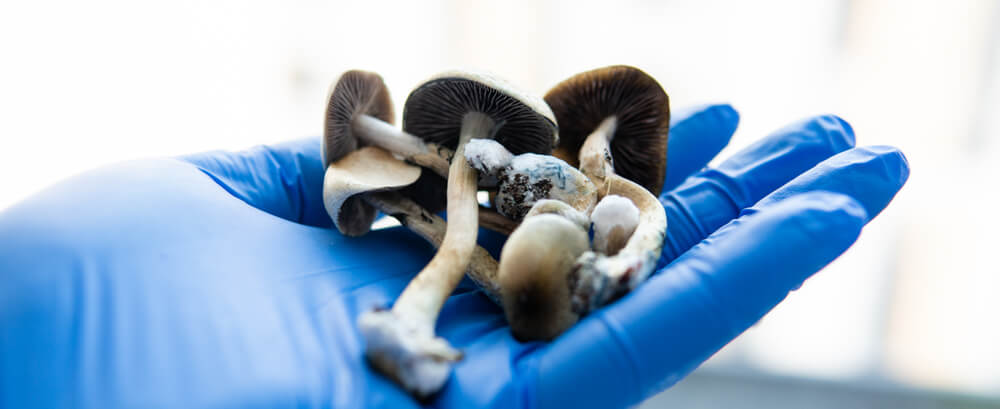
According to the account, the little smoke was obtained by smoking in a pipe a mixture elaborated patiently over a year, whose star ingredient was mushrooms of the genus Psilocybe, rich in psilocybin. The preparation, care of the pipe, and ritual were as important as the experience itself.


Watch out for this point, because it's one of the most debated by specialists. Mushroom experts like R. Gordon Wasson showed their skepticism, since smoking psilocybin mushrooms is not a documented practice in Mexican indigenous traditions, which consume them orally. A first indication that perhaps not everything Castaneda tells should be read as a field report.
Mescalito
If you've read Castaneda, you surely recognize Mescalito, the entity linked to peyote (Lophophora williamsii). Many readers lump it in with the allies, but don Juan insists it's something very different.

Mescalito is not an ally, but a teacher and protector. He cannot be domesticated or used to obtain power: it is he who decides whether to accept the apprentice, whom he teaches the "right way to live." He is, so to speak, the demanding teacher who tests you, as opposed to the ally, which would be a tool that you have to learn to handle.
This distinction is key to understanding the philosophy of the early works: knowledge is not achieved solely through power, but also through personal ethics. And, by the way, it's worth remembering that peyote is a cactus threatened in its natural habitat and holds profound sacred value for peoples like the wixárika (Huichol), which makes it even more important to treat it with respect.

Mescaline: What is it and what are its effects?
Mescaline, a psychoactive alkaloid found in cacti such as peyote and San Pedro, has been used for centuries in spiritual rituals for its ability to alter perception and foster introspection. Today, in addition to its traditional use, it is also attracting scientific interest for its potential therapeutic applications in disorders such as depression and anxiety. This fascinating compound, with its unique visual and emotional effects, remains a bridge between ancient wisdom and modern medicine.
From power plants to "inorganic beings"
One of the most surprising turns in the saga comes in the later books. In Journey to Ixtlan (1972), Castaneda explains that the plants were only a resource to break his mental rigidity, because he was a particularly stubborn apprentice. The true path of knowledge, he states, does not depend on any substance.
Over time, the concept of the ally transforms and approaches what in works like The Art of Dreaming he calls "inorganic beings": conscious entities that inhabit other planes and with which the practitioner can interact through lucid dreaming or "dreaming." The psychedelic focus of the early days is thus relegated to the background.
Every warrior who embarks on the path of knowledge believes, sooner or later, that he is learning sorcery; but, in reality, he is only letting himself be convinced of the power contained within his own being and that he can access it. The Power of Silence
For many readers, this change is a logical evolution of don Juan's system. For others, it's proof that Castaneda was reinventing his mythology book by book. Either way, it demonstrates that the ally was never a simple "drug", but a much broader idea about perception.
Reality or fiction? The great Castaneda controversy
Here comes the million-dollar question: did don Juan really exist? From the seventies onwards, researchers like Richard de Mille analyzed the work with a magnifying glass and pointed out inconsistencies in dates, places and descriptions of flora and fauna of the Sonoran desert, as well as its scarce coincidence with the real traditions of the Yaqui people.
Today, a good part of the academic community considers that the books are, to a large extent, works of fiction or novelized philosophy, rather than ethnography. Even so, no one disputes their enormous cultural influence: Castaneda opened the doors of shamanism to millions of Western readers and contributed to popularizing interest in entheogens and altered states of consciousness.
Our recommendation is to enjoy his books for what they probably are: fascinating, symbolic tales full of suggestive reflections, but not shamanism manuals or practical guides on the use of plants. Read them yes, imitate them no!
Responsibility, health and legality
As always at Alchimia, we want to focus on responsible information. The plants that appear in Castaneda's work have very powerful effects and, in the case of Datura, potentially deadly. There is no reliable "safe dose", as the concentration of alkaloids varies greatly from one plant to another and even between parts of the same plant. For this reason, we strongly advise against any experimentation with it.

Regarding psilocybin mushrooms and peyote, their legal status is highly variable: in many countries they are prohibited or heavily regulated, while in others there are exceptions for traditional uses or clinical research. The same applies to cannabis, whose regulations change constantly depending on the country and even the region.
That's why it is each reader's responsibility to learn about the current legislation in their place of residence, as laws change frequently. And if you ever suspect poisoning, don't hesitate: immediately contact emergency services or your country's toxicological information service.
A legacy that continues to spark curiosity
More than five decades after its publication, the concept of the hallucinogenic ally continues to fuel debates, discussions, and the occasional late-night conversation among friends. Real or invented, don Juan's universe invites us to question how we perceive the world, and that alone has great value.
Perhaps Castaneda's great lesson isn't in the plants, but in the idea that knowledge requires discipline, respect, and a good dose of humility. A philosophy that, incidentally, fits wonderfully with the spirit of every good grower: patience, care, and respect for nature.
We hope this journey through the world of allies has been as fascinating for you as it has been for us. Remember: the best journeys begin with a good book and plenty of information. Happy reading and happy harvest!