
 Seeds
Seeds
























 Growshop
 Nutrients








 Extractions
 CBD
CBD
 Magic Mushrooms
 Headshop
List of contents
- From traditional cannabis to the global genetic map
- The digital market and selection by impact
- THC, terpenes and the simplification of quality
- Modern inbreeding and loss of genetic extremes
- Diversity, hash and genetic rescue
- The cannabis market divided between industry and exploration
- Every cannabis plant is unique
For decades, cannabis was synonymous with diversity, not only in potency or production, but in something much harder to define: character. There were varieties that seemed to belong to different worlds, some smelled like varnish or solvent, others like incense, musk, even fruit... impossible to fit into any other known botanical category.
Within the same harvest, the experience could change dramatically from one plant to another, yes; great differences between sisters.

However, in recent years, one idea has been repeated insistently among growers, breeders and experienced users: much of modern cannabis seems to move within an increasingly narrow range of aromas, effects and sensations, giving rise to flowers impeccable in appearance, resinous, and potent. But also in many cases, surprisingly familiar to each other, as if different genetics were increasingly speaking a common language.
The question is not whether this is good or bad. The question is another, more uncomfortable one: how did we get here?
In this article, an old-school grower shares his perspective on the current state of the international cannabis landscape.
From traditional cannabis to the global genetic map
To understand today's homogenization, we must look back before the modern era of global breeding. During much of the 20th century, cannabis evolved in relatively separate "genetic islands". Equatorial, Mexican or Thai sativas had a completely different expression than indicas from the Hindu Kush or Afghanistan. Not only because of genetics, but because of geographic isolation, climate and local selection.
The globalization of cannabis in the 80s and 90s broke that isolation. Seeds traveled from America to Europe, from Asia to California, from Africa to emerging seed banks. From that mixture comes the first great wave of modern hybrids. Skunk, Haze and Kush become the three structural pillars of contemporary cannabis.
Skunk provides stability and production, Haze varieties bring complexity and cerebral effect, Kush introduces density, resin and potency. For years, breeding consisted of balancing these three poles, but that base diversity was still broad.
The digital market and selection by impact
Modern cannabis doesn't just evolve in breeders' rooms, it also evolves on social media. Instagram, forums, short videos and visual marketing have changed the way plants are selected. The flower no longer competes solely for its properties, but for its ability to generate immediate impact in an image. This favors specific traits such as density, intense colors and abundant resin.

The consequence is an indirect evolutionary pressure. There is no "central plan," but there is a convergence of individual decisions guided by what works commercially in digital environments.
Over time, that convergence produces repetition, and repetition in genetics not only reduces exploration space...
THC, terpenes and the simplification of quality
Another key factor in this homogenization is the reduction of quality to simple metrics, THC has become the dominant language of modern cannabis, in which a number replaces experience, a percentage replaces complexity.
Why there's probably too much THC in cannabis
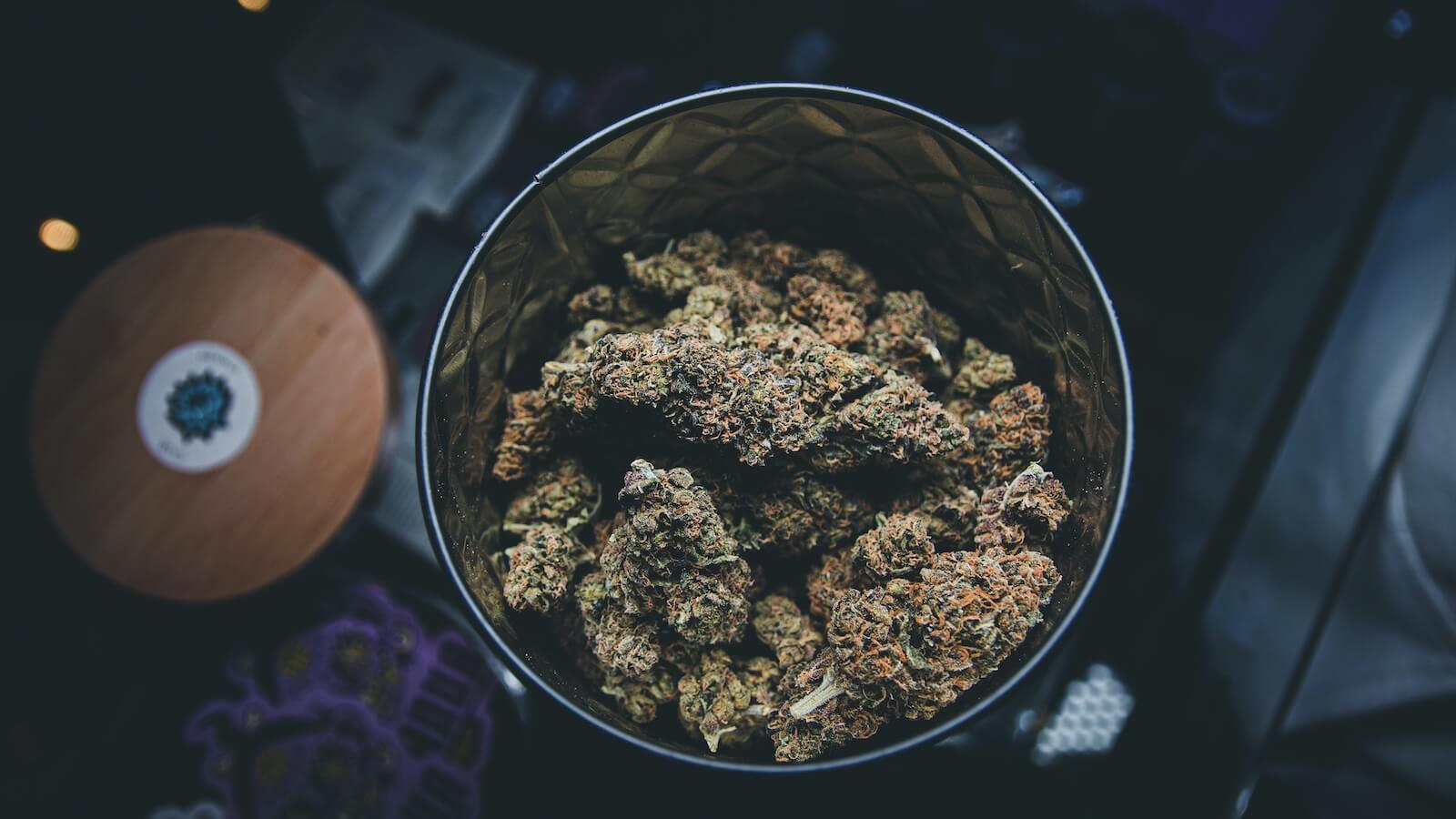
According to official figures, over the last few decades, the THC content of cannabis varieties has skyrocketed. Today we want to delve into this topic and find out why this has happened and if we are really on the right track when it comes to judging the quality of a flower.
This has a direct effect on genetic selection, when a variable becomes the main indicator of value, breeding tends to optimize toward that variable.
But cannabis is not a one-dimensional system. The experience depends on the interaction between cannabinoids, terpenes... and genetic structure. The obsession with THC has generated more potent flowers, but not necessarily more differentiated in experience, and this contributes to a growing sense of uniformity.
Modern inbreeding and loss of genetic extremes
One of the less visible effects of the current market is the progressive reduction of genetic extremes. Modern cannabis breeding works increasingly on a relatively narrow genetic base. This is not necessarily negative in terms of stability or production, but it does have consequences on diversity—are we talking about breeding or seedmakers?
Many lines with radical profiles, such as extreme sativas with spicy flavors, metallic and electric effects or without ceiling have been displaced by commercial and predictable hybrids.

Additionally, practices such as intensive use of elite clones, constant backcrossing and repeated selection over the same families contribute to a phenomenon of genetic convergence.
It is not a total loss of varieties, but a loss of breadth.
Cannabis remains diverse, but within a narrower range of dominant expression.
Diversity, hash and genetic rescue
However, this process is neither irreversible nor unidirectional. In recent years, a clear reaction has been emerging within the most advanced cannabis scene. Independent breeders, boutique seed banks, experimental growers, and hashmakers are once again valuing diversity over repetition.

The rise of hash and new extraction techniques has been highly relevant to this shift. Quality extractions don't depend on the aesthetics of the buds, but on the complete chemical profile of the plant (glandular quality, terpenes, and yield). This has forced a re-evaluation of genetics with real aromatic complexity and quality resin, even if they aren't visually spectacular.
At the same time, interest in landrace cannabis varieties and old-school lines is growing. Not from a nostalgic perspective, but from a search for profiles that haven't been conditioned by decades of intensive commercial selection—even seed banks with decades of experience are once again offering classic varieties... This movement doesn't dominate the market, but it is influencing its direction.
The cannabis market divided between industry and exploration
Today's cannabis is not evolving as a single block, but as two parallel dynamics.
On one hand, there exists a highly optimized industrial market, whose objective is consistency, scalability, visual appeal, and commercial stability. This model inevitably tends toward homogenization because it rewards the repetition of what works. On the other hand, there exists a smaller but increasingly influential scene, focused on genetic exploration, diversity of effects, and the recovery of less conventional terpene profiles. Here, value lies not in repetition (seedmaker), but in difference (breeding).

Salaries in the cannabis industry
Despite the unemployment crisis caused by the Covid pandemic, job opportunities in the cannabis industry have been steadily increasing. With many sectors still struggling to make ends meet economically, the weed industry continues to soar like a rocket, and that is reflected in the salaries earned by its professionals. Do you know how much a cannabis dispensary employee earns per hour? Or what is the annual salary of a director of operations of a commercial greenhouse? And the wages for a trimmer? We will try to answer these questions by looking at the US, the world's largest cannabis market, so everything that happens there serves as a mirror for what one day, hopefully not too far away, may happen here.
Both models not only coexist, but feed off each other. The industry sets volume trends, while the experimental scene introduces variation that can eventually be absorbed. The tension between the two is the true driving force of contemporary cannabis.
Every cannabis plant is unique
Cannabis has never been a static plant. Its history is one of constant adaptation to new cultures, climates, and markets. But within that evolution exists a silent risk: that optimization reduces diversity. And in the case of cannabis, diversity is not a luxury—it is its biological and cultural identity.
What has made this plant unique has not been its potency or its yield, but its capacity to generate radically different experiences under the same name. Perhaps the challenge of the future is not to produce more homogeneous or more potent cannabis, but to recover something harder to measure: the possibility that, upon opening a jar of buds, the aroma feels unfamiliar, and that this lack of familiarity becomes, once again, part of the value.