
 Seeds
Seeds
























 Growshop
 Nutrients








 Extractions
 CBD
CBD
 Magic Mushrooms
 Headshop
List of contents
- What is static hash?
- Origins of static hash: something old, something new
- Bubbleman: from carding to parchment paper
- Why has it exploded now, then?
- Why is it done? The advantages of Static Sift
- Extreme purity
- Flavor and terpenes intact
- An extract without residues
- The science behind it: triboelectric effect
- Conditions: this is where you win or lose the game
- What you need: screens and dry sift extraction equipment
- How to make static hash step by step
- The tray trick (the simplest method)
- Electrostatic passes
- The DVD method (carding + parchment paper)
- The nitrile glove
- Conclusion
- Sources consulted
If you've been keeping a close eye on hash competitions or the accounts of the big European hash makers lately, there are two words that keep coming up over and over: static hash. A blonde, almost luminous powder that melts clean and that many tasters describe as the most faithful representation of the plant that can be achieved without water or solvents.
But what exactly is static hash? Is it a new extraction method or a twist on something we already knew? And above all, can you make it at home without spending a fortune on machinery? Let's take a look.

What is static hash?
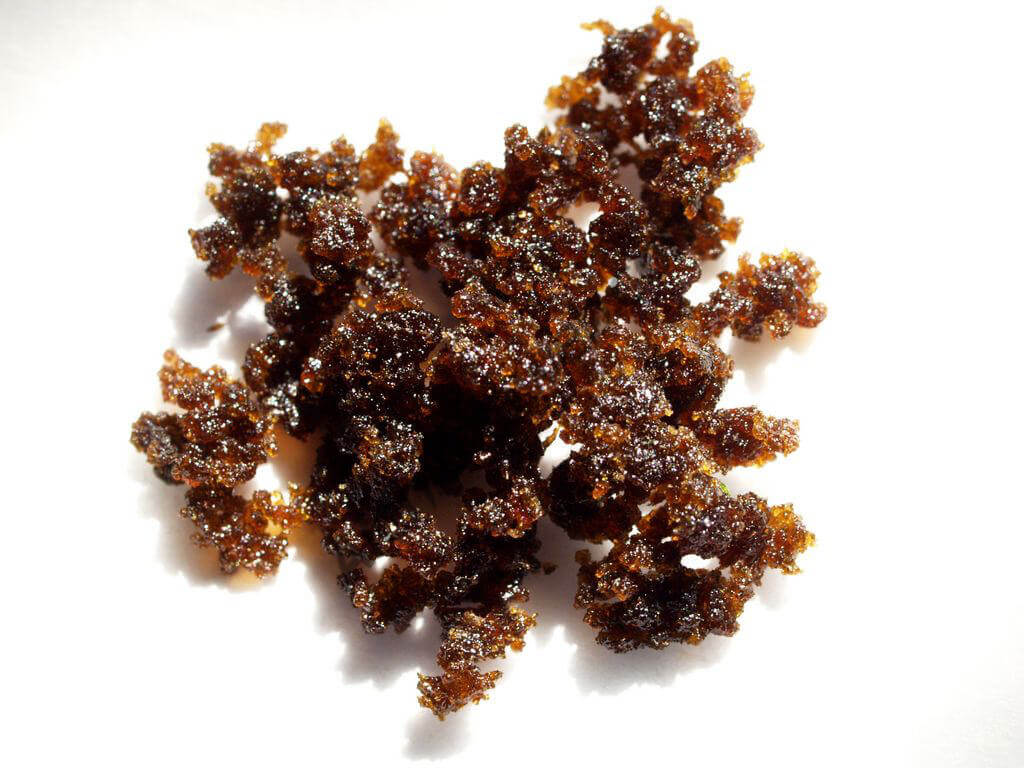
Static hash (also called static sift, static tech or static dry sift) is a marijuana resin obtained by refining dry sifting through static electricity. It's important to clarify one point from the start, because it creates a lot of confusion: technically, static isn't an independent extraction method, but rather a subsequent purification step.
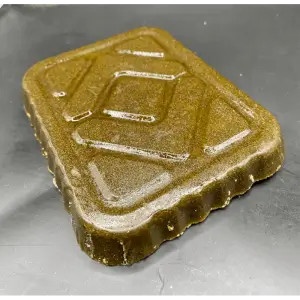


First, the resin is separated from the plant by dry sifting (dry sift), and then electrostatic charge is used to remove from the kief everything that isn't trichome heads: leaf fragments, trichome stalks, pistils, plant dust and other impurities.
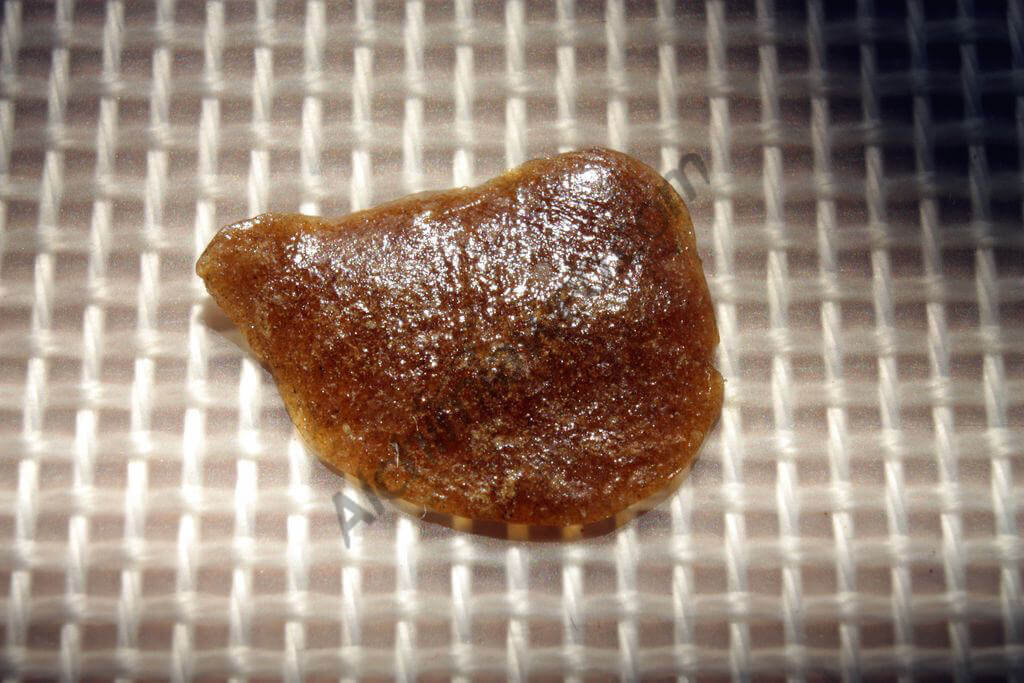
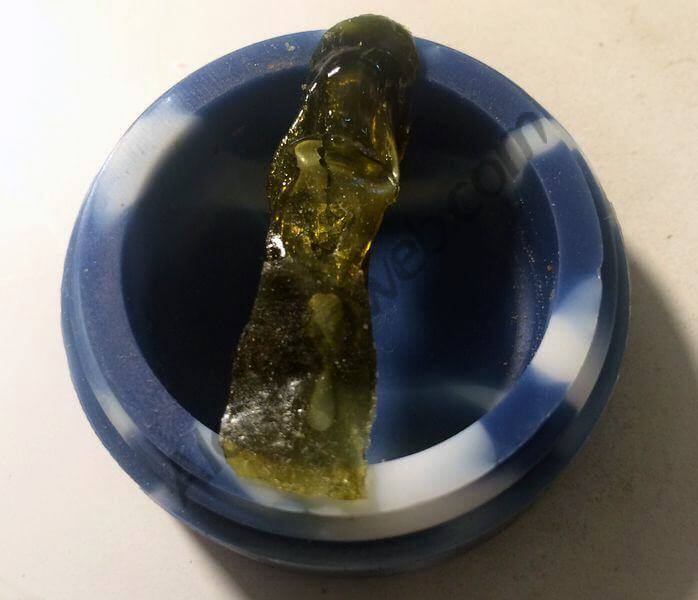
The result is a concentrate that can go from ordinary hash —with a purity around 45-50% heads— to purities of 90% or higher. In other words, a six-star full melt obtained without water, without solvents and without heat, in which the original terpene profile remains practically intact.
A comparison often used in the scene: if kief is crude oil, static sift is refined fuel.

Origins of static hash: something old, something new
Although it may seem like the latest trend, the principle is anything but new. Dry sifting has centuries of history. In Morocco, Afghanistan, Lebanon, or Pakistan, people have been separating resin from dried plants by shaking them over fine meshes for generations. And static electricity has been with us forever: anyone who rubbed a balloon on their hair as a child knows the effect.

In this post we will explain about the origins of hashish. There are many legends, information and texts that tell us about the beginnings of marijuana trichome extractions and for this reason we have made a summary explaining those legends, texts and significant events that help us understand the expansion of hashish consumption in the entire world as we know it today.
It makes sense to think that, at some point, some hash maker realized that this invisible force separated the trichome heads from the rest of the material. In fact, there are ancient references: in Robert Connell Clarke's book Hashish!, a device from the 70s based on this principle is already mentioned, the so-called Original Astounder. Sam the Skunkman is also credited with spreading the technique in the late 80s after observing it in Africa.
More recently, Canadian breeder Breeder Steve (founder of the seed bank Spice Of Life) says he made his first static sift about 25 years ago, simply by rubbing a balloon on his head and passing it over a dry sift. The Internet is full of veterans who claim to have been doing it for decades.
Bubbleman: from carding to parchment paper
If there's one name impossible to omit when talking about modern dry sift, it's Marcus "Bubbleman" Richardson. The Canadian—known for popularizing ice water extraction with his Bubble Bags—has been publicly teaching how to clean dry sift since the early 2000s, first on forums and later through Bubbleman's World and the legendary weekly Hash Church sessions. A good part of today's hash community learned to look at resin under a loupe thanks to him.

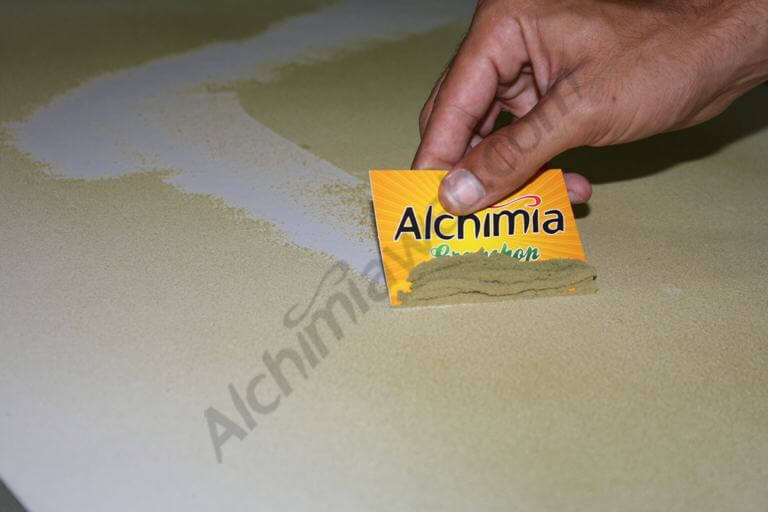
His great contribution was carding: instead of scraping the sift, you drag the edge of a card across the mesh to push the plant material through it and leave the trichome heads on top, which are larger and rounder. It's a simple gesture that completely changed the quality standard of homemade dry sift.
Building on that foundation, an extractor known in the scene as Meeze had the idea of wrapping the card (or a DVD case) in parchment paper, with the silicone-coated side facing out. When rubbed, the paper generates static charge and the separation is no longer just mechanical: it becomes electrostatic. From there the famous DVD method was born, and from there to the balloon, nitrile glove, and paint roller is just one step. Bubbleman himself has been one of the great promoters of these variants, including the inflated latex glove.
Why has it exploded now, then?
Due to a combination of factors:
- Hash competitions, especially the Spanish circuit and events like The Ego Clash in Barcelona, where static full melt has become the star of the main table.
- Social media, which has spread tutorials and techniques at a speed that was previously unthinkable.
- Industrialization and legalization in other markets: in 2023 the first commercial tabletop electrostatic separator appeared (the Plasmastatic V1) and in March 2025 the first peer-reviewed study on electrostatic separation of trichomes at scale was published in the Journal of Cannabis Research.
- The drop in flower prices, which has pushed many growers to add value to their harvest by transforming it into premium extractions.
In other words: the technique is old, the phenomenon is new.
Why is it done? The advantages of Static Sift
Static Hash is an exceptionally high-quality product, due to several factors that distinguish it from other extracts.
Extreme purity
This is the main reason. A well-made dry sift is already a great extract, but it always carries plant contamination. Electrostatic separation allows you to eliminate it selectively and increase purity pass by pass: 60%, 70%, 80%... up to nearly 99% intact heads.
Flavor and terpenes intact
There's no water, no solvents, no heat, no violent agitation. The trichomes suffer very little, so the aromatic profile of the variety reaches the final product almost entirely. For flavor lovers, that's the great advantage of static over other methods.
An extract without residues
Being a purely physical process, there are no solvent traces or need for purging. And by not using water, there's also no risk of degradation from moisture or a long drying process involved.
The science behind it: triboelectric effect
Everything is based on the triboelectric charge: when two materials rub together, one is left with a positive charge and the other with a negative charge.

Trichome heads (essentially a drop of resinous oil encapsulated) and plant material (cellulose, leaves, stems) have different electrical properties and acquire opposite charges when rubbed together. Since opposite charges attract and like charges repel, a charged object—a balloon, a glove, a PVC tube, a plastic surface—selectively attracts some and repels others.
Added to this is a significant density difference between resin and plant material, which helps ensure that the heads roll and group together while the chaff sticks to the walls.
It's the same principle used by the recycling industry to separate plastics, or the magnet that removes iron filings from sand. Only here we apply it to resin.
Conditions: this is where you win or lose the game
Static is extremely sensitive to environmental conditions:
- Low humidity. With high humidity the charge dissipates and no separation is possible. The usual working range is between 25 and 40% RH. A dehumidifier is your best ally.
- Cold. Around 13°C or less. With heat the resin becomes sticky, deforms and adheres to everything. Many work directly in a cold room, and there's even frozen static, which is performed at very low temperatures so the heads remain spherical and intact.
- Dry and well-cured raw material. Static starts from dry flower or trim, never from fresh frozen material intended for bubble.
- Suitable genetics. Not all varieties sift the same. Plants with large heads (around 120 microns) and long stalks that detach easily are sought after. Indicas usually stand out; finding sativas that perform well in static remains a challenge.
- Cleanliness. Hair, lint and dust are declared enemies: static attracts them just like it does trichomes.
What you need: screens and dry sift extraction equipment
Static doesn't start with a balloon, it starts with good sifting. In our dry sift extraction equipment section you'll find everything you need, but these are the essentials:
Screens and sifting boxes. The heart of the process. Working with several micron sizes allows you to classify the resin by quality instead of mixing it all together: a classic combination is 190-160-70-45-25 microns, discarding what remains above 190 and below 25. If you're looking for a single all-purpose screen, the 120-160 micron range is the standard. Boxes with integrated screens are the most convenient option to start with, because they collect the pollen directly in a lower drawer.

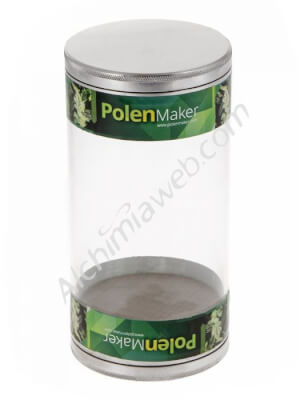
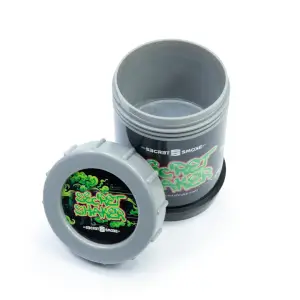
Rotary extractors. The Pollinator is the undisputed classic: a drum lined with a 150-micron screen that rotates at low speed inside a closed container. The gentle, continuous friction releases the trichomes without crushing the plant material, which is exactly what we're looking for: the less you break up the plant, the less debris you'll have to clean up later. There are versions for all scales, from the Pollinator P150 —up to 150 g of buds or resinous leaves— to multi-kilo models for large harvests. Brands like Dr. Flwr or Secret Smoke offer alternatives along the same lines.
Work surface and tools. A trim tray with mesh, a glass or smooth plate, rigid cards and spatulas for carding and collection, and soft brushes.
How to make static hash step by step
With the flower or trim well dried, sift it cold. The usual approach is a first coarse sieve (around 250 microns) to remove the bulk of the plant material, and then a fine sifting (74-120 microns) to collect the kief. Now you have your working base. If you use a Pollinator, the kief that accumulates in the container is already your starting point.
If you've never sifted before, on the blog we have a complete guide on how to make homemade dry hash with all the details of the process.
The tray trick (the simplest method)
If you're working with a mesh trim tray like TrimBin, don't scrape the kief accumulated in the lower compartment. Instead:
- Tilt the tray slightly toward one corner.
- Tap gently on the side.
- The debris will stick to the plastic walls by static attraction, while the trichome heads, being denser, will roll toward the corner.
- Collect that accumulation with a card or spatula.
Simple, free, and surprisingly effective.
Electrostatic passes
To refine further, work on a clean, smooth surface: glass, a steel tray, parchment paper, or a rigid plastic sheet.
- Spread the sift in a thin, even layer.
- Charge a tool by rubbing it with fabric: a balloon, an inflated latex glove, a PVC roller or tube, or directly your gloved hands.
- Pass it over the material, at a short distance without touching it. You'll see how the plant matter jumps and sticks to the tool, or how the heads separate from the rest depending on the configuration you use.
- Clean the tool, recharge it and repeat.
Each pass increases purity. It's slow work, almost like watchmaking, and that's where the artisanal part comes in: the hashmaker's hand still makes the difference.
The DVD method (carding + parchment paper)
This is the technique popularized by Bubbleman and probably the best result/investment ratio that exists: you only need a DVD case and parchment paper.
- Wrap the edge of the case with parchment paper, with the silicone side facing out.
- Rub it against a cotton t-shirt or towel to charge it.
- Spread the sift on the screen or on a smooth surface and drag the edge gently, always in the same direction.
- Contaminants accumulate on the leading edge and the heads remain behind.
- Repeat a minimum of ten passes.
Here patience is everything. With this method, a sift with 50% purity can approach 85%. Not bad for an old DVD.
The nitrile glove
Another widely used variant: nitrile gloves generate charge when rubbing against nylon mesh. Work the sift on the screen with your gloved hand; plant debris passes through the mesh while the heads stick to the edge of the glove, from where they're removed with a brush. Fast, clean and no additional tools.
Conclusion
Static hash is a perfect example of how cannabis culture advances: recovering an old idea, understanding it better and taking it to the extreme. You don't need a machine costing tens of thousands of euros to start; you need good raw material, a cold and dry room, patience and a balloon.
If you like dry sift, static is the next logical step. And if you've never sifted before, perhaps this is the best time to start: there's never been so much information or so many people pushing the technique forward.
Feel like trying it with your next trim? Tell us your results in the comments.
Sources consulted
- High Times / El Planteo — report on the rise of static sift (Dec. 2025)
- Journal of Cannabis Research — "Electrostatic separator of cannabis trichomes: an innovative approach to extraction" (March 2025)
- ION Positive Industries — outreach on electrostatic separation and historical references (Hashish!, R.C. Clarke)
- Marcus "Bubbleman" Richardson's Blog — origin of carding and the addition of parchment paper by Meeze
```