
 Seeds






















 Growshop
 Nutrients








 Extractions
 CBD
 Magic Mushrooms
 Headshop
List of contents
- What is Crop Styling?
- What about Crop Steering?
- Relationship between Crop Styling and Crop Steering
- Practical application
- Advantages of an integrated approach in cannabis cultivation
- Limitations and common mistakes
- An agronomic vision of modern cultivation
- Understanding your plants to get the most out of them
In recent years, cannabis cultivation has incorporated a series of concepts from modern horticulture that seek to go beyond the simple practical experience of the grower. Among them, Crop Styling and Crop Steering have gained prominence as two complementary approaches that allow understanding cultivation from a more structured and technical perspective. Although often mentioned together, they don't mean the same thing. In this article we're going to look at what each one consists of, how they differ, and why they can be useful tools (or not) depending on the level of cultivation requirements.

Over the last few decades, cannabis cultivation has undergone a profound transformation. From being an activity based mainly on empirical observation and grower experience, it has progressively integrated into a more technical approach, where plant physiology, environmental control, and precision agronomy play a fundamental role. In this context, two concepts have emerged that, although relatively recent in their nomenclature, represent ideas that have been applied in intensive crops for years: Crop Styling and Crop Steering.
From the perspective of modern agronomy, both terms should not be interpreted as isolated techniques, but rather as ways of understanding and managing plant development under controlled conditions. Their real value doesn't lie in the novelty of the concept, but in the capacity they offer to systematize decisions that previously depended exclusively on the grower's intuition.
What is Crop Styling?
Crop Styling can be understood as the conscious construction of the crop's plant architecture. It's not just about shaping the plant, but about organizing its structure so that each part of the canopy fulfills an efficient function within the overall production system.

Growers use a wide range of different techniques in order to control the height and size of their plants and improve yields. In this article we tell you several pruning techniques so you can get the most out of your grow!
In cannabis cultivation, this approach focuses on configuring the plant's aerial space—that is, how its branches are distributed, how the canopy is organized, and how light capture is optimized. The goal is not aesthetic in a superficial sense, but functional: to maximize photosynthetic efficiency and reduce unproductive zones.
In practice, Crop Styling involves continuous work during the vegetative phase and early stages of flowering. The grower makes progressive decisions about the plant's structure, removing, guiding, or redistributing growth to achieve a more uniform and efficient geometry. Essentially, it's about designing a crop that makes better use of available space and responds more evenly to light conditions.

However, it's important to understand that Crop Styling isn't a closed protocol or a specific technique. Rather, it's a way of thinking about cultivation from an architectural and functional perspective, where the plant is interpreted as a three-dimensional system in constant development.
What about Crop Steering?
If Crop Styling acts on form, Crop Steering acts on the plant's internal behavior. In this case, the focus shifts from the visible to the physiological, entering the realm of regulating growth processes through the environment.
Crop Steering can be defined as the ability to influence the direction of plant development through controlled management of factors such as irrigation, nutrition, light or environmental humidity. Through these elements, the grower does not impose growth, but rather conditions the plant's response to direct it toward certain productive objectives.
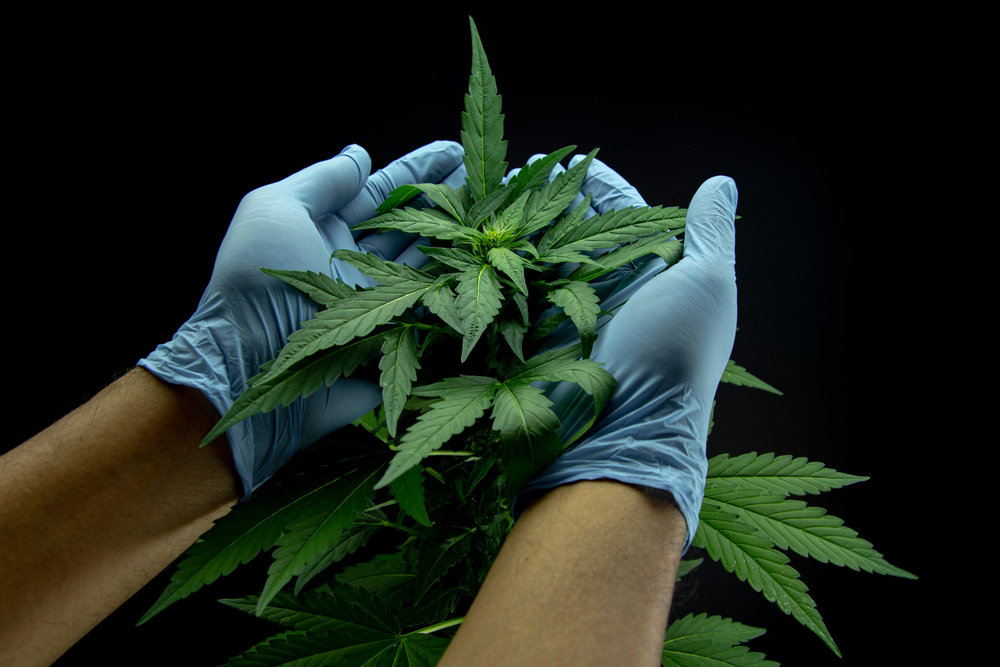
How cannabis hormones influence growth and flowering
Discover cannabis hormones and how they affect growth, flowering, and plant health. Complete guide with practical applications.
This approach is based on clear principles of plant physiology. The plant does not grow arbitrarily, but constantly responds to external stimuli. By adjusting these stimuli, it is possible to favor a more vegetative, more generative or more balanced development, depending on the crop's needs.
Unlike Crop Styling, whose effects are immediately visible in the plant's structure, Crop Steering acts in a more subtle and progressive manner. Its results can be seen reflected in the reduction of internode distance, in overall vigor, in the response to controlled stress or in the metabolic efficiency of the crop.
Relationship between Crop Styling and Crop Steering
Although conceptually distinct, both approaches are deeply interrelated in modern cultivation practice. The plant's structure directly influences its physiology, just as its physiological state conditions its ability to develop a certain architecture.

A well-managed crop cannot be based solely on one of the two aspects. Crop Styling without Crop Steering can result in well-formed plants but poorly balanced in their internal development. Similarly, Crop Steering without structural control can generate vigorous plants but disorganized from the perspective of light utilization.
In reality, both concepts are part of the same agronomic decision-making system, where form and function constantly feed back into each other. One defines the visible structure of the crop; the other regulates the dynamics that sustain it.
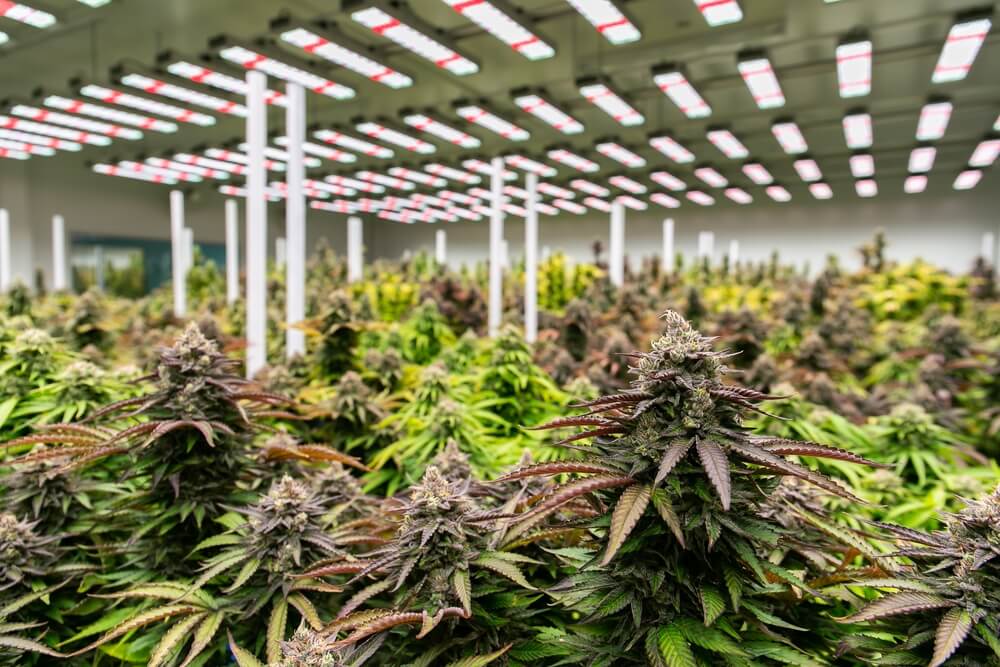
How to maximize indoor cannabis yields
We present a small guide to improve production in your crops, turning a normal plant into a super plant with high production, improving aspects of the growing environment as well as its nutrition for a great harvest!
Practical application
One of the most common questions among growers is whether these approaches are truly necessary or if they belong exclusively to the professional realm. The answer depends on the level of demand and the production objective.
In home or small-scale grows, it's possible to obtain satisfactory results without rigorous application of these concepts. However, as greater uniformity, efficiency, and control are sought, their relevance increases significantly.
In professional environments, especially in indoor growing systems or technified greenhouses, these approaches are not optional. They form part of a comprehensive crop management strategy that allows for reducing variability between plants and optimizing resource use.

Advantages of an integrated approach in cannabis cultivation
When Crop Styling and Crop Steering are applied coherently, the benefits manifest in both the structure and performance of the crop. One of the most evident is uniformity, a key factor in productions where homogeneity is essential to guarantee consistent results.
Another relevant aspect is efficiency in light use. A well-structured canopy allows for more homogeneous distribution of radiation, which translates into more balanced photosynthesis throughout the entire plant. Added to this is greater predictability of crop behavior, which facilitates the planning of production cycles and resource management.
Limitations and common mistakes
Despite their advantages, these concepts are not without limitations. Their application requires technical knowledge, observational capacity, and practical experience. Excessive intervention in the plant's structure can generate unnecessary stress, while inadequate management of physiological parameters can provoke imbalances that are difficult to correct.
One of the most common errors is the excessive simplification of these concepts, especially in non-professional environments. They are often presented as isolated techniques or quick solutions, when in reality they form part of a complex system of interaction between plant and environment.
An agronomic vision of modern cultivation
From an agronomic perspective, Crop Styling and Crop Steering must be understood as tools within a broader management system. They do not replace the basic fundamentals of cultivation, but rather complement and structure them within a more precise and efficient framework.

The experienced grower is not the one who accumulates more techniques, but the one who better understands the plant's response to each decision. In this sense, these concepts represent a natural evolution toward more rational cultivation, where decisions are based on systematic observation and physiological understanding of the plant.
Understanding your plants to get the most out of them
Ultimately, Crop Styling and Crop Steering should not be interpreted as isolated trends, but as two complementary dimensions of the same biological process. The first defines the form; the second regulates the internal dynamics that sustain it.

Their true value does not lie in the novelty of the term, but in the capacity they offer to structure the grower's thinking. Ultimately, the goal is not to control the plant, but to understand it well enough to accompany its development in the most efficient way possible.