
 Seeds
Seeds
























 Growshop
 Nutrients








 Extractions
 CBD
CBD
 Magic Mushrooms
 Headshop
List of contents
- What is Schwazzing?
- Schwazzing, defoliation, and lollipopping: they're not the same thing
- Why does it work?
- When to do Schwazzing
- Schwazzing step by step
- Make sure the plant is in top form
- Prepare the tools
- First defoliation (day 1)
- Recovery between passes
- Second defoliation (day 21)
- Until harvest
- What you need for Schwazzing to work
- Advantages and disadvantages of Schwazzing
- Schwazzing on autoflowers and outdoors
- Most common mistakes
- Final tip from alchimiaweb
- Sources
The first time you see a plant after Schwazzing, it's hard to believe someone did it on purpose. Where yesterday there was a green mass of fan leaves, today only stems, branches, and small flowering sites pointing toward the lamp remain. It looks like a disaster. And yet, two or three weeks later, that same plant is usually full of well-lit buds, more uniform and with less wispy material at the bottom.
Schwazzing is probably the most radical defoliation technique in indoor growing, and also one of the most debated. In this post we'll tell you where it comes from, what exactly it consists of, what you need for it to work, and in which cases it's better not to apply it.

What is Schwazzing?
Schwazzing is a high stress training technique (HST) that consists of removing practically all the fan leaves from the plant at two very specific moments during flowering: right when switching to 12/12 photoperiod and again around day 21.
The term was coined by Joshua Haupt, a Colorado grower who described the method in his book Three A Light, published in 2015. The title refers to the book's central promise: achieving three pounds (about 1.36 kg) per lamp by combining high-intensity lighting, CO₂ enrichment, and aggressive defoliations at just the right time. The book became famous almost as much for its content as for its price, around 500 dollars, which meant the technique spread mainly through forums and word of mouth among growers.
It's worth keeping that context in mind: Schwazzing was born as a piece within a high-yield growing system, not as an isolated trick.
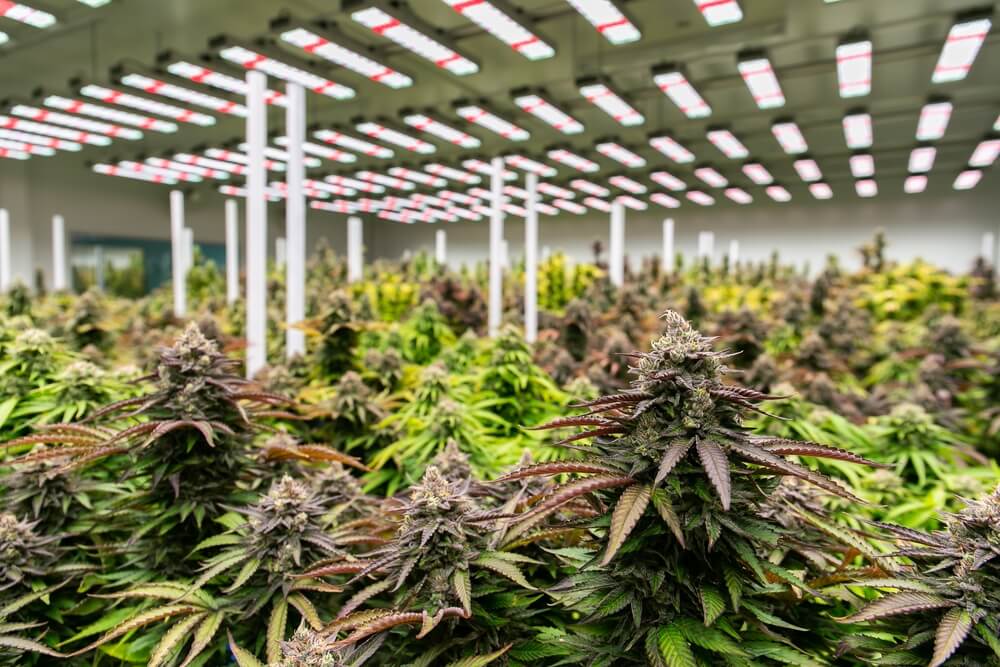
How to maximize indoor cannabis yields
We present a small guide to improve production in your crops, turning a normal plant into a super plant with high production, improving aspects of the growing environment as well as its nutrition for a great harvest!
Schwazzing, defoliation, and lollipopping: they're not the same thing
The three concepts are often mixed up, so it's worth separating them:
- Classic defoliation. Leaves are selectively removed: those that cover flowering sites, those that are damaged, or those that prevent air circulation. It's gradual and can be done at different moments during cultivation.
- Lollipopping. The lower part of the branches is cleaned up, removing leaves, small shoots, and sometimes entire branches, so that the plant concentrates energy on the tops. The result resembles a lollipop.
- Schwazzing. It's a total defoliation of the fan leaves, with a fixed calendar of two interventions. It's the most aggressive version of the three, and in practice many growers combine it with a lollipopping on the first pass.
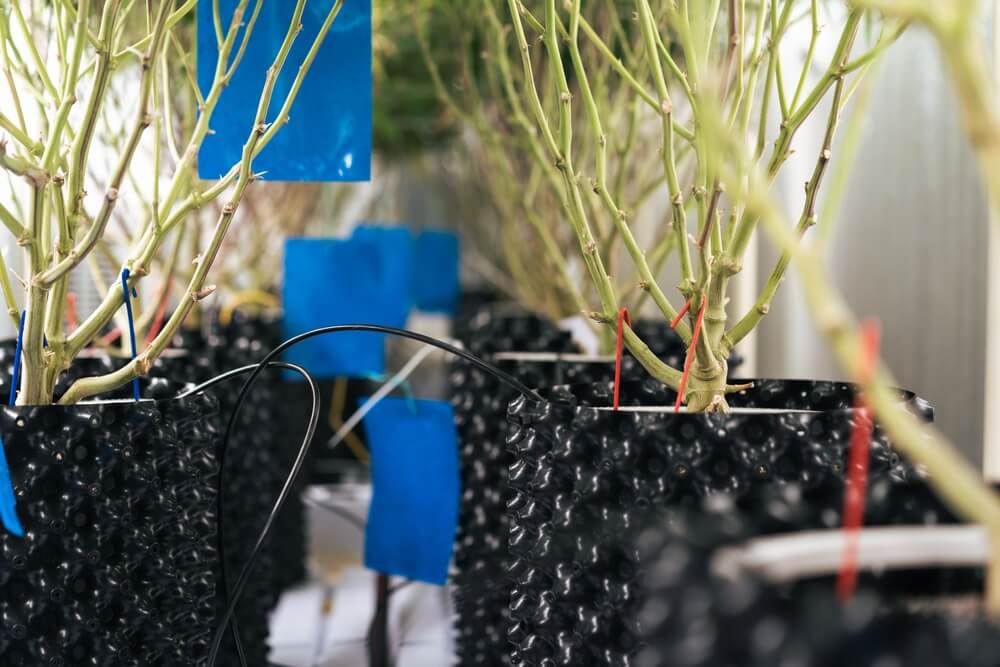
Lollipopping: What it is and how to apply this technique
Lollipopping or Lollipop pruning, as it is also known, is a resource that many growers use to concentrate the energy of plants in those areas where they are most interested in developing flowers. Today we will tell you everything about this pruning technique so that you get the best possible performance from your crop and achieve a uniform harvest of flowers of the best quality.
Why does it work?
We need to be honest here: there are no conclusive scientific studies that explain why such intense defoliation can increase production. What does exist are several hypotheses that growers have been working with for years:
- Better light penetration. Without fan leaves creating shade, light reaches the intermediate and lower flowering sites, which on a bushy plant would end up producing small, airy buds.
- More ventilation. Less leaf mass means better air circulation between branches, fewer humid microclimates, and lower risk of fungi like botrytis on the densest buds.
- Energy redistribution. By losing the large leaves, the plant directs its resources toward flowering sites and quickly generates new foliage that's smaller and better positioned.
- Stress response. Some growers believe that defoliation activates defense mechanisms that stimulate flowering and resin production. It's the most intriguing hypothesis and also the least proven.
What those who apply it regularly do confirm is that a healthy and well-fed plant recovers surprisingly quickly: within a few days it becomes covered with new leaves again.
When to do Schwazzing
The original schedule is simple and is precisely what distinguishes this technique:
- Day 1 of flowering (just before or right when switching to 12/12): First total defoliation of fan leaves. Good time to also do lollipopping on the lower part.
- Day 21 of flowering (beginning of week 4): Second total defoliation. Remove all the large foliage that has grown since the first round.

After day 21, no more massive defoliation is done. At that point the plant is already fattening flowers and needs all the leaves it generates to finish the cycle.
Schwazzing step by step
Make sure the plant is in top form
This is the golden rule. Schwazzing only makes sense with vigorous plants, without deficiencies, without pests and with well-developed vegetative growth. If the plant has any problems, defoliation will aggravate them. Before starting, check that there are no symptoms of nutrient deficiencies or excesses.
Prepare the tools
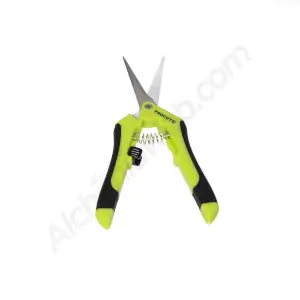
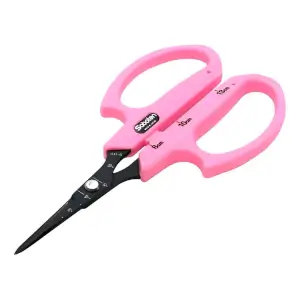
Sharp manicure scissors disinfected with alcohol, gloves and some patience. In a grow with several plants the task takes time. If you prefer, many fan leaves can be removed by hand by gently pulling the petiole, but with scissors the cut is cleaner and you reduce the risk of damaging the shoots.

First defoliation (day 1)
- Remove all large fan leaves, starting from the bottom and working up.
- Cut at the petiole, close to the stem, without taking the shoots that emerge from the axil with it.
- Respect the small leaves surrounding the upper flowering sites.
- Clean the lower third of the plant: weak shoots and twigs that will never receive good light.
Recovery between passes
During the following three weeks the plant will react strongly. Here nutrition is key: Haupt insists on replenishing the nutrients the plant loses with the leaves, without neglecting micronutrients. Maintain a complete and balanced flowering feeding program, watch nitrogen especially during the transition and consider using biostimulants and rooting agents that help the plant withstand the shock.
Avoid adding other stresses during this period: no transplants, sudden temperature changes or drastic watering adjustments.
Second defoliation (day 21)
Repeat the operation: remove again all the large fan leaves that have appeared. In this second pass be even more careful with sugar leaves and with buds that are already forming. The goal is to clear, not mutilate.
Until harvest
From here on, let the plant grow normally. Maintain high light intensity, relative humidity under control (the resulting buds tend to be dense) and good air movement.

What you need for Schwazzing to work
Schwazzing is not a universal technique. It really delivers when these conditions are met:
- Powerful light. The method is designed for high-intensity lamps. With low light, removing leaves doesn't help at all: the problem isn't the shade, but the lack of energy.
- Controlled indoor cultivation. Stable temperature, humidity and ventilation help the plant recover without setbacks.
- Robust genetics. Indica and hybrid varieties with dense foliage usually respond better. Thinner sativas or plants with little leaf mass may suffer more than necessary.
- Good vegetative development. A small plant or one recently cloned doesn't have the reserves to withstand two complete defoliations.
- A fine-tuned nutrition program. Without adequate nutrient replacement, stress turns into delay.
Advantages and disadvantages of Schwazzing
In favor:
- Better light utilization throughout the plant.
- More uniform buds and less wispy material in the lower part.
- More ventilation and lower risk of fungi.
- Pests and deficiencies easier to detect.
- Faster manicuring at harvest.
Against:
- It's a very stressful technique; with weak plants or sensitive genetics it can reduce the harvest instead of increasing it.
- It can delay the flowering cycle by a few days.
- There's a risk of hermaphroditism in unstable genetics subjected to stress.
- It requires time, experience and very controlled growing conditions.
- Its benefits aren't backed by scientific studies, only by growers' experience.
Schwazzing on autoflowers and outdoors
Autoflowers: with caution. Their cycle is short and fixed, so they don't have margin to recover from strong stress. If you want to try, limit yourself to light and selective defoliation, never complete Schwazzing, and even less if you're starting out.
Outdoors: not recommended. Outdoor plants depend on their foliage to protect themselves from direct sun, temperature changes and wind, and the flowering schedule isn't controlled like indoors.
Most common mistakes
- Applying it to stressed plants or those with deficiencies. It's the quickest way to ruin a crop.
- Defoliate off schedule, especially beyond the third week of flowering.
- Damage flowering sites when cutting in a hurry or with imprecise scissors.
- Forget about nutrition after defoliation.
- Do it with poor lighting, expecting the technique to compensate for insufficient illumination.
- Try it for the first time on the entire crop. Better to start with just one plant.
Final tip from alchimiaweb
If you've never done Schwazzing, the best way to know if it suits you is to do a comparative test: two plants of the same genetics, same conditions, one defoliated and one not. That way you'll see with your own eyes how that variety responds in your grow, which in the end is all that matters.
Schwazzing is not magic or a shortcut: it's a powerful tool that works when everything else is in place. Light, nutrition, environment, and genetics first; scissors, afterwards.
Sources
- Joshua Haupt, Three A Light (2015)
- Grow Weed Easy — «What is Schwazzing & What Does Defoliating Cannabis Do?»
- Happy Pot Farmer — Schwazzing comparative test