
 Seeds























 Growshop
 Nutrients






 Extractions
 CBD
 Magic Mushrooms
 Headshop
List of contents
- What French regulations say about synthetic fertilizers
- All mineral fertilizers? Watch out for the nuances
- The new "A1" and "A2" categories
- Why is France taking this step?
- What changes in garden centers and online stores
- What about growshops?
- Countdown: what you can do until December 31st
- Your shopping list for the final weeks
- From 2027 onwards, the replacement is organic
- The Positive Points of the Measure
- The Negative Points and Criticisms
- An important legal note
- Sources consulted
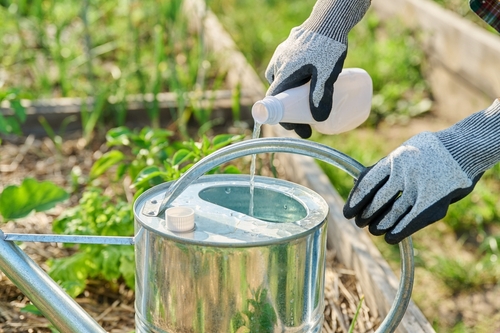
Do you grow in France? Then mark this date in red: on January 1, 2027, synthetic fertilizers, the classic mineral products we've always known, will no longer be available to private individuals. And we're not just talking about buying them: from that day onwards, you won't be able to use them or keep them at home either.
There are just over six weeks left to make your final mineral purchases with complete peace of mind, so it's time to get organized! Today we'll tell you what the regulations say, what's changing in stores, and how to make the most of these last few weeks so your grow doesn't notice the change.
What French regulations say about synthetic fertilizers
Rather than a sudden crackdown, what's arriving is the deadline of a law passed in 2021. We're talking about the Climate and Resilience Law (law no. 2021-1104 of August 22, 2021), whose article 269 created article L.255-13-1 of the Rural Code. Its section II prohibits the marketing, delivery, use, and even possession! of synthetic fertilizers for non-professional use.

The regulation has three legs: it prohibits public administrations from using them in their spaces, closes the door to private individuals, and bans their non-agricultural use on private properties. Exempt are fertilizers authorized for use in organic farming (UAB), maintenance of historical monuments, certain sports facilities, and land with an agricultural purpose.
The key date depends on an implementing decree and, at the latest, is January 1, 2027. As of today that decree hasn't been issued, but according to Unep, the landscaping employers' association, the law will come into force on that date anyway, although without specified implementation procedures or sanctions.
All mineral fertilizers? Watch out for the nuances
Here's the fine print that creates the most confusion: the law doesn't talk about "minerals," but rather synthetic fertilizers. In practice, these are those manufactured by the chemical industry, such as synthetic NPK, urea or ammonium nitrate.
The exact definition must be set by that pending decree, so there are still gray areas. A fertilizer with minerals of natural origin that carries the UAB designation, for example, can continue to be sold to private individuals. The moral of the story? What counts is the label, not the word "mineral."

The new "A1" and "A2" categories
In parallel, France is introducing the so-called socle commun of fertilizing materials, with quality and safety criteria. Decree No. 2026-357 of May 7, 2026 creates usage categories: A1 remains open to professionals and private individuals, while A2 is reserved only for professionals.
The contamination thresholds (cadmium, lead, mercury...) were published in the Official Journal on October 2, 2026 and also apply from January 1, 2027. Translated: products under the national regime that are sold to the general public will have to meet the most stringent limits—an extra guarantee of cleanliness for what reaches your crop!
Why is France taking this step?
The idea doesn't come out of nowhere. When it was debated in the Senate in 2021, the amendment that gave rise to the regulation was directly inspired by the ban on synthetic phytosanitary products in non-agricultural spaces, as stated in the amendment text. In other words, after removing chemical pesticides from private gardens, now it's the turn of fertilizers.
The underlying argument is environmental. An excess of soluble nitrogen washes away with rain and ends up in aquifers, a true nightmare for water quality. Supporters of the measure also pointed out that it makes no sense for all the effort to reduce synthetic fertilizers to fall only on farmers.

And there's another open front: cadmium, a heavy metal present in some phosphate fertilizers. According to the law firm Kohen Avocats, from January 1, 2027, the limit will align with the European one, 60 mg per kilo of phosphoric anhydride, with reductions planned for the following years. Fewer heavy metals in the soil means, in the long run, cleaner crops.
What changes in garden centers and online stores
From the deadline date, no store will be able to sell or deliver synthetic fertilizers for non-professional use. And we're not just talking about the neighborhood garden center; the change also affects agricultural self-service stores and online sales.
Sales to professionals (farmers, horticulturists, landscapers...) don't disappear, because the prohibition in section II refers to non-professional use. That said, be careful: a landscaper is still a professional, but they won't be able to use synthetic fertilizers in a private person's garden either. How stores should verify that the buyer is a professional is precisely one of the things the pending decree needs to clarify.
What about growshops?
Here the blow is stronger, because many nutrient lines for coco or hydroponic growing are mineral-based. That's why many French growshops are already experiencing their last season of mineral fertilizers for private individuals, which can be sold normally until December 31, 2026.
Apparently, the law doesn't provide any specific exception for indoor cultivation or hydroponics, so each product must be reviewed separately. And an important warning: words like "bio," "natural," or "organic" on the packaging aren't enough; what matters is the UAB mention in accordance with European regulation (EU) 2018/848.
What if you buy from online stores in other countries, including Spain? The law prohibits marketing and delivery for non-professional use in France, so it looks like stores that ship to France will have to adapt accordingly from January 1st. The details of the controls will come with the pending decree.
Countdown: what you can do until December 31st
Until the deadline arrives, buying and using mineral fertilizers in France remains perfectly legal. This is your last window to stock up on your usual products and close out the season with the products you know and trust.
However, there's one detail you can't skip: the law also prohibits possession of synthetic fertilizers for non-professional use. It's not about filling your cupboard for all of 2027, but about buying sensibly only what you'll actually use before January 1st. A half-empty bottle on January 2nd won't do you any good!

And if you're starting a long cycle now, keep in mind it will finish in 2027. What better time to start it directly with organic fertilizers and arrive in January with your homework done?
Your shopping list for the final weeks
To make the most of this time without any surprises later, here's our roadmap.
1. Calculate what you'll spend until December 31st and buy that amount of minerals, no more, no less. This way you make the most of your favorite fertilizers without being left with product you won't be able to have or use later.
2. Place your order with time to spare. Between shipping times and the Christmas holidays, it's better not to leave it for the last week of December.
3. Get your UAB fertilizers for 2027 now. They're the ones that will remain legal, and starting to use them now allows you to learn how to handle them calmly instead of improvising in January.
4. Complete your equipment with what doesn't change. Substrates, organic amendments, pH and EC meters, or beneficial microorganisms are not synthetic fertilizers, so this ban doesn't affect them.
5. Read labels carefully. Look for the mention Utilisable en Agriculture Biologique or reference to regulation (EU) 2018/848: neither "bio," "natural," nor "organic" are enough on their own.
From 2027 onwards, the replacement is organic
Don't worry, your plants won't go hungry. Fertilizers usable in organic farming are excluded from the ban and will remain on garden center and growshop shelves.
However, they work differently. Organic nitrogen is released gradually by soil microorganisms over three to four months, without leaching peaks or risk of burning roots. Fewer worries about over-fertilization and a more living substrate, in exchange for applying nutrients two to four weeks earlier.
If you grow hydroponically, the transition is more demanding, because organic fertilizers work less well with recirculating systems; switching to living soil or coco with organic nutrition may be the most convenient route. And if you have any mineral fertilizer left over on January 1st, don't throw it in the trash—check with your municipality's waste collection point (déchèterie).

Discover how organic farming can transform the way you grow and consume. From the microbial life in the soil to the best natural fertilizers on the market, today we'll tell you why you should switch to this growing method, its main benefits, and how to apply it correctly.
The Positive Points of the Measure
The first one is obvious: less nitrates in the water. By stopping soluble fast-acting fertilizers from reaching gardens, the risk of excess nitrogen seeping into rivers and aquifers is reduced. A benefit you don't see in your pot, but one we all notice.
The second is the boost to living soil. Organic fertilizers feed bacteria, fungi, and other microbial life, which do the work of making nutrients available to the roots. Many veteran growers know this well: a substrate rich in life forgives more mistakes and handles stress better.

And the third, quality and safety. With the new cadmium and contaminant limits, what is sold to the general public will be cleaner, and at home you'll stop storing concentrated chemical products. Furthermore, the organic fertilizer sector has been innovating for years, so everything points to us seeing very interesting developments in the coming months.
The Negative Points and Criticisms
The big drawback is legal uncertainty. Just weeks from the deadline, the decree that should define what exactly a "synthetic fertilizer" is, how it's controlled, and what sanctions exist still hasn't been published. The French Senate itself acknowledged the delay, and stores, manufacturers, and users are preparing for a regulation whose details they still don't know.
For indoor growers, especially in hydroponics and coco, the change hurts. Mineral salts allow precise nutrition adjustment, and switching to organic means learning all over again, changing systems, or accepting transitional harvests. Stores, meanwhile, bear the risk of being left with stock they can't sell to individuals.

There is also collateral damage. Mineral fertilizers from the circular economy (recovered from waste) do not currently have their own exception, and the ministry acknowledged in 2026 that their case needed to be studied. And there are those who fear that the ban will push some users to buy across the border or through less transparent channels, exactly the opposite of what is intended.
An important legal note
This regulation is French and only applies in France; in Spain and other countries, the rules on fertilizers are different. Additionally, the pending decree may introduce nuances, so what we're telling you today could change in the coming weeks.
The ban on synthetic fertilizers for individuals marks a before and after in French garden centers and grow shops. It has its shadows, especially the lack of a decree clarifying the details, but it also opens the door to cultivation that is more respectful of soil and water.
Our advice is not to wait until the last day—take advantage of these weeks to stock up on the minerals you'll use this season and, while you're at it, prepare for the transition with UAB fertilizers so that 2027 finds you all set. We'll continue to closely monitor the publication of the decree to share any updates with you. Happy harvest!
Sources consulted
- Article L.255-13-1 of the Rural Code (Légifrance)
- Article 269 of Law No. 2021-1104 (Légifrance)
- Unep: Engrais de synthèse, interdiction au 1er janvier 2027
- Régal'Terre: what the law says
- French Senate: written question no. 06245
- French Senate: amendment COM-835 (2021)
- Kohen Avocats: cadmium in fertilisers, thresholds 2027-2030