
 Seeds























 Growshop
 Nutrients








 Extractions
 CBD
 Magic Mushrooms
 Headshop
List of contents
Although cannabis became a controversial subject throughout the 20th century, hemp played an important role in the economy and industry for several centuries. For this reason, the status of the Cannabis sativa plant was very different: its cultivation was encouraged and rewarded. Let's take a look back at centuries of hemp history.
Why was hemp worth its weight in gold to a ship?
Before steel and synthetic fibres, a warship was basically wood, sails and miles of rope. And those sails and ropes (the famous rigging) came mainly from hemp fibre. Yes, the very same species you lovingly tend today in your grow tent. The figures are mind-boggling. According to a study published in the Revista de Historia Naval, just over 20% of the cost of an 18th-century Spanish ship of the line came from hemp materials, and a three-decker required around 150 tonnes of fibre.

Just imagine how many plants went into every ship! Why hemp in particular? Because its fibre withstands tension, wear, moisture and sunlight better than flax or esparto grass. For a sailor, that meant something very simple: the rigging wouldn't snap in the middle of a storm. It's no coincidence that hemp was as essential to sailors as it was to hangmen, a grim comparison which, as we'll see, appears in Hemp for Victory itself.
The Spanish Navy and its "Baltic dependency"
The relationship between the Spanish navy and hemp goes back a long way. As early as 1281, Peter III of Aragon ordered hemp to be stockpiled for his Royal Navy. But its heyday came in the 18th century, when the Bourbons set out to rebuild a fleet capable of standing up to England. The problem was serious: the best hemp in Europe was grown in Russia and shipped out through Baltic ports such as Riga and Saint Petersburg, with Holland acting as the main middleman. Until the middle of the century, the Navy bought rigging and canvas from private contractors who used a great deal of Russian hemp. And what if war broke out with Sweden, Holland or England? A nightmare: ships stuck in port for lack of rope.

Economists such as Gerónimo de Uztáriz and ministers such as the Marquis of Ensenada were in no doubt: hemp had to be grown at home. Ensenada even sent Antonio de Ulloa to Scandinavia with orders to learn how pines and hemp were cultivated there. High-level cannabis espionage in the middle of the Age of Enlightenment!
The hemp commissions
In the mid-18th century, the Crown stopped relying solely on middlemen and set up its own direct purchasing system. This gave rise to the Granada Hemp Commission, organised in 1752 and left virtually unchanged until 1789. Similar operations soon followed in Aragon and Navarre, which got its own commission in 1778. How did they work? The commissioners agreed with farmers how much they would sow, made sure the best growing techniques were followed, and oversaw the harvest until it reached the arsenals. And since many peasants lacked the cash to start the season, the Navy advanced them money up front. In other words, the State was your growing partner, and it even paid you in advance! The plan worked. Between 1750 and 1784, Spanish hemp production rose by 62%, with Valencia, Aragon, Catalonia and Granada leading the way.
England, the great naval power, was still debating in 1791 how to promote its own cultivation so it could stop importing hemp.
How naval hemp was processed
If you've ever watched a sativa grow, what follows will sound familiar. Hemp was sown between April and May and, since it's a dioecious plant, the males matured a few weeks before the females, so it was harvested in two rounds from August onwards. Mind you, nobody was after resinous buds here; the treasure was in the stalk. Next came retting, which involved submerging the bundles in ponds so that fermentation would separate the fibre from the woody core. Once dried, the stalks were broken (crushed to shatter the woody parts), then scutched and hackled to clean the fibre. The result was long, strong strands, ready to become rope or canvas. The final stage took place in large factories such as the Royal Factory of Sada (A Coruña), which employed up to some 675 workers, or those in the arsenals of Cartagena and La Carraca. The scientist and naval officer Jorge Juan imposed relentless quality control: every batch was tested by hanging weights from a rope until it broke, and if it didn't hold, it was rejected.

Hemp and Marijuana - what's the difference?
Are hemp and marijuana the same? Where do these plants come from and what are their main differences? In this article, we answer these questions and go deeper into their origins, uses and cultivation methods.
The decline after Charles III
After the death of Charles III in 1788, shipbuilding programmes ground to a halt and, with them, the demand for hemp. The Peninsular War finished the system off, and in 1817 a royal order returned rigging manufacture to private contractors. Even so, the seed (pun intended) had been planted. The plains of Granada, the Valencian huerta and Alicante's Vega Baja kept a deep-rooted hemp culture alive for generations.
If you're ever passing through Callosa de Segura, its Hemp Museum preserves tools such as the scutching blades used to clean the fibre. A must-visit for any lover of the plant! And official interest resurfaced more than once: between 1928 and 1936, Spain had bodies such as the Official Hemp Committee, dedicated to promoting its cultivation. But that's another story… because our next stop is on the other side of the Atlantic.

Hemp for Victory
This is where the story becomes deliciously ironic. In 1937, the United States passed the Marihuana Tax Act, the law championed by Harry Anslinger that strangled cannabis cultivation with taxes and red tape. Anslinger himself promised to leave the hemp industry alone, but the sector took a hit. Just five years later, everything changed. After Pearl Harbor, Japan occupied the Philippines and the United States lost access to "Manila hemp", a fibre (abacá) which, curiously, isn't even hemp and came from a former Spanish colony.
The Navy was running out of rope, and the government did the unthinkable: it asked its farmers to start planting hemp again. To win them over, the Department of Agriculture (USDA) produced Hemp for Victory in 1942, a short film of about 14 minutes explaining how to grow, harvest and process the plant for military use. The film boasts that, that year, farmers sowed 36,000 acres of seed hemp at the government's request, with the goal of reaching 50,000 acres in 1943. Kentucky was the main stage, and the authorities went as far as offering seeds, incentives and processing plants to make the crop profitable. The film that "never existed" (and how Jack Herer rescued it).

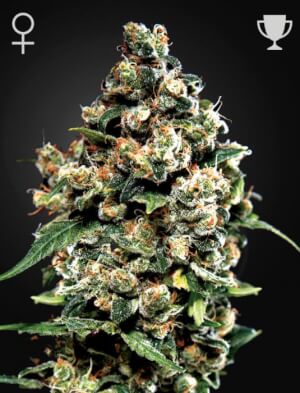
Once the war was over, hemp was sent back to the naughty corner, and fibre production in Kentucky died out shortly afterwards. The curious part is what happened to the documentary: for decades, both the USDA and the Library of Congress denied it had ever been made. A government video encouraging people to plant cannabis didn't quite fit the official narrative, did it? As the story goes, a copy surfaced in 1976 and ended up in the hands of a journalist in Florida. From then on, the film became a true icon of the pro-hemp movement. Activist Jack Herer, author of the legendary book The Emperor Wears No Clothes (and yes, the very same man who gave his name to one of the most legendary strains in history), spread it far and wide as proof of prohibitionist double standards. Today there's no need to rummage through dusty basements: the US National Agricultural Library has it catalogued in its special collections. Rarely has official propaganda aged so well!


The same lesson in two different eras
Put the two stories side by side and the parallel is striking. In both cases, a naval power depended on a foreign fibre (Russian hemp for Spain, Philippine abacá for the United States) and, faced with the risk of running out, turned to its own farmers. And in both cases, hemp rose to the occasion like a champion. The big difference lies in what came next. In Spain, the plant lost its prominence for purely economic reasons, once ships stopped being built. In the United States, on the other hand, hemp went from war hero to usual suspect in a matter of months, caught in the same legal net as psychoactive cannabis.

And today? Industrial hemp is enjoying a new golden age in textiles, eco-construction, food and CBD products. Today's certified hemp varieties have a very low THC content, making it possible to use their fibre, seeds and non-psychoactive cannabinoids. A plant that rigged ships of the line and helped win wars proves, once again, that it had far more to offer than prohibition was willing to admit.
From the arsenals of Cartagena to the fields of Kentucky, history shows there was a time when growing hemp was a patriotic duty. Kings, ministers and entire governments knew perfectly well how valuable this plant was… until it suited them to forget. Next time someone tells you cannabis has always been frowned upon, you'll have a couple of stories to tell them.
Happy harvest!
Sources
- Acosta Ortega, F. "Suministro de fibra de cáñamo en la segunda mitad del siglo XVIII"
- Revista de Historia Naval 168 (2025)
- Hemp For Victory, USDA National Agricultural Library
- Hemp for Victory transcript, Hempology
- Kentucky Hempsters
- Marginal Revolution
- Mises Wire
- Media Burn Archive