
 Seeds
Seeds


















 Growshop
 Nutrients








 Extractions
 CBD
CBD
 Magic Mushrooms
 Headshop
List of contents
- From Sacred Plant to Prohibited Substance
- The European Gaze and the Colonial Business
- The Separation of India and Pakistan
- Hashish in the north, herb in the south, and bhang at festivals
- The chillum ritual
- Drums and trance at Sufi shrines
- From Manali to Jamaica
- Forbidden for smoking, open for medicine and industry
- India: prohibition with exceptions
- Pakistan: from hashish to regulated hemp
- A tradition that survived prohibition
Few regions of the world have a relationship with cannabis as ancient, deep, and contradictory as the Indian subcontinent. There, the plant has been an offering to the gods, traditional medicine, companion to Sufi mystics, source of taxes for an empire, and finally, a prohibited substance. India and Pakistan shared this history until 1947. Since then, their laws have taken different paths, but on the streets, in temples, and in shrines, the traditions remain surprisingly alive.
From Sacred Plant to Prohibited Substance
Cannabis grows wild on the slopes of the Himalayas and the Hindu Kush, so it's no surprise that it appears in the region's most ancient texts. The Atharva Veda, composed some three thousand years ago, cites bhang among the five sacred plants capable of freeing one from anguish. Some scholars have even speculated that soma, the divine drink of Vedic hymns, was cannabis, although this theory has never achieved consensus.

Over time, the plant became associated with Shiva, the ascetic god who, according to tradition, consumed it in his Himalayan retreat. Ayurvedic medicine, for its part, used it for centuries under the name vijaya ("the victorious") to relieve pain, stimulate appetite, or combat insomnia.
With the arrival of Muslim dynasties, cannabis found a new spiritual home in Sufism. Orders of wandering dervishes, such as the qalandars and malangs, used it as a path to mystical ecstasy. In Mughal courts, majun was common—a sweet made with cannabis, sugar, ghee, and dried fruits. Babur himself, founder of the Mughal Empire, left record in his memoirs of gatherings where it was served.
The European Gaze and the Colonial Business
The Portuguese physician Garcia da Orta described bhang in Goa in 1563, in one of the first European texts about the plant. Nearly three centuries later, the Irishman William O'Shaughnessy, stationed in Calcutta, published in 1839 the studies that introduced cannabis into Western medicine.
The British did not ban cannabis: they turned it into a business. From the late 18th century, ganja, charas, and bhang paid taxes and required cultivation and sales licenses. In Bengal, there even existed an area dedicated almost exclusively to producing marijuana under state control.
When temperance movements pressured London, the colonial government created the Indian Hemp Drugs Commission (1893–1894). After interviewing hundreds of witnesses, its report, thousands of pages long, reached a conclusion surprising for the time: moderate consumption did not cause significant harm and banning it would be unjust and unenforceable. It recommended controlling and taxing, not prohibiting. For decades, that was the policy.

The Separation of India and Pakistan
After independence and the partition of 1947, both countries inherited the same colonial framework, but the international context was beginning to change.
India skillfully negotiated the UN Single Convention of 1961. It managed to get the definition of cannabis to include only flowers and resin, not leaves or seeds, which left bhang protected. It also obtained a 25-year grace period to end traditional use. When that period expired, and under strong pressure from the United States, Rajiv Gandhi's government passed the NDPS Act in 1985, which prohibits marijuana and charas throughout the country.
Pakistan hardened its stance in 1979, with the Islamization driven by General Zia ul-Haq. The war in Afghanistan later turned the border into a major corridor for hashish and heroin. The current law, the Control of Narcotic Substances Act of 1997, harshly punishes production, trafficking, and possession.
Hashish in the north, herb in the south, and bhang at festivals
In the subcontinent, people don't simply speak of "cannabis." There are three distinct products, each with its own geography and social significance.
Bhang: the cannabis that is drunk. It is prepared by crushing leaves on a stone slab until a green paste is obtained, which is then mixed with milk, yogurt, spices, or nuts. It is consumed as bhang lassi, as thandai (milk with almonds, fennel, and cardamom), or in sweet balls. It is the most socially accepted form: for many Hindu families it is not a "drug," but rather a festive and devotional drink. Its great moment is Holi, the festival of colors, especially in sacred cities like Varanasi or Mathura.

Bhang Lassi, cannabis milk shake
Bhang Lassi is a traditional cannabis milk shake in India, where it has been used for centuries by a wide range of people, from sadhus to tourists. In this article we explain you how to easily prepare a delicious Bhang Lassi at home. You'll only need some weed, seeds, honey, milk and spices!
Charas: Himalayan hashish. It is the resin of the plant, and here there are two very different traditions. In the Indian Himalaya (Himachal Pradesh, Kashmir) it is obtained by rubbing the flowers of the live plant with the hands: the resin accumulates on the palms and is rolled into dark, soft balls. It is a slow and artisanal method, which gave worldwide fame to the village of Malana, in the Parvati Valley. In Pakistan and Afghanistan, on the other hand, sieving of the dried plant dominates: the resulting powder is pressed and heated to form black slabs. That is the famous Pakistani hashish, with the Tirah Valley and the Peshawar region as emblematic areas. In Pakistan, charas is, by far, the most common form of consumption, and is usually smoked mixed with tobacco in emptied cigarettes.
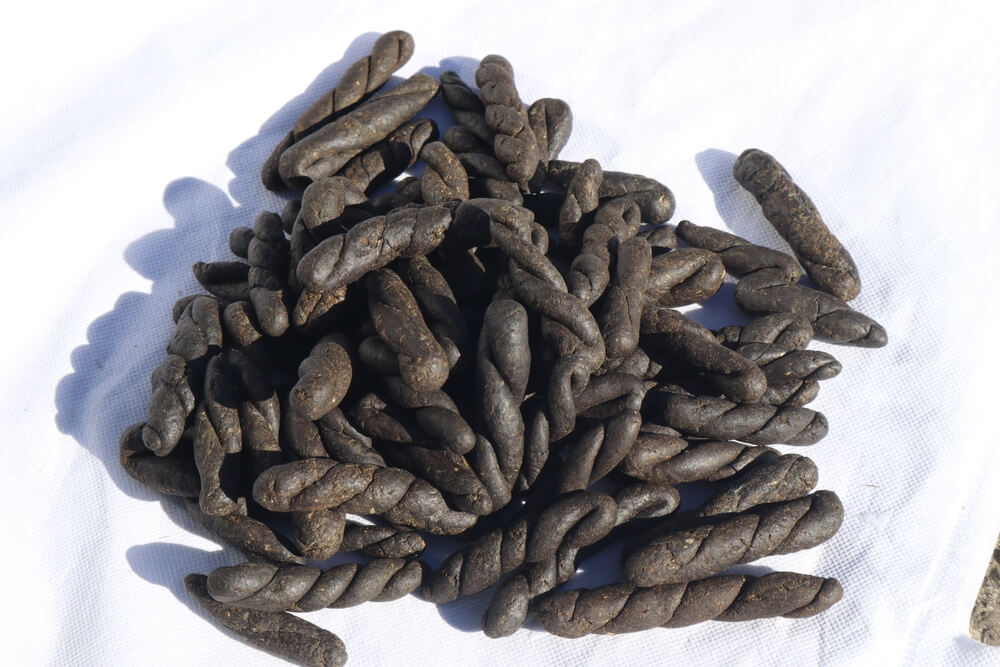
Charas: the origins of hashish
Today we tell you all about the oldest type of hashish in history, charas. As you will see, it is a traditional way of separating the vegetable matter from the resin that is still used today in some areas of the planet such as Nepal or northern India. Discover all its secrets with us, from its origins to the best known types of charas!
Ganja: the flower. It is more traditional in eastern and southern India: Bengal, Bihar, Odisha, Andhra Pradesh, and Kerala. The British even classified it by its form: flat ganja (flowers flattened by stomping on them), round ganja (hand-rolled), and chur (loose fragments). In Kerala, the variety known as "Idukki Gold" achieved legendary status.
So in the north and in Pakistan, hashish rules; in eastern and southern India, the herb; and bhang is a separate case, edible and festive.
The chillum ritual
The sadhus, wandering Hindu ascetics, smoke charas or ganja in the chillum, a conical clay pipe. The ritual has its own etiquette. The base is wrapped with a damp cloth that acts as a filter, the pipe is raised to the forehead as an offering, and Shiva is invoked with a "Bom Bholenath!" before inhaling. The chillum never touches the lips and is always shared in a circle. These scenes multiply at festivals such as the Kumbh Mela or Mahashivaratri, the great night of Shiva.

Drums and trance at Sufi shrines
In Pakistan, cannabis is linked to the shrines of the most "ecstatic" Sufi saints. In Sehwan Sharif, at the shrine of Lal Shahbaz Qalandar, the smoke of charas accompanies the dhamaal, a trance dance to the rhythm of enormous drums. In Lahore, Thursday nights at the shrine of Shah Jamal became famous for the same combination of music, dance, and charas. For the more orthodox religious sectors, these practices are a scandal. That tension between the popular Islam of the shrines and normative Islam runs through all of Pakistani culture.
The nihang, Sikh warriors of Punjab, also maintain the tradition of drinking sukha, a bhang preparation with almonds and spices of strong ritual significance.
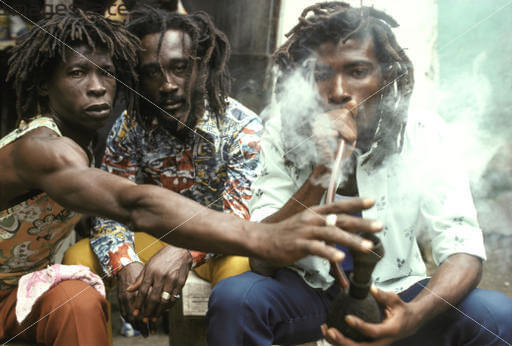
Spiritual, religious, and traditional use of cannabis
Today we present you a post in which we highlight the connection between different cultures and religions of the world that use the cannabis plant in a medicinal, recreational or religious way.
For centuries there existed a clear moral hierarchy. Bhang was religious and respectable, while smoking ganja or charas was associated with ascetics, peasants, day laborers and rickshaw drivers, who used it to endure fatigue and hunger. The urban middle classes looked upon it with suspicion.
Today the landscape is changing. In Delhi, Mumbai, Bangalore, Karachi or Lahore, many young people with purchasing power prefer flowers of imported varieties or indoor cultivation, associated with the global cannabis culture, over the "traditional" charas.
From Manali to Jamaica
In the sixties and seventies, the hippie trail turned Manali, the Parvati Valley and Goa into mythical destinations for Western travelers, and Himalayan charas gained international prestige. Villages like Kasol continue to live in large part from that tourism.
And a curious fact: the word "ganja", of Sanskrit origin, arrived in Jamaica in the 19th century with Indian workers brought to British plantations. From there it passed into Rastafarian vocabulary and, with reggae, to the entire world.

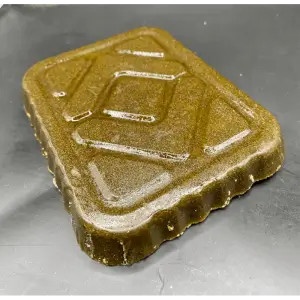

Forbidden for smoking, open for medicine and industry
Currently, the laws (and tolerance towards them) have evolved and, although recreational consumption and commerce are prohibited, new avenues are opening in the medical and industrial sectors.
India: prohibition with exceptions
At the national level, the NDPS Act of 1985 remains fully in force. Marijuana and charas are prohibited throughout the country: possession of small quantities can result in up to one year in prison, and commercial quantities, between 10 and 20 years.
But the law leaves two doors open:
- Bhang, being made from leaves, falls outside the legal definition of cannabis. That's why there are state-licensed bhang shops in places like Rajasthan, Uttar Pradesh or Varanasi.
- Cultivation for industrial, medical, and scientific purposes, which states may authorize. Uttarakhand was a pioneer with industrial hemp, followed by Uttar Pradesh and Madhya Pradesh. The most ambitious step has been taken by Himachal Pradesh, which in 2026 approved regulations to grant licenses for cultivation, processing, and manufacturing of cannabis for medicinal, scientific, and industrial purposes, expressly excluding charas and ganja.
Even so, there is no national project underway to legalize or decriminalize recreational use. Change, for now, advances state by state and only in the realm of hemp and medicine.
Pakistan: from hashish to regulated hemp
Recreational use remains illegal under the Control of Narcotic Substances Act of 1997, and the Anti-Narcotics Force maintains strong pressure on trafficking, especially at the Afghan border.
However, the country has taken a striking turn:
- 2020: the federal government approved hemp cultivation for industrial and medicinal purposes.
- 2024: the Cannabis Control and Regulatory Authority (CCRA) was created, first through a presidential ordinance and later with a law passed by the National Assembly in September of that year. This body grants licenses for cultivation, production, and industrial use, valid for five years.
- 2026: the CCRA inaugurated its headquarters in Islamabad, with funding approved by the federal government.
The stated objective is to reduce illegal trafficking, improve farmers' incomes, and create an industry of medicinal and industrial products.
A tradition that survived prohibition

The history of cannabis in India and Pakistan is that of a plant that went from the sacred to the fiscal, and from the fiscal to the prohibited, without prohibition managing to erase its place in culture. Today both countries are moving, cautiously, towards an opening centered on hemp and medicine, while the bhang of Holi, the chillum of the sadhus and the smoke of Sufi shrines remind us that here cannabis was tradition long before it became a legal problem.