
 Seeds


















 Growshop
 Nutrients








 Extractions
 CBD
 Magic Mushrooms
 Headshop
List of contents
Some of the most famous genetics of the last decade have had to change their name by court order or through an out-of-court settlement. Gorilla Glue #4 is now GG4, Girl Scout Cookies is GSC, and Zkittlez has become Z. The plant is the same; what changed was the label.
For decades, naming a variety was a game of wit: you borrowed the name of a candy, a movie, or a well-known brand and gave it a cannabis twist. In the underground, no one complained about anything. But with legalization in many U.S. states, cannabis became a business with licenses, packaging, websites, and social media. And that's when big companies started paying attention.

An important nuance: in almost all these cases, we're not talking about copyright, but rather trademark law. Companies claim that a name similar to theirs confuses consumers, takes advantage of their prestige, or worse yet, associates their children's product with a drug. In this post, we review, variety by variety, their history, why they became famous, what happened in court, and what they're called now.
Gorilla Glue #4
The story of Gorilla Glue #4 begins with an accident. In Nevada, Joesy Whales and Lone Watie (Ross Johnson), who worked under the name GG Strains, witnessed how a hermaphrodite Chem's Sister accidentally pollinated a Sour Dubb. They crossed that offspring with Chocolate Diesel and, among the resulting plants, selected a specimen they simply called "4".
That number 4 produced so much resin that, when manicuring, the scissors would get stuck together. That's where the nickname "Gorilla Glue" came from, like the famous adhesive, and the joke also fit with its effect, the kind that leaves you glued to the couch. The variety shot to fame at the 2015 World Cannabis Cup and in a short time became one of the best-sellers in the United States, accompanied by its sisters, #1 and #5.

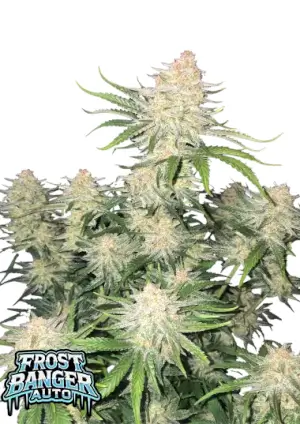
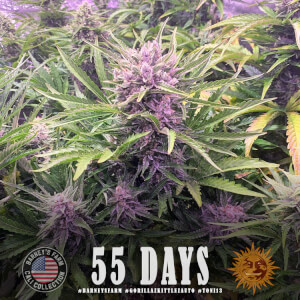
The success was so great that GG Strains products ended up dominating the search results for the adhesive brand, or at least that was the explanation given later by its creators. In March 2017, The Gorilla Glue Company, a family business from Ohio, sued them in a federal court in Cincinnati for trademark infringement. They claimed they had been building their name for about 20 years, that the varieties were confusingly similar, and demanded the profits obtained from them.

The lawsuit didn't go to trial. After about two months of negotiation, in September 2017 both parties signed an agreement whereby GG Strains gave up the name "Gorilla Glue", any gorilla imagery, and all resemblance to the adhesive brand. Gorilla Glue #4 became GG4 or Original Glue, #5 became GG5 or New Glue, and #1 became GG1 or Sister Glue. For one year they could continue using the tagline "formerly known as Gorilla Glue", and licensed growers and dispensaries had 90 days to change their labels. It was one of the first serious clashes between a major brand and a cannabis genetic, and it opened the door to the cases that came after.

The Origins of GG4 - RIP Joesy Whales
Upon the sad news of Joesy Whales' death recently, we've decided to pay homage to the man and his greatest creation, GG4 in this article where we examine the origins of this modern megalith of the cannabis world.
Girl Scout Cookies
Girl Scout Cookies was born in the late 2000s in the Sunset neighborhood of San Francisco, within a group of growers who called themselves Cookie Fam. Its breeder, Jai "Jigga" Chang, crossed his F1 Durban Poison with an OG Kush from the Florida OG line. Or so the story goes: Jigga himself has acknowledged that some of the versions circulating about its genetics were misdirections to prevent anyone from copying it.
By 2011, mentions by rapper Berner, who would go on to found the Cookies brand, and by Wiz Khalifa turned it into the trendy strain in California. Its sweet aroma, reminiscent of cookie dough with an OG undertone, ushered in the era of "dessert" strains, and from it descended classics like Thin Mint, Platinum GSC, Animal Cookies, Sunset Sherbet, Gelato, Do-Si-Dos, and Wedding Cake.

The problem was that "Girl Scout Cookies" is a trademark registered since 1936 by the Girl Scouts of the United States, who sell their famous cookies each year to fund the organization. When its name began appearing on dispensary menus, the scouts sent cease and desist letters to California shops, including to a Los Angeles dispensary that had won a Cannabis Cup with the strain. They reminded them that only they could use that name and that its use implied they endorsed illegal drugs.
This time, no lawsuit was necessary. Many dispensaries pulled the product or changed the label, and the solution that prevailed was the abbreviation GSC, now the official name of the strain under the Cookies brand and in major databases. Some tried wordplay like "Gurl Scout Cookies," though that didn't prevent complaints from parents in Las Vegas. What did survive was the word "Cookies," which Berner turned into one of the most recognized cannabis brands in the world.

Zkittlez
Zkittlez comes from Mendocino County in Northern California, where Terp Hogz and 3rd Gen Family developed it in the early 2010s, with Dying Breed Seeds also linked to its history. It's a cross of Grape Ape and Grapefruit with a third parent that has never been revealed, and its fruity candy profile made the nod to Skittles seem inevitable.
Its track record speaks for itself: first place in indicas at the High Times Cannabis Cup in San Francisco and Michigan in 2015, and first place at the 2016 Emerald Cup. With moderate THC by today's standards, it proved that terpenes can sell as much as potency. It also became a highly sought-after parent, giving rise to an entire "Z family" led by Runtz, Gorilla Zkittlez, and Blue Zkittlez.

The blow came in May 2021, when Wrigley, the Mars subsidiary that manufactures Skittles, sued Terphogz in a federal court in Chicago, amid a crackdown on THC edibles that mimicked their candies. According to the lawsuit, "Zkittlez" was nearly identical to Skittles in sound, appearance, and meaning, and slogans like "Taste the Z Train" copied the famous "Taste the Rainbow." Wrigley sought $250,000 and even demanded that Terphogz never use the letter Z, either alone or in combination. To make matters worse, Terphogz itself had described Skittles as a probably famous candy brand in its 2019 trademark application, and the judge refused to dismiss the case in November 2021.
In July 2023, both parties reached an agreement. Terphogz renounced “Zkittlez”, “Skittles” and similar terms, their slogans and the domain zkittlez.com, but retained the right to use the letter Z as long as it didn't generate confusion. Since then, their flagship variety is called The Original Z, or simply Z. The company didn't forget to remind that they had used the name for over ten years without a single complaint from the candy manufacturer.
Runtz
Runtz is, in a way, the heir to all of the above: daughter of Zkittlez and Gelato, which in turn descends from GSC. It was born in the Cookies environment, in the San Francisco area, and its name plays with Runts, colorful fruit-shaped candies. Its candy-like flavor and colorful buds made it omnipresent at the end of the 2010s, to the point of becoming a brand of its own with flowers, gummies and vape cartridges.

Runtz, born under a lucky star
Since its official launching at the end of 2017, Runtz genetics hasn't stopped receiving awards and praise due to its quality and, why not say it?, a great marketing campaign. Today we are going to see in detail this unique plant, and show you some of the options available in case you want to try it. You won't regret it!
That caught the attention of Ferrara, the Ferrero group company that manufactures Runts and had already won several cases against THC edibles that imitated their Nerds, Trolli and Runts. In October 2024, it sued 3615 Market LLC and Three Steps Ahead Inc., holders of the “Runtz” trademark applications, in a federal court in Northern California. It accused them of copying their brand and having expanded the line with “Chilly Wonka” products, a nod to the Willy Wonka that accompanies the candies, despite several cease and desist letters.

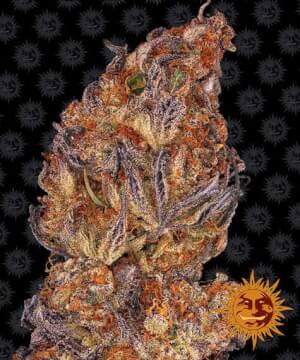

This time the story didn't follow the usual script. In March 2026, Judge Rita F. Lin rejected Ferrara's petition to resolve the case without trial, and two months later, after eight and a half hours of mediation, the parties closed an agreement whose conditions have not been made public. The defense attorney described it as balanced and, for now, there is no record of any name change. Runtz could be the first of these varieties to leave the courthouse with its name intact.
New name and the same fame
GG4, GSC, and Z are still the same plants that conquered the cups; they've only lost the nod to an external brand. For the grower, the lesson is simple: what matters is the genetics and the breeder, not the label. If you're looking for these varieties, you'll likely find them under their new name or with an abbreviation, and their descendants already come baptized with their own names.
Sources
- Gorilla Glue vs. Gorilla Glue – Cannabis Business Times
- Gorilla Glue – Wikipedia
- Gorilla Glue Co. sues GG Strains – High Times
- How an LA weed dispensary pissed off the Girl Scouts – Munchies
- What Happened to “Girl Scout Cookies” Weed? – Westword
- Parents upset with ‘Gurl Scout Cookies’ – KTNV
- Candy maker Wrigley accuses hemp, marijuana company – Hemp Industry Daily
- Terphogz settles with Mars Wrigley – Terphogz
- Chilly Wonka weed line infringes Runts candy mark – Bloomberg Law
- Ferrara Candy settles trademark suit over Runtz – Bloomberg Law
- Cannabis companies infringe Ferrara candy trademarks – Duane Morris
- Hershey settles with Hashees edibles maker – Law Street