
 Seeds
























 Growshop
 Nutrients








 Extractions
 CBD
 Magic Mushrooms
 Headshop
List of contents
- What does it mean for a cannabis strain to "go extinct"?
- Panama Red
- Why did it disappear?
- What remains today?
- Acapulco Gold, the gold from Guerrero
- Fire, paraquat and overexploitation
- The Grandchildren of Acapulco Gold
- Santa Marta Gold and the Bonanza Marimbera
- How was the Colombian Gold of the 70s lost?
- Matanuska Thunderfuck, the ghost of Alaska
- Thunder hunters
- Original OG Kush
- Extinction through hybridization
- The original Haze and authentic Thai Sticks
- Why is the original Haze considered lost?
- Thai Stick: the joint that disappeared
- Other Lost Legends: Hawaii, Oaxaca and Michoacán
- Maui Wowie and Kona Gold
- Oaxaca and Michoacán
- The boomerang effect of hybridization
- Can an extinct variety be brought back?
- The Spanish guardians of lost genetics
- Kaiki and Cannabiogen, the art of patience
- Dubi and ACE Seeds, tropical treasures within everyone's reach
- Alex "La Mano Negra", a Canarian legacy that lives on
- How to detect a false "reissue"
- Are they lost forever?
- The risk of losing genetic material persists today
- Jamaica, the cradle of ganja that almost lost its soul
- Traveling pollen, the invisible enemy
- The 2015 reform, lights and shadows for landraces
- Morocco and the Beldiya, a survivor from the Rif
- Why did farmers switch plants?
- Moroccan legalization, an unexpected lifeline
- Is Beldiya saved?
- Sources consulted
Few things generate as much nostalgia among cannabis veterans as the strains from the 60s and 70s. Those who tried them often repeat the same phrase: "there's no weed like that anymore." And in many cases they're right, though not for the reasons they think. It's not that today's weed is worse, it's that those specific plants stopped being cultivated, were mixed with others, or got stuck in some grower's freezer who ended up arrested.
This article reviews, based on specialized media and breeders' own accounts, the history of the most legendary cannabis strains considered extinct or, at the very least, lost in their original form. For each one we'll see where it came from, why it became famous, what made it disappear, and what remains of it in today's market.

It's worth warning from the start: in the cannabis world the line between history and legend is very thin. During decades of prohibition, no one kept genetic records, names were used as marketing tools, and much of what's considered "official history" has been built through word of mouth. Throughout the text we'll point out which facts are reasonably documented and which belong to the realm of myth.
What does it mean for a cannabis strain to "go extinct"?
Cannabis as a species is not endangered, but specific strains can disappear. Unlike an animal species, a cannabis strain only exists while someone cultivates it, reproduces it, or stores its seeds in good condition. When that chain breaks, the genetics are lost. In practice, almost all the "extinctions" in this article respond to one or more of these causes:
- The war on drugs. The eradication campaigns of the 70s and 80s in Mexico, Colombia, and Panama, including fumigation with paraquat, wiped out entire fields of local varieties and pushed producers toward other crops or faster genetics.
- Hybridization with indicas. With the arrival of Afghan and Hindu Kush genetics, farmers and growers began crossing their traditional sativas to shorten flowering time. Within a few generations, the local gene pool became "contaminated" and the pure variety ceased to exist as such.
- The shift to indoor cultivation. Equatorial sativas require between 12 and 16 weeks of flowering and considerable height. In a grow tent they were unprofitable, so they were abandoned in favor of compact, fast hybrids.
- Varieties that only existed as clones. Some varieties were never distributed in seed form. If the only cutting is lost due to a pest, a move, or a raid, the variety disappears with it.
- The name as a brand. In many cases the name survived the plant and was applied to anything that resembled it. This makes it nearly impossible today to know what "the original" was.
That's why, when we talk about extinct varieties, we're mainly talking about genetics lost in their original form. Many have seed versions today that bear their name, some quite worthy, but they are modern reconstructions or selections, not the same plant.

Panama Red
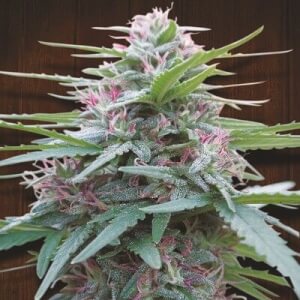
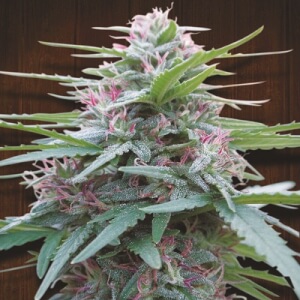
If there's one variety that sums up the nostalgia for 70s weed, it's Panama Red. It was an equatorial sativa from Panama, known for its pistils that turned from copper to deep red and for a cerebral, energetic, and almost psychedelic effect that made it a favorite of the hippie movement.
About its exact origin, there are at least three versions that don't match up. According to High Times, one places the crops in the Pearl Islands archipelago, in the Pacific; another, in the mountains north of the Canal; and a third, in a less rainy area of the Pacific coast. The only certainty is that it came from somewhere in Panama and that it was already known by the late 60s: it appears cited in the book The Drug Beat, from 1969.
Panama Red entered popular culture even before Acapulco Gold. It frequently appeared in the underground comic The Fabulous Furry Freak Brothers, starred in the 1973 best-known song by New Riders of the Purple Sage (written by Peter Rowan), and in the following years gave its name to a film about a hippie musician who sold weed to settle his debts. Peter Tosh also mentioned it in his famous Legalize It.
Unlike Acapulco Gold, whose golden color depended mostly on the environment, Panama Red's red tone appears to have a genetic basis, probably due to a higher presence of anthocyanins. Some phenotypes of current lines still show reddish stems and leaves around mid-flowering.

Why did it disappear?
The original Panama Red was lost due to a combination of factors. Eradication campaigns and police pressure in Central America reduced production, and the American market shifted first towards Colombian weed and later towards indoor hybrids. A sativa that needs between 13 and 16 weeks of flowering and easily exceeds two meters had no place in the new cultivation model. Within a few decades, the plant that hippies smoked stopped circulating.
What remains today?
Several seed banks sell seeds under the name Panama Red or Panama, normally from Panamanian populations collected at different times. One of the most interesting cases is that of Equilibrium Genetics, which offers a CBD-rich Panama Red. According to its head, Jason Matthys, the line comes from seeds that a volunteer (other versions mention some missionaries) brought from Panama in the 70s, and which have been maintained in California for decades through Bob Hemphill, from Coastal Seeds. Matthys maintains that a CBD-rich version like this probably resembles more what was smoked during the Summer of Love than any modern THC-oriented selection.
Even so, it's important to be clear: no one can guarantee that any of these lines is the Panama Red from the 70s. They are Panamanian populations, more or less faithful to the spirit of the original, but without a record that allows them to be compared with that plant.
Acapulco Gold, the gold from Guerrero
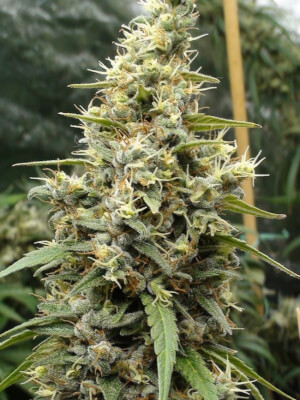
The great rival of Panama Red was Acapulco Gold, a Mexican sativa cultivated in the mountains of Guerrero, near Acapulco. According to the documentation collected in its Wikipedia entry, the name appears registered in the United States in 1964 and barely a year later it was already listed in the Oxford English Dictionary as a special type of cannabis with a golden brown color. In the 60s it was considered connoisseur weed, superior to what was cultivated in California or Texas, and it commanded prices that seemed astronomical at the time: about 20 dollars an ounce or 500 dollars per kilo in 1967.
Its characteristic golden tone, according to smuggler and promoter Gary Tovar, had more to do with the way of drying and curing the plants in the Pacific wind than with genetics. This is an important nuance, because it explains why no modern seeds cultivated outside Guerrero have managed to reproduce that appearance.
Fire, paraquat and overexploitation
Acapulco Gold is probably the best documented case of how the war on drugs wiped out a variety. In 1967, the Mexican Army burned much of the original fields at the request of the U.S. government. In the late 70s came fumigation with paraquat as part of an eradication program to which the United States contributed 13 million dollars annually. The irony was cruel: up to 20% of Mexican weed entering the United States was contaminated with the herbicide, which yellowed the plants and made them indistinguishable from authentic Acapulco Gold.

Added to this was the variety's own fame. As early as 1975, New York Magazine warned that its original potency had been diluted by mass planting to meet demand. When production shifted to Colombia and, later, to domestic cultivation in the United States, the Acapulco Gold of the golden years ceased to exist.
The Grandchildren of Acapulco Gold
What was not lost was its genetic footprint. Acapulco Gold appears among the parents of Skunk #1, the hybrid that would become the backbone of modern cannabis breeding. In other words, part of its DNA remains alive in thousands of current varieties, though diluted among Afghan and Colombian genetics.
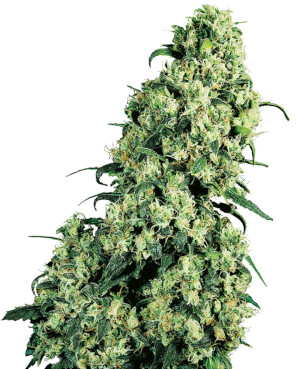

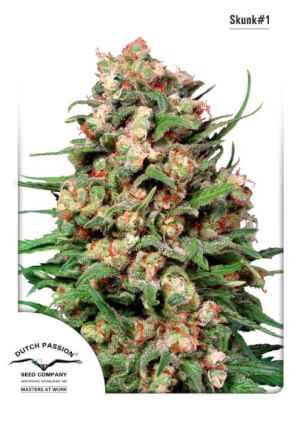
In popular culture it left an enormous mark. In 1971 it lent its name to rolling papers whose sales financed much of the legalization campaign in California in 1972, to a song by The Rainy Daze pulled from radio in 1967, and to the famous scene in Up in Smoke (1978) by Cheech and Chong.
Today there are many "Acapulco Gold" strains in catalogs, but most are hybrids or selections from modern Mexican populations.
Santa Marta Gold and the Bonanza Marimbera
If Acapulco Gold dominated the 60s, the decade of the 70s was Colombian. From the Sierra Nevada de Santa Marta and La Guajira came tons of a golden, aromatic, and very energetic sativa that in the United States became known as Colombian Gold or Santa Marta Gold. Alongside it circulated other local varieties such as "Samarian Golden" or "Red Point" (Punto Rojo), which High Times came to rank among the best in the world.
That era is known in Colombia as the Bonanza Marimbera. According to a column in El Heraldo, the business came to move more than two billion dollars a year between the mid-70s and mid-80s, and was the embryo of what would later become cocaine drug trafficking. The film Pájaros de verano (2018) portrays that world well.

How was the Colombian Gold of the 70s lost?
The end of the bonanza came through military means: the Colombian government's war on drugs, with support from the United States, wiped out most of the crops. At the same time, production shifted to California, where seedless cultivation (sinsemilla) and technified growing ended up displacing imported weed. Drug traffickers, for their part, found a much more profitable business in cocaine.
With less foreign demand, farmers who continued cultivating cannabis in Colombia began introducing more productive and faster hybrid genetics. The Santa Marta Gold that was exported in the 70s, as a large-scale cultivated population, ceased to exist.
Here it's worth clarifying more than in any other case. Unlike Panama Red, Colombian genetics from that era did leave well-documented offspring: Colombian Gold is, along with Acapulco Gold and an Afghani, one of the three pillars of Skunk #1, and the oral tradition of Californian breeders also places it at the origin of Haze. In other words, a good part of modern cannabis carries something of Santa Marta in its DNA.

Cannabis in the seventies, a decade of change
The 1970s is undoubtedly one of the most interesting decades in the recent history of cannabis. Despite the efforts of the authorities at the federal level, marijuana cultivation and consumption skyrocketed in the US during that decade, so as politicians and police launched a veritable war against the plant, the first hybrids were developed and hydroponic growing techniques began to be applied in indoor gardens, laying the foundations for the decades to come.
Furthermore, several collectors maintain that the pure line never completely disappeared and that it remains available through European seed banks and small American breeders, although it may be difficult to find. The most prudent thing to say is that the Colombian Gold of the Bonanza was lost as a phenomenon, but that preserved Santa Marta populations exist which, with more or less fidelity, keep its legacy alive.
Matanuska Thunderfuck, the ghost of Alaska
Few varieties have such a memorable name and such a difficult-to-verify history as Matanuska Thunderfuck, better known by its acronym MTF. Its legend was born in the Matanuska-Susitna Valley, north of Anchorage, in the early 70s, and is so tied to cannabis press that it's hard to separate the plant from the myth.
As reconstructed in 2017 by the Anchorage Daily News, the first printed reference was probably from High Times in September 1974, which listed a discreet "Matanuska Valley (strong)" without a price. Just four months later, in January 1975, the same magazine was already talking about "primo Matanuska valley thunderfuck" at 70 dollars an ounce, the most expensive weed in Alaska, compared to 20 dollars for Mexican.
In May 1975, shortly after the Alaska Supreme Court recognized in the Ravin v. State case the right to possess small amounts at home, High Times journalist Blair Sachs-Benedict traveled to the state. His report, on the cover of August 1975, described buds the size of a malamute's paw and claimed he had never tried better American weed. His main source was a grower identified only as Nordhoff, who boasted that his plant grew through the snow and reached two and a half meters tall.
The story goes that Nordhoff ended up being arrested some time later. Some say the variety died with that raid; others, that it was saved by the Hells Angels or the grower's own lovers, who would have divided the cuttings among themselves. Neither version has been proven.
What does seem clear is that, after High Times' fame, any good weed from the valley came to be called MTF. In an article in Leaf Magazines, grower Fuzzy Millhouse went so far as to claim that "there never was an MTF variety," and another valley veteran, Tom Holohan, recalled that in the 80s everyone was growing mixes of Northern Lights #5 and Maui Wowie under that name. An Alaska state police captain summed up the current situation in the Anchorage Daily News: with legalization, the name has become a marketing strategy.
Thunder hunters
With the arrival of the legal market in Alaska, several growers set out to find it. Ron Bass, from Big Lake, grew five plants in parallel that had been sold to him as MTF and had veteran smokers blind-test them, who chose the same one: the one from Wasilla. Breeder Evan Schlosberg defends another theory: that there were several MTFs, some compact indicas and others tall sativas, all from the same era and place. Hunter Justin Roland summed up the problem: if it takes him ten more years to find it, there will be no veterans left capable of recognizing it.
The most solid preservation is probably that of AK Bean Brains, which according to Weedmaps received an MTF clone in 1987, crossed it with Northern Lights #1 and backcrossed the offspring to recover the mother's traits (BX2 and BX3 versions, with a characteristic earthy chocolate aroma). Even so, the lineage itself makes clear that the original pedigree of that plant remains unconfirmed. That's why MTF occupies a special place on this list: we don't know for certain if it went extinct, because we've never known for certain what it was.
Original OG Kush
The case of OG Kush is different from the previous ones. We're not talking about a local variety wiped out by the war on drugs, but a modern clone from the 90s that became so famous that its name ended up devouring the plant itself. And the question "does the original OG still exist?" has more than one answer.
According to the genealogy published by Leafly based on testimonies from its protagonists, the story begins in the mid-90s in Los Angeles. Grower Josh Del Rosso ("Josh D") challenged his friend Matt "Bubba" Berger to prove that better weed was grown in northern Florida than in California. Berger returned with several cuttings and, of the five that traveled west, only one survived. That clone, grown in 1996 in a small Silver Lake apartment, is what tradition considers the original OG Kush.

In 1997, Josh D took his second harvest to a small competition in the San Francisco Bay Area and dominated. From there, the clone passed to a small circle of friends, reached B-Real from Cypress Hill, and within a few years, "Kush" became synonymous with good weed throughout Los Angeles. By 2001, a pound of OG sold for as much as $8,000, the highest confirmed price.
The problem is that, as Josh D himself admitted, the fame of OG didn't necessarily correspond to the cut he had preserved. With demand skyrocketing, seeds found in bags of OG, crosses, and local selections began to circulate. When the strain reached Humboldt around 2004, there were about twenty recognized OG variants and dozens of subtypes: SFV OG, Tahoe OG, Larry OG, Ghost OG, Kosher Kush, Fire OG... It's estimated that in 2008, more than half of the $8 billion valuation of Humboldt's harvest was OG.
Extinction through hybridization
What has been lost is everything that existed before 1996: the Florida mother and its genetic context. Nobody knows for certain which cross it came from. The most repeated theory, defended among others by High Times editor Danny Danko, points to Chemdawg as a parent, with contributions from Hindu Kush and Lemon Thai according to other versions, but there's no record to confirm it. The Florida growers who bred it never told their story publicly, and other genetics from that same environment only survive today through their descendants, like the "Pre-98" Bubba Kush.
Josh D's clone, on the other hand, remains alive in the hands of his close circle, though it has never been distributed openly. So, strictly speaking, the original OG isn't extinct, but diluted: surrounded by hundreds of versions carrying its name and with origins we'll probably never be able to reconstruct.
The original Haze and authentic Thai Sticks
Two more legends complete the chapter on lost sativas, and they're closely connected to each other: the original Haze from Santa Cruz and the Thai weed that arrived in the United States in the form of Thai Sticks.
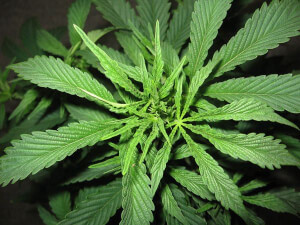
According to the most widespread account, Haze was born in Santa Cruz (California) in the late 60s or early 70s, at the hands of two brothers known as the Haze Brothers. There's no agreement on its recipe: the most widely circulated version speaks of a mix of Mexican and Colombian sativa, later crossed with one from southern India and, finally, with a Thai male. However, David Watson, better known as Sam the Skunkman, has described it in forums as a cross of three Colombian lines.

What is well documented is the path the genetics followed. Sam the Skunkman, neighbor and friend of the brothers, took Haze seeds to the Netherlands in the 80s and commercialized them through Cultivator's Choice. From there they passed to Wernard (Positronics), to Eddie Reedeker (Flying Dutchmen) and, above all, to Neville Schoenmakers, from The Seed Bank. According to the journey documented by Weedmaps, Neville worked the Haze during the second half of the 80s, selected several lines (Haze A, B and C) and ended up creating Neville's Haze by crossing Haze A with Northern Lights #5 and the result again with Haze C.


Why is the original Haze considered lost?
The Haze that was cultivated in California in the 70s was a population with extremely long flowering, sometimes over 16 weeks, impossible to commercialize indoors. With the shift to hybrids, the pure line stopped being reproduced on a large scale, and what we know today as Haze (Amnesia, Super Silver, Neville's, Purple Haze...) are almost always hybrids with indicas to make it manageable. According to Skunkman himself, the brothers had three main phenotypes: purple, silver blue and lime green.
Once again, it's worth clarifying. Sam the Skunkman claims to have preserved the original Haze since the 70s, and some breeders work with lines like the "68 Santa Cruz Haze". But none of these materials can be compared with the 1969 plant, so their authenticity depends on trust in whoever preserves it.
Thai Stick: the joint that disappeared
Thai Stick wasn't a variety, but a form of presentation: several seedless buds tied with thread to a bamboo stick. The herb came mainly from northeastern Thailand, the Isan region, next to the Mekong River, and its prestige grew during the Vietnam War thanks to soldiers and a network of smuggler surfers documented by Peter Maguire and Mike Ritter in the book Thai Stick.

After decades of being consigned to oblivion, modern Cannagars are the revival of the Thai Sticks, which were highly popular in USA during the 1970s. But, what are Thai Sticks and how are they made? And what exactly is inside these amazing Cannagars of today? In this article, we answer these questions and tell you everything there is to know about this interesting marijuana consumption method.
Thailand toughened its penalties in 1979 under US pressure, during the final phase of its war against communist insurgency, and some producing areas like Nakhon Phanom were devastated. By the late 80s, the trade was practically closed. The pure Thai sativa from that era is very rare today: much of its heritage survives diluted in Haze strains and in varieties like Juicy Fruit, while the "Thai Sticks" sold in legal markets are cannabis cigars filled with any variety.
Other Lost Legends: Hawaii, Oaxaca and Michoacán
The list could be much longer. There are other historic varieties whose original form is considered lost or at serious risk, and almost all share the same profile: they were long-flowering sativas, cultivated outdoors and, for that very reason, especially vulnerable to aerial eradication campaigns.
Maui Wowie and Kona Gold
Hawaii was, during the 60s and 70s, one of the great names in American cannabis. From the Nāhiku area, on the island of Maui, came Maui Wowie, a fruity sativa that became synonymous with Hawaiian weed. On the Kailua-Kona coast, on the Big Island, Kona Gold was cultivated in the early 70s, a huge plant adapted to the region's lava fields.
Its downfall came from the air. According to a report by Fat Nugs Magazine, in the late 70s the National Guard began supporting anti-drug agents with helicopters in what was called Operation Green Harvest, and by the 80s eradication was already a state operation funded mainly by the DEA. A sativa several meters tall with endless flowering was an easy target: Kona Gold's very height and long cycle made it highly visible, and it nearly disappeared.
Today, most of the Maui Wowie being sold are hybrids that retain little of the original, although some Hawaiian companies claim to maintain the "pre-'72" line. Kona Gold was somewhat luckier: local growers kept it quiet during the raid years and, in 2018, Maui Grown Therapies made it available again to patients in the Hawaiian medical program. Even so, as in all other cases, it's impossible to verify to what extent it resembles what was cultivated fifty years ago.
Oaxaca and Michoacán
Acapulco Gold wasn't the only Mexican variety with its own fame. From the late 60s to the early 80s, the Mexican Pacific states supplied a large part of the American market, and some origins commanded higher prices than others. Highland Oaxacan Gold, grown in the mountains of Oaxaca, was a mountain sativa highly prized for its clear and energetic effect. The weed from Michoacán also had its own prestige, to the point that Cheech's character mentions it alongside Acapulco Gold in Up in Smoke.
Both suffered the same fate as their neighbor from Guerrero: crop burnings, paraquat fumigations and, finally, a progressive hybridization with seeds brought in from outside that diluted the local populations. Today there are Oaxaca and Michoacán lines in specialized catalogs, some carefully preserved by breeders, and in 2023 a San Francisco store even presented a Highland Oaxacan that was thought to be lost. But none can guarantee that it's identical to what was harvested in those mountains in the 70s.

The boomerang effect of hybridization
The botanist Robert Clarke, co-author of Cannabis: Evolution and Ethnobotany, explained in an interview with Project CBD a lesser-known mechanism that helps understand all these losses: growers themselves brought seeds from the United States back to producing regions like Mexico or Colombia. Those hybrids mixed with local varieties and, over the generations, made it so that today it's no longer possible to find them in their place of origin with the gene combination that defined them. In other words, many of these legends didn't just disappear due to repression, but also because of the very success of the hybrid cannabis that they themselves helped create.
Can an extinct variety be brought back?
The short answer is that a lost variety cannot be recovered exactly as it was, but part of its heritage can be rescued. Today there are several pathways, each with its limitations:
- Stored old seeds. Some lines survive because someone saved seeds in the 70s or 80s. If they were kept cold and dry, a portion may still germinate decades later, although the percentage drops significantly over time. It's the most faithful route, but also the rarest.
- Preserved clones. In varieties that only existed as clones, like OG Kush or MTF, rescue depends on someone having kept the mother plant alive for years. Without a genetic record from that era, authenticity is based on veterans' memory and trust in whoever keeps it.
- Backcrosses. When only one specimen remains, breeders cross it with another variety and backcross several generations with the mother to recover its traits, as AK Bean Brains did with his MTF. The result closely resembles the original, but is no longer pure.
- Collection at origin. Some banks and strain hunters travel to traditional areas to collect local seeds. The problem, as Robert Clarke points out, is that many current populations are already hybridized, so what is collected today in Panama or Guerrero is not what was cultivated in 1970.
- Genetic analysis. Projects like the one Clarke developed with Phylos Bioscience have begun sequencing old and modern samples to trace the family tree of cannabis. They don't resurrect anything, but they allow us to know which current lines are most similar to the historical ones.
The Spanish guardians of lost genetics
If there's a country that has managed to stand up against the disappearance of classic varieties, it's Spain. While the market was filling up with modern hybrids that looked identical to each other, a handful of national breeders decided to swim against the current and dedicate years, and a lot of patience, to preserving landraces and old-school lines that were about to vanish.
Thanks to them, today you can grow plants in your garden whose lineage goes back to the mythical sativas that made history in the 60s and 70s. Can you imagine smoking something similar to what the flower power pioneers tried? Well, that's exactly what these breeders have made possible.
Kaiki and Cannabiogen, the art of patience
Kaiki, the soul of Cannabiogen, is one of the most respected names when it comes to preserving tropical genetics. His catalog was almost a journey through time in Latin America, with gems like Colombia Punto Rojo, Colombia Mangobiche, Chapita de Michoacán or Jarilla de Sinaloa, varieties that you would hardly find today in their place of origin.
His famous Destroyer is the best example of his way of working: a pure sativa resulting from crossing a Meao Thai with a Mexican-Colombian hybrid, worked for years until achieving a more contained flowering. And what does that mean for you? That you can enjoy the cerebral high of old-school sativas without having to wait an eternity to harvest.

Dubi and ACE Seeds, tropical treasures within everyone's reach
With Dubi at the helm, ACE Seeds has become a true reference for lovers of pure sativas and rare genetics. Their landrace library is one of the most varied in the sector, and their philosophy has always been the same: preserve, study and share with the community.
Their Panama is a living legend. It combines three Panamanian sativas and, in some specimens, offers those reddish pistils reminiscent of the mythical Panama Red and the Colombian Punto Rojo. For you, that translates into an electric and creative effect, citrus and incense aromas and the satisfaction of growing a piece of history.
Along these same rescue lines we also find vintage Colombian Gold, like Colombian Gold 72, heirs to the sativas from the Sierra Nevada de Santa Marta that served as the basis for classics like Skunk #1 or Haze. A whole genetics lesson in a single seed!
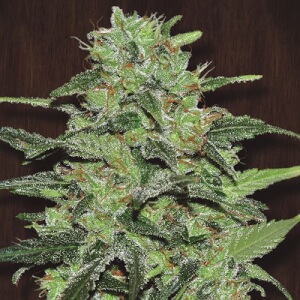
Alex "La Mano Negra", a Canarian legacy that lives on
From the Canary Islands, Alex "La Mano Negra" left an indelible mark on the Spanish cannabis scene. Although he is no longer with us, his work continues to beat in varieties like JoTaKe, Iguana, Cantarela, Timanfaya Devil or his Angola Roja x Banghi, which preserves the character of African sativas.
Their genetics are now authentic collector's pieces, highly sought after by growers who value authenticity over trends. Keeping them in circulation is, ultimately, a way of paying tribute to them and preventing their work from joining the list of extinct varieties.
How to detect a false "reissue"
If you're interested in these historic genetics, it's wise to be wary of marketing. Some useful signs:
- Ask about the origin. A good seed bank can tell you where the seeds came from, what year they were collected, and how the line has been maintained.
- Look at the flowering time. A pure equatorial sativa takes between 12 and 16 weeks or more. A "Panama Red" or "original Haze" that finishes in 9 weeks is almost certainly a hybrid.
- Be wary of autoflowering varieties. Such a variety can be very good, but it's necessarily a modified version of the original.
- Value variability. Traditional populations were heterogeneous. A line presented as "landrace" that is perfectly uniform has probably gone through a lot of selection or hybridization.
Even with all these precautions, we have to accept it: part of the magic of those varieties depended on their environment, on the sun of Guerrero, the volcanic soil of Hawaii, or the Pacific wind curing. That doesn't come in any seed.
Are they lost forever?
It depends on what we mean by "lost." If we're talking about the exact plant that was smoked in Haight-Ashbury in 1967 or in Anchorage in 1975, the honest answer is yes: Panama Red, Acapulco Gold, the Santa Marta Gold from the Bonanza, Nordhoff's MTF, or Santa Cruz Haze no longer exist as they were. They were wiped out by fire, paraquat, helicopters, raids, and above all, a market that came to reward speed, production, and THC above everything else.
But when we talk about their heritage, the story changes. Acapulco Gold and Colombian Gold live within Skunk #1; the Thai sativa, within the Haze; OG Kush, in hundreds of descendants that dominate dispensaries. And there are Panamanian, Colombian, Mexican, and Hawaiian populations preserved by growers who refused to let them die, although none can prove to be identical to the original.
The risk of losing genetic material persists today
We wish we could tell you that the extinction of varieties is a thing of the past, but the reality is quite different. The phenomenon continues and, right now, in different corners of the world, unique genetics are gradually fading away without hardly anyone noticing. The most worrying part? The main candidates for disappearance are precisely the oldest jewels: the landraces.
In case you're not familiar with the term, a landrace is a native variety that has evolved over centuries in a specific region, adapting to its climate, its soil, and the hands of the farmers who cultivated it. They are, so to speak, the original genetic heritage of cannabis. Practically all the varieties you grow today descend from them, from the classic Skunk and Haze to the most modern hybrids on the market.

The problem is that these plants compete at a disadvantage. The globalization of seeds, the demand for increasingly higher THC percentages, and the search for faster and more abundant harvests push many farmers to replace their traditional varieties with commercial hybrids. And since pollen travels freely, just a few foreign males near a traditional field are enough for the local genetics to lose their essence within a few generations.
Paradoxically, not even legalization guarantees their survival: when the regulated market focuses solely on productivity, landraces can be left out of the game. Fortunately, there are also cases where regulation has become their best ally. To show you both sides of the coin, we invite you to travel with us to two emblematic places where this battle is being fought right now: Jamaica and Morocco.
Jamaica, the cradle of ganja that almost lost its soul
If there's one country we all associate with cannabis, it's Jamaica. Between the 1950s and 1970s, its landraces gave it an international fame that reached every corner of the planet, hand in hand with reggae and Rastafarian culture. Varieties like Lamb's Bread (or Lamb's Breath) or King's Bread became authentic legends. Who hasn't heard at some point that it was Bob Marley's favorite?
However, that golden era came to an abrupt end. During the war on drugs in the 1980s, native sativas were very easy to detect due to their height, so they were destroyed and many farmers abandoned their cultivation. Little by little, hybrids, shorter and easier to hide, took their place. A nightmare for any lover of pure genetics!

If we talk about traditional cannabis producing countries, Jamaica comes to mind almost immediately. In this article we tell you more about the close relationship between this wonderful Caribbean island and cannabis, where both Rastafarians and Reggae Music have played a major role during the past 50 years.
Traveling pollen, the invisible enemy
Here comes into play a key botanical detail. Cannabis is a dioecious plant, meaning it has separate male and female specimens. If a male of Dutch origin grows near a Jamaican female, the resulting seeds will produce something completely new. And with each generation of uncontrolled crosses, the original genetics dilute a little bit more.
What does this mean for you as a grower? That many seeds sold today as "Jamaican" may have little to do with the plants that were smoked in Montego Bay half a century ago. Authenticity, in this case, is almost a collector's treasure.

The 2015 reform, lights and shadows for landraces
In 2015, Jamaica took a historic step with the reform of its Dangerous Drugs Act. Possession of up to two ounces became a simple infraction punishable by fine, cultivation of up to five plants per household was allowed, and the sacramental use of ganja by the Rastafarian community was recognized. Additionally, the door was opened to a regulated industry for medical, therapeutic, and scientific purposes.
But not everything is rosy. The licenses to enter the legal market require capital that many Rastafarians and small traditional farmers can hardly gather. And it's precisely those families who, for decades, have kept their grandparents' seeds. If they're left out of the business, the risk is that the industry will bet on imported genetics and the landraces will once again be sidelined.
The good news is that Jamaica has taken conservation seriously. The company Jamaica Medical Cannabis Corporation signed an agreement with the country's National Foundation for the Development of Science and Technology to finance a ten-year study aimed at identifying, isolating, and preserving local varieties for medicinal purposes. Additionally, researchers from the University of the West Indies are working to locate and recover that "lost" ganja, with the added challenge of recognizing the merit of the farmers who have preserved it.
It's a precious effort, but still fragile. As long as there isn't a solid and accessible germplasm bank, each Jamaican landrace continues to depend on a few farmers and a handful of passionate breeders. May the land of Marley shine with its true ganja once again!
Morocco and the Beldiya, a survivor from the Rif
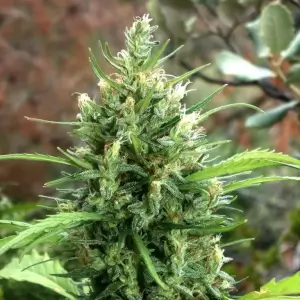
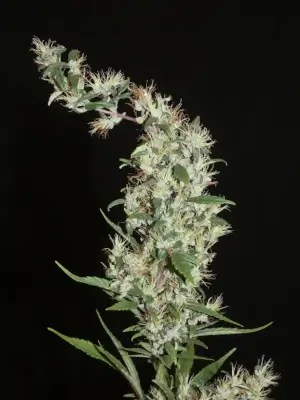
We now travel to North Africa, to the Rif Mountains, where the traditional Moroccan variety has been cultivated for centuries: Beldiya. It's responsible for the legendary hashish that reached Europe for generations, and many enthusiasts consider it irreplaceable for its flavor and more balanced effect.
In recent years, however, it has been disappearing from the fields, displaced by imported hybrids with names like Pakistana, Amnesia, Gorilla, or Critical. Khardala, another introduced variety, came to dominate more than 65% of the plots. A true genetic invasion in every sense.

Why did farmers switch plants?
The answer, as almost always, lies in productivity. According to official Moroccan data, Beldiya yields about 17 quintals per hectare, while imported seeds reach an average of 28. For a farmer who lives off their harvest, that difference weighs heavily.
But hybrids have a flip side that isn't visible at first glance. Critical grows during the dry summer and needs intensive irrigation, while Beldiya is planted in winter and makes do with rainwater. In a region where water is a scarce resource, that difference translates into overexploited aquifers and an environmental impact that's hard to ignore. And let's not forget the palate: a Rif farmer once summed it up by saying that one variety makes you think and the other makes you paranoid. Quite a review!

Moroccan legalization, an unexpected lifeline
Here the story takes a very hopeful turn. In 2021, Morocco approved Law 13-21 on legal uses of cannabis, limited to medical and industrial purposes, and in 2022 created the regulatory agency ANRAC. Before this law, Beldiya was not certified, so its legal production was directly impossible.
After a year of testing, ANRAC authorized for the first time the cultivation of Beldiya for cooperatives in 2024, supported by a study with the National Institute of Agronomic Research to characterize the local variety. And the numbers speak for themselves! Of the 4,082 tons of legal cannabis produced in 2024, Beldiya contributed 2,786, and the cultivated area went from about 1,400 hectares to between 3,000 and 3,500 in 2025.
As if that weren't enough, researchers have identified about 150 distinct Beldiya ecotypes, a genetic diversity worth its weight in gold. And a scientific study confirmed that its cannabinoid profile remains much more stable year after year than that of four imported hybrids, making it especially interesting for the pharmaceutical industry. In fact, Morocco has already exported Beldiya medical cannabis to Australia.
Is Beldiya saved?
Not entirely yet, although it's on the right track. The legal program covers only part of the territory and is oriented toward medical and industrial uses under very strict control. Outside that framework, in fields that remain outside the law, hybrids continue to be very present and pollen doesn't understand licenses or boundaries between plots.
Even so, the Moroccan case demonstrates something that fills us with hope: when the value of a landrace is recognized, you can turn things around. Regulation has gone from being a threat to becoming the best shield for the native variety.
Perhaps the most important lesson from all these stories is that the genetic diversity of cannabis is fragile. Every time a local variety is abandoned or mixed without control, something disappears that can never be recovered. That's why the work of seed banks that preserve traditional lines, and that of every grower who saves and reproduces their seeds, has more value today than ever before. The legends of the 70s remind us that no variety, however famous it may be, is safe if no one takes care of it.
Sources consulted
- High Times: "Cannabeginners: The Adventures of Panama Red"
- Wikipedia: Acapulco Gold
- El Heraldo: "La bonanza marimbera II"
- Leafly: Colombian Gold
- Anchorage Daily News: "Chasing thunder: Searching for Alaska's most legendary cannabis strain"
- Leaf Magazines: "The Mythology of MTF"
- Weedmaps: MTF (Matanuska Thunderfuck)
- Leafly: "An Epoch of OG: The OG Kush family genealogy"
- Weedmaps: "The history of Haze strains"
- Seedfinder: Haze (Unknown or Legendary)
- Leafly: "In Thailand, opinion on cannabis is changing"
- Fat Nugs Magazine: "Six Islands, One Plant: How Geography Shaped Hawaii's Cannabis Identity"
- Maui Now: "Maui Grown Therapies Announces Release of Kona Gold"
- Calle 24 SF: Highland Oaxacan "Mota" Release
- Project CBD: Interview with Robert Clarke on Cannabis Evolution